


Saltwater pulls moisture out of your skin’s outer layer, causing it to contract and trigger a sensation of tightness. That feeling is real and measurable. The single best immediate action: rinse off salt with fresh water and apply a moisturizer while your skin is still damp. Removing the salt stops the ongoing moisture loss, and a damp moisturizer physically re-swells the stratum corneum, relieving the mechanical force behind the sensation.
Table of Contents
- Why does skin feel tight after beach saltwater exposure?
- What the Binghamton University study actually found
- Other beach factors that make tightness worse
- What to do right after the beach, step by step
- Which ingredients actually help rehydrate and repair the barrier
- When tight skin after the beach needs a doctor
- Key Takeaways
- The part most people skip
- Miamibeachbum makes the post-beach routine simple
- Sources and further reading
Why does skin feel tight after beach saltwater exposure?
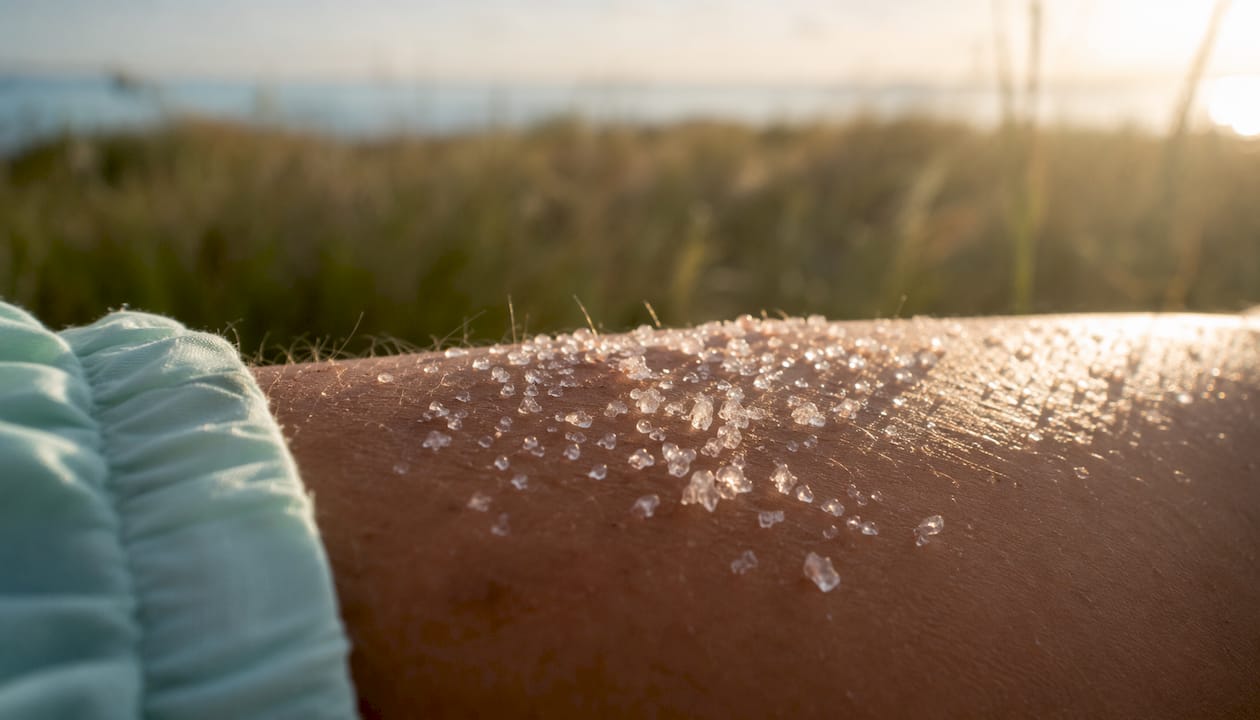
Your skin’s outermost layer is called the stratum corneum. It acts as a physical barrier, holding moisture in and keeping irritants out. When you swim in the ocean, saltwater coats that layer. As the water evaporates, microscopic salt crystals remain on the surface.
Those crystals are hygroscopic. When ambient humidity drops below roughly 76%, they actively pull moisture out of the stratum corneum rather than absorbing it from the air. The layer loses water, shrinks, and stiffens.
That shrinkage is not just a surface event. Mechanoreceptors are sensory receptors located below the epidermis. They convert mechanical force into neurological signals. When the stratum corneum contracts, it transmits that mechanical force downward to these receptors, which fire signals to the brain. The brain reads those signals as tightness. The sensation is not imagined; it has a direct physical cause.
Here is the sequence in plain terms:
- Salt crystals remain on skin after ocean water evaporates
- Crystals draw moisture out of the stratum corneum (osmotic and hygroscopic effect)
- The outer layer loses water, shrinks, and stiffens
- Shrinkage transmits mechanical force to mechanoreceptors below the epidermis
- Mechanoreceptors signal the brain, which registers the sensation as tightness
Measured in the lab: Controlled tests found that salt-treated skin samples showed an elastic modulus of 5.13 MPa versus 2.75 MPa for fresh water samples. Drying stress more than doubled: 208.5 kPa versus 91.23 kPa. Those are not subtle differences.
What the Binghamton University study actually found
Researchers at Binghamton University studied the specific mechanism by which saltwater increases skin tightness, publishing their findings in the Journal of the Mechanical Behavior of Biomedical Materials. The study compared salt water and fresh water conditions directly, measuring both tissue stiffness and drying stress on skin samples.
Salt water significantly increases both the stiffness of the stratum corneum and the drying stress it experiences compared with fresh water. The study identified this “drying stress” as the primary mechanical driver of the tight sensation beachgoers report.
The practical implication is straightforward. Rinsing with fresh water after ocean exposure removes the salt crystals responsible for the elevated drying stress. Applying a moisturizer while the skin is still damp adds water back into the stratum corneum, re-swelling it and reducing the mechanical force on the mechanoreceptors. The tightness eases because the physical cause has been addressed.
Other beach factors that make tightness worse
Salt is the primary driver, but it rarely acts alone. Dermatologists note that salt, sun, and wind act cumulatively, accelerating lipid and natural moisturizing factor loss beyond what any single stressor would cause. On a typical beach day, you are exposed to all of them at once.
- UV exposure: Sun strips lipids from the stratum corneum and triggers inflammation. Sunscreen applied before entering the water is the most direct prevention. A mineral SPF applied before sun exposure protects the barrier before damage starts.
- Wind and low humidity: Wind accelerates evaporation, which amplifies salt-induced drying stress. Tightness is noticeably worse on windy days. A cover-up or reapplying a light lotion between swims helps.
- Sand abrasion: Sand acts as a physical exfoliant. Repeated friction removes surface skin cells and disrupts the barrier. Rinsing sand off gently rather than rubbing it is the simplest prevention.
- Pool chlorine: Chlorine is a disinfectant that strips natural oils from the skin. If you mix pool time with ocean time, barrier loss compounds quickly. Rinse immediately after pool exposure as well.
The combination of these stressors on a single beach day creates conditions where the barrier is being attacked from multiple directions simultaneously. Salt alone raises drying stress measurably; add UV, wind, and friction, and the cumulative effect on skin dryness after beach exposure is significantly greater.
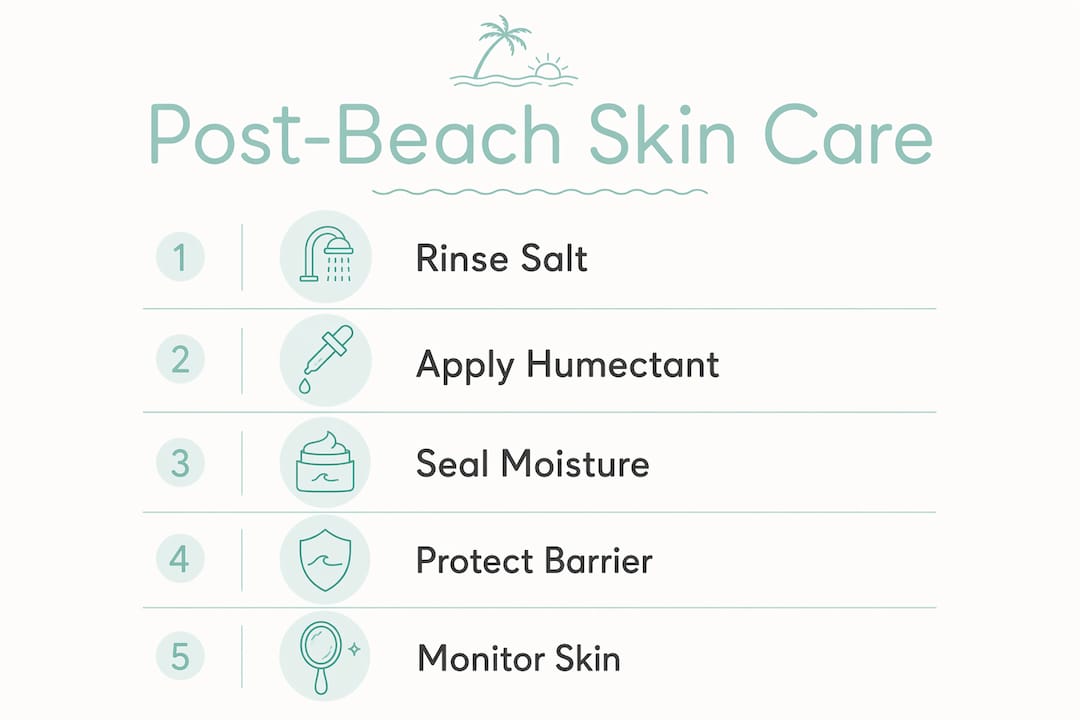
What to do right after the beach, step by step
The routine does not need to be complicated. Speed and gentleness matter more than product count.
- Rinse with fresh water immediately. A beach shower, garden hose, or even a large bottle of water works. The goal is removing salt crystals before they continue drawing moisture out.
- Gently cleanse at home if needed. Use a mild, fragrance-free cleanser. Avoid anything with sulfates or physical scrubbing particles.
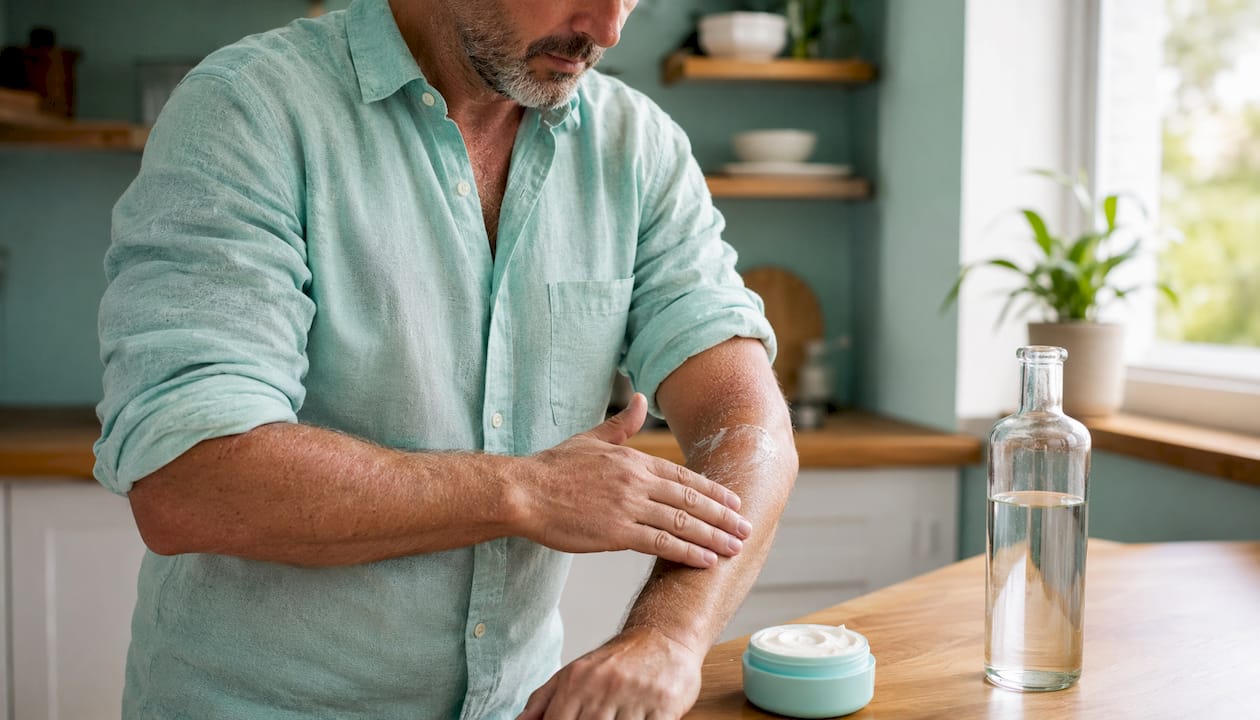
- Apply a humectant while skin is still damp. A water-based lotion, hyaluronic acid serum, or glycerin-based product draws water into the stratum corneum. Apply within minutes of rinsing.
- Seal with a cream or body lotion. An emollient or occlusive layer locks the moisture in. Apply over the still-damp humectant layer.
What to avoid for 24–48 hours after beach exposure:
- Alcohol-based toners or astringents
- Retinoids and AHAs or BHAs
- Physical scrubs or exfoliating mitts
- Very hot showers, which strip remaining oils
The Cleveland Clinic recommends a minimalist approach after sun and environmental exposure: fragrance-free, hydrating products only, and no harsh actives until the barrier has had time to recover.
Pro Tip: No shower available? Use damp wipes or a spray bottle filled with fresh water to rinse salt off your skin before applying any moisturizer. Removing the salt first is more important than the specific product you use.
Which ingredients actually help rehydrate and repair the barrier
Understanding the three categories of moisturizing ingredients helps you pick the right products and layer them correctly.
- Humectants (hyaluronic acid, glycerin, aloe vera): Draw water into the stratum corneum. Apply these first, while skin is damp, for maximum uptake. These are the after-sun skincare ingredients most directly responsible for re-swelling the contracted outer layer.
- Emollients (ceramides, fatty acids, squalane): Fill gaps in the skin barrier and restore suppleness. They sit between humectants and occlusives in a layered routine.
- Occlusives (fatty alcohols, shea butter, plant-based waxes): Form a physical film over the surface to slow water loss. Apply last to seal everything in.
For shopping, look for fragrance-free formulations with no added alcohol. Avoid anything labeled “exfoliating” or “clarifying” for the first 48 hours post-beach. A minimal effective skincare routine built around these three ingredient types is enough for most people.
Miamibeachbum’s Bum + Body collection includes body creams formulated with botanical and marine ingredients that fit the sealing step. The Save Face SPF 50 Sheer Mineral Serum covers the pre-beach protection step with a reef-safe mineral formula gentle enough for use on compromised skin. Applying sunscreen as the final step before sun exposure, over a water-based moisturizer, reinforces the barrier before damage begins.
Pro Tip: Apply your humectant while your skin is visibly damp, then apply your cream within 60 seconds. That short window is when the humectant can pull the most water into the stratum corneum before surface moisture evaporates.
When tight skin after the beach needs a doctor
Normal salt-induced tightness responds to rinsing and moisturizing within a few hours. If it does not, something else may be happening.
Red flags that need medical attention:
- Warmth, redness, or tenderness that persists beyond 24 hours after rinsing
- Blistering or fluid-filled skin
- Widespread rash or hives
- Fever, chills, or nausea alongside skin symptoms
- Spreading redness or signs of infection in cracked or broken skin
- Eyes that feel painful or sensitive to light
Sunburn causes inflammatory tightness that is distinct from the mechanical tightness caused by salt. Persistent warmth or tenderness after rinsing suggests inflammation, not dehydration. Those two conditions require different responses, and treating sunburn with only a moisturizer is not sufficient.
A dermatologist evaluation is appropriate if you experience repeated barrier breakdown after beach exposure, develop chronic dermatitis after ocean swimming, or notice that tightness and sensitivity are worsening over multiple beach seasons. Repeated barrier disruption without proper recovery can accelerate skin aging and increase long-term sensitivity.
The timeline guide: tightness from salt alone should ease noticeably within a few hours of rinsing and moisturizing. If symptoms are not improving after 24–48 hours, or if any of the red flags above appear, contact a healthcare provider.
This article is general information, not medical advice. Confirm any skin concerns with a qualified dermatologist or healthcare provider for your specific situation.
Key Takeaways
Salt increases drying stress in the stratum corneum substantially compared to fresh water, causing measurable mechanical tightness that a rinse and damp moisturizer directly reverses.
| Point | Details |
|---|---|
| Salt doubles drying stress | Lab tests measured drying stress at 208.5 kPa for salt-treated skin versus 91.23 kPa for fresh water; salt more than doubled the drying stress in controlled tests. |
| Rinse first, moisturize damp | Removing salt crystals stops ongoing moisture loss; applying moisturizer while damp re-swells the stratum corneum. |
| Avoid harsh actives for a day or two | Skip retinoids, AHAs, scrubs, and alcohol-based toners while the barrier recovers. |
| Watch for red flags | Blistering, fever, or persistent warmth after rinsing signals sunburn or inflammation, not simple dehydration. |
| Miamibeachbum fits the routine | The Bum + Body creams and Save Face SPF 50 cover both the sealing and pre-beach protection steps with reef-safe formulas. |
The part most people skip
Most post-beach skin advice focuses entirely on what to do after you get home. The bigger gap is what happens in the first 15 minutes after leaving the water, when salt crystals are actively pulling moisture out and the barrier is at its most vulnerable.
The Stanford research on mechanoreceptors and the Binghamton drying-stress findings together make a clear case: the sensation of tightness is a direct mechanical signal, not a vague feeling of dryness. That distinction matters for how you respond. A moisturizer applied to dry skin an hour later is less effective than a humectant applied to damp skin within minutes of rinsing. The window is short.
The other underappreciated point is that sun protection before the beach is as much a barrier-preservation strategy as it is a cancer-prevention one. UV exposure strips lipids from the stratum corneum and makes it more vulnerable to salt-induced drying stress. Applying a mineral SPF before entering the water, not just before sitting on the sand, reduces the cumulative barrier damage that makes post-beach tightness worse. Miamibeachbum was founded by a marine scientist who understood this connection between ocean exposure and skin barrier health before it became a talking point. That background shows up in the formulations.
Miamibeachbum makes the post-beach routine simple
Post-beach skin needs two things fast: a humectant to pull water back in, and a cream to seal it. Miamibeachbum’s Bum + Body creams are formulated with botanical and marine ingredients to do exactly that, without fragrance or harsh actives that would stress a compromised barrier.
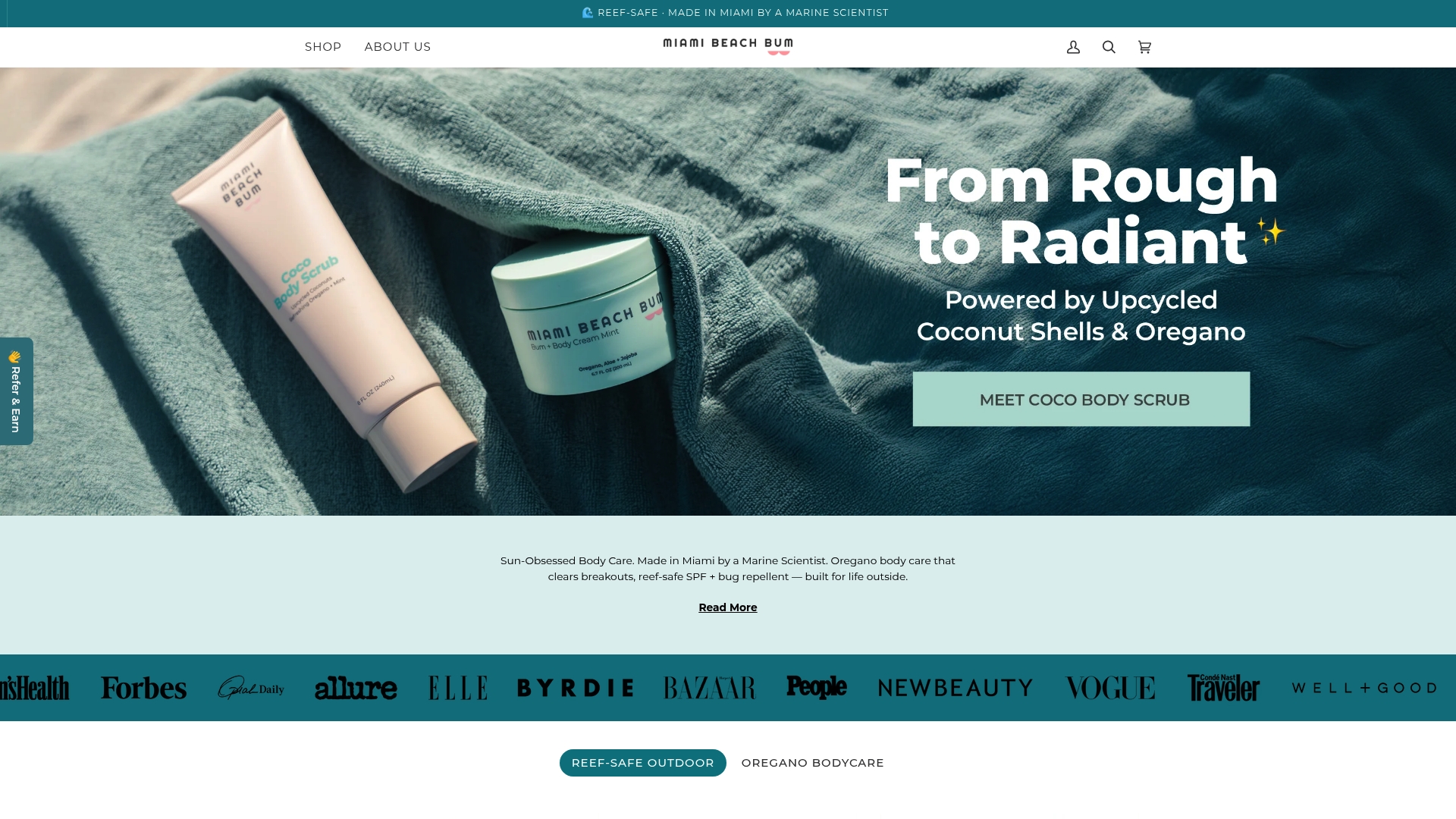
For sun protection before you hit the water, the Save Face SPF 50 Sheer Mineral Serum is a reef-safe mineral formula light enough to layer under a body moisturizer. Both products are made with the same science-forward approach behind the brand. If you want to try the full routine, the Bodycare Discovery Set includes travel-friendly sizes that cover every step.
Sources and further reading
- Binghamton University: New study explains why your skin feels tight at the beach
- MedicalXpress: New study explains why your skin feels tight at the beach: It’s the salt water
- StudyFinds: Why salt water dries out your skin
- Stanford University School of Engineering: Why does our skin feel tight after using a facial cleanser?
- Cleveland Clinic: Sunburn
- Mayo Clinic: Sunburn symptoms and causes
- MedlinePlus: Sunburn
- Miamibeachbum: After-Sun Skincare Ingredients to Know
- Miamibeachbum: Why Skin Prep Matters Before Tanning
- Fundamental Skin: Build a Minimal Effective Skincare Routine That Works