


Why skin prep matters before tanning
Skipping skin prep is the single most reliable way to end up with a patchy, short-lived tan. Whether you’re using a self-tanner or UV exposure, the condition of your skin at application time determines everything: color evenness, depth, and how long the result lasts before it fades.
Here’s why preparation makes the difference:
- Dead skin cells cause uneven DHA reaction. The active ingredient in self-tanners, dihydroxyacetone (DHA), reacts with amino acids in the outermost skin layer. Cells at the end of their life cycle shed within days, taking the tan with them unevenly.
- Product residues block absorption. Lotion, deodorant, and perfume sit on the skin’s surface and prevent DHA from making direct contact, leading to pale spots and streaking.
- Dry patches absorb more color. Rough areas like elbows and knees pull in tanning solution aggressively, turning darker than surrounding skin.
- Skin pH affects DHA chemistry. The skin’s natural pH of 4.5–5.5 is the optimal range for DHA to develop evenly. Alkaline skin from harsh soaps disrupts that reaction.
- Timing matters at every step. Exfoliating, moisturizing, and shaving each require specific lead times to let skin settle before tanning.
A clean, hydrated, product-free surface gives any tanning method its best shot at an even, lasting result.
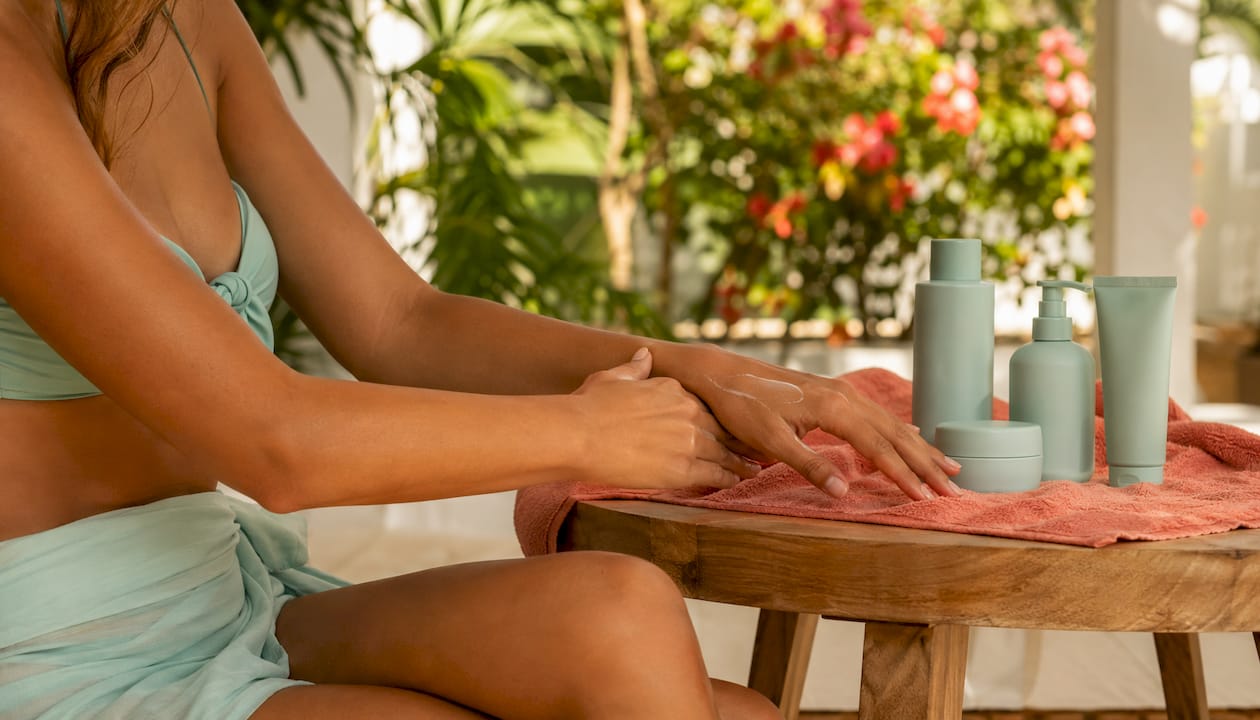
How to cleanse and exfoliate your skin before tanning
Exfoliation is the foundation of any good tanning prep routine. Skipping it is the most common cause of patchy, uneven, and fast-fading tans, because DHA develops on dead cells at different stages of their life cycle, which shed at different rates.
Physical vs. chemical exfoliation:
- Physical exfoliation (scrubs, mitts, loofahs) is the preferred method before tanning. A gentle, oil-free scrub like the Miamibeachbum Coco Body Scrub removes dead cells without leaving residue that blocks DHA.
- Chemical exfoliation (AHAs, BHAs, retinol) alters the skin’s surface pH and makes skin more reactive. Suspend these at least 48 hours before tanning.
- Timing: Exfoliate before tanning, allowing enough time for skin to settle; avoid exfoliating on the day of tanning to prevent uneven absorption, not on the day itself. Same-day exfoliation leaves skin sensitized and causes the solution to absorb unevenly.
- Focus on dry zones. Elbows, knees, ankles, and heels have thicker skin and absorb more product. Without extra attention here, these areas turn noticeably darker.
- Avoid fragranced or oil-based scrubs. Oil residue left on the skin blocks DHA contact and promotes patchy results.
- Rinse thoroughly. Any scrub particles or cleanser left on the skin act as a barrier at application time.
Pro Tip: Use a fragrance-free, sulfate-free body wash on the morning of your tan. Skip anything with added oils, shimmer, or heavy fragrance, since even rinsed residues from antibacterial or fragranced washes can disrupt tanning solution chemistry.
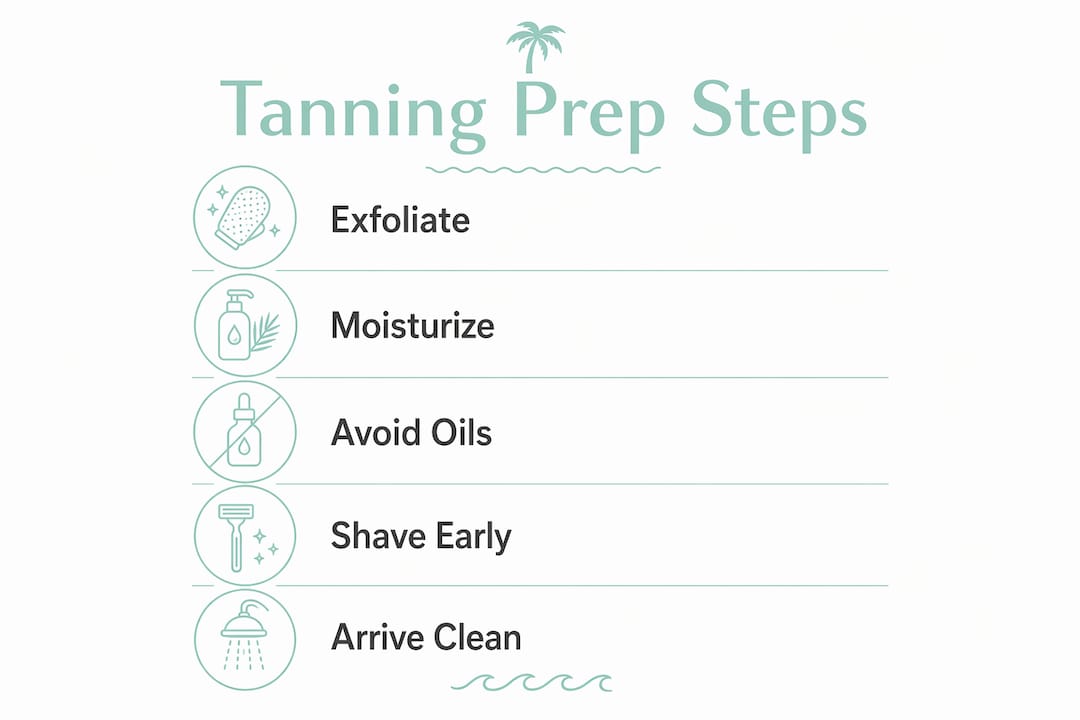
How to moisturize strategically before tanning
Hydration directly affects how evenly a tan develops and how long it lasts. Hydrated skin holds tans longer and fades more evenly than dry skin, which grabs color unevenly and sheds faster.
The rule: moisturize after exfoliation, then arrive at your tanning appointment with completely bare skin. Any lotion applied on tanning day creates a barrier that blocks DHA contact and causes streaking.
Moisturizing dos and don’ts:
- Do apply a generous, alcohol-free, oil-free, fragrance-free moisturizer immediately after exfoliating. Pay extra attention to elbows, knees, and heels. Check the right moisturizer ingredients to avoid anything that leaves a film.
- Do moisturize daily in the 1–3 days before your tan to build baseline hydration.
- Do drink water consistently. Skin hydrated from the inside holds color noticeably longer.
- Don’t apply any lotion, serum, or body oil on tanning day. Even a light layer disrupts DHA absorption.
- Don’t use oil-based moisturizers at any point in the prep window. Oil-based products leave residues that hinder DHA from absorbing properly.
- Don’t skip moisturizing after exfoliation. Exfoliation temporarily compromises the skin’s moisture barrier, and replenishing it is what allows DHA to develop evenly.
What you need to know about shaving before tanning
Hair removal timing is one of the most overlooked prep steps, and getting it wrong produces a very specific problem: small dark dots where the tanning solution seeps into open follicles.
- Shave well before tanning to allow follicles to close and skin to calm, preventing dotted or uneven tan patches. This gives follicles time to close and skin time to calm, preventing dotted, uneven patches.
- Wax at least 48 hours before. Waxing removes the top layer of skin along with hair, leaving the surface more sensitive and reactive.
- Never shave or wax on tanning day. Freshly groomed skin absorbs tanning agents unevenly and causes irritation.
- Avoid depilatory creams close to your appointment. The strong chemicals in hair removal creams interfere directly with DHA.
- Do not shave and exfoliate on the same day. Stagger them: shave one day, exfoliate the next, then rest before your appointment.
- Skip shaving after tanning. Shaving over a developed tan removes the top skin layer and shortens its lifespan significantly.
Timing your prep steps for the best results
Every prep step has an optimal window. Getting the timing right is what separates a tan that lasts from one that fades in patches within days.
| Prep Step | Timing Before Tanning | Why It Matters |
|---|---|---|
| Waxing | 48+ hours | Allows skin sensitivity to subside and surface to stabilize |
| Chemical exfoliants (AHAs/BHAs) | 48+ hours | Prevents pH disruption and surface reactivity |
| Physical exfoliation | 24–48 hours before tanning | Removes dead cells while giving skin time to settle |
| Shaving | 24+ hours before tanning | Allows follicles to close and redness to clear |
| Moisturizing | After exfoliation, not on tanning day | Hydrates skin without creating a barrier at application |
| Deodorant, perfume, lotion | Avoid on tanning day | Residues block DHA and cause uneven color |
| Clothing post-application | Loose, dark clothing immediately after | Prevents smudging and transfer while tan develops |
On tanning day, arrive with clean, completely product-free skin. No deodorant, no perfume, no makeup. The skin’s pH also shifts slightly throughout the day, so applying a pH-balancing prep spray before your session can reset the surface to the optimal acidic range for DHA to develop correctly.
Common mistakes that lead to uneven tanning
Most bad tans trace back to one or more of these errors, not the tanning product itself.
- Skipping exfoliation. DHA develops on dead cells that shed within days, producing a patchy, blotchy fade. Unexfoliated dry patches on elbows and knees absorb solution more aggressively and turn darker.
- Using oils or oil-based products before tanning. Oil sits on the skin’s surface and blocks DHA from making proper contact, causing light spots and uneven fading.
- Shaving or waxing too close to the appointment. Open follicles absorb tanning solution and create dark dots.
- Applying lotion or deodorant on tanning day. Even a thin layer creates a barrier. Deodorant in the underarm area produces pale, uneven patches.
- Using fragranced or antibacterial body washes right before tanning. Residues from these products disrupt tanning solution chemistry even after rinsing.
- Over-exfoliating or using chemical exfoliants too close to the appointment. This raises skin pH into the alkaline range, where DHA develops unevenly or not at all.
- Ignoring dry patches. Rough, dehydrated skin on heels, elbows, and knees absorbs color at a different rate than the rest of the body.
Pro Tip: If your skin feels tight or stripped after cleansing, that’s a sign the pH has been pushed alkaline. A pH-balancing prep spray applied before tanning can correct this and give DHA a stable surface to work on.
Skin type-specific tips for prepping before tanning
Different skin types need different approaches. A one-size routine produces one-size results, which often means uneven color on the areas your skin type handles poorly.
- Dry skin: Moisturize consistently for several days before tanning, not just the night before. Chronically dry skin absorbs DHA unevenly, especially on rough zones. Apply a generous alcohol-free moisturizer after exfoliating and focus extra product on elbows, knees, and heels.
- Oily skin: Thorough cleansing is the priority. Excess sebum and surface residue act like a barrier. Use a gentle, sulfate-free wash and avoid any oil-based products in the prep window.
- Sensitive skin: Stick to fragrance-free, alcohol-free products at every step. Exfoliate gently with a soft mitt rather than a coarse scrub, and give yourself the full 48-hour window between exfoliation and tanning to let any reactivity settle.
- Combination skin: Treat each zone according to its needs. Exfoliate oily areas thoroughly and apply extra moisture to dry patches. Uneven skin texture across zones is one of the main causes of uneven color.
- All skin types: Patch test any new product at least 48 hours before your tanning appointment. Apply a small amount to the inner arm and check for redness or irritation before using it across your full body.
The science behind DHA and why skin prep changes everything
DHA works through the Maillard reaction, a chemical process where DHA reacts with amino acids in the outermost dead skin layer to produce a brown pigment. The quality of that reaction depends entirely on the condition of the surface it encounters.
The principle shared by surgical skin prep and cosmetic tanning prep is the same: creating a clean, debris-free surface maximizes the efficacy of any topical agent applied to it. Surgical antisepsis research confirms that removing soil and surface microorganisms before applying an active agent is the foundation of consistent, predictable results.
Skin pH is the variable most people miss. The optimal range for DHA development is 4.5–5.5. Harsh soaps, over-exfoliation, and even excessive sweating push skin into the alkaline range, where DHA absorbs unevenly, fades faster, and produces patchy color. Professional tanning services often use pH-balancing sprays before application to reset the skin’s surface to this acidic range.
Residual products compound the problem. Deodorant, lotion, and perfume create chemical barriers that prevent DHA from reaching the amino acids it needs to react with. The result is pale, uneven patches in exactly the areas where those products were applied.
Get your skin tan-ready with Miamibeachbum
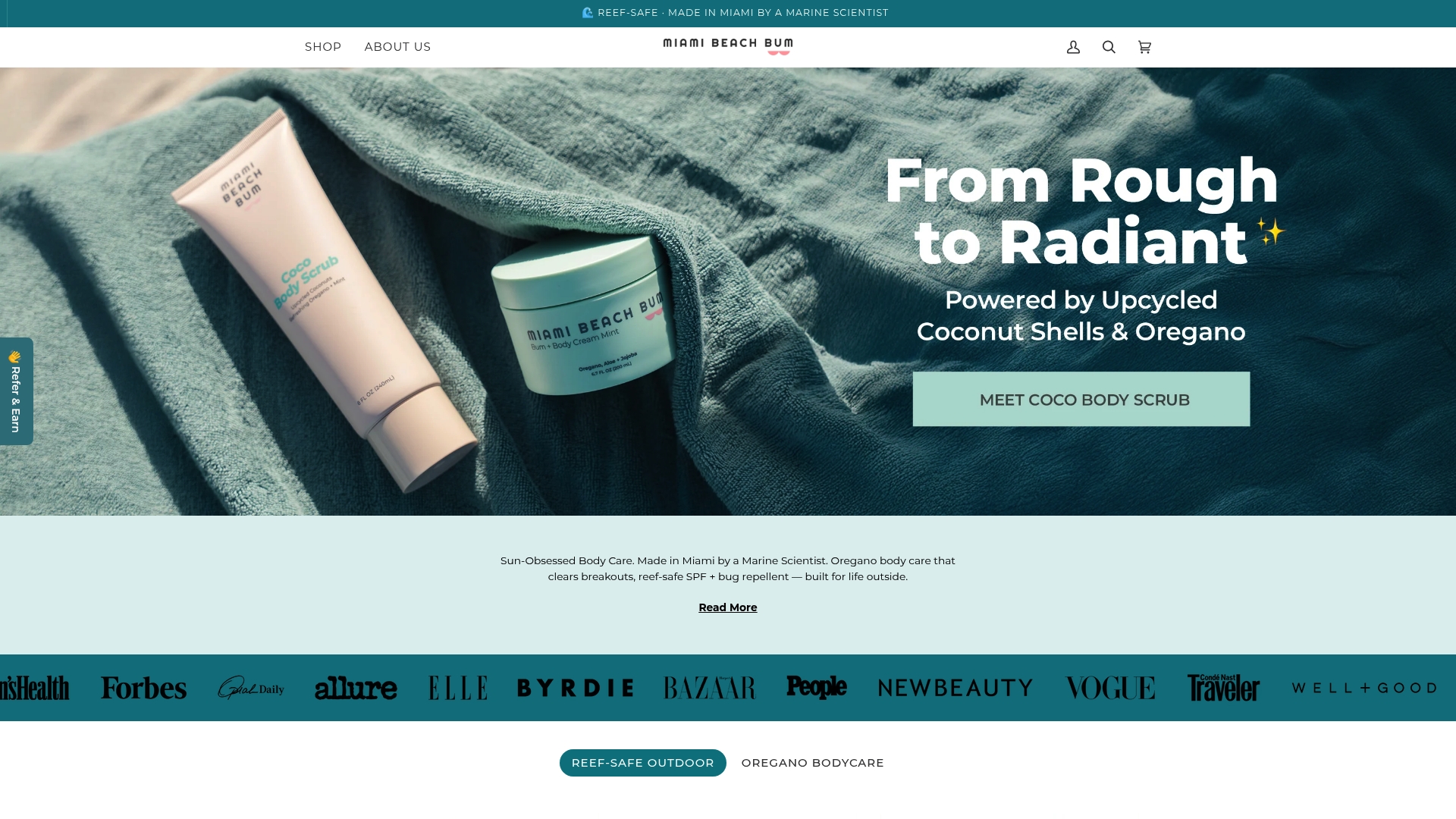
Miamibeachbum builds body care around the science of skin, not just the surface. The Bodycare Discovery Set gives you the full prep toolkit: clean formulas, no oils, no fragrance barriers, and ingredients that work with your skin’s chemistry rather than against it. For post-shave skin that needs calming before a tan, the Bum + Body collection addresses razor sensitivity and restores the skin barrier so your tan develops on a smooth, even surface.
Key Takeaways
Proper skin prep before tanning requires exfoliation 24–48 hours out, moisturizing after exfoliation but not on tanning day, and arriving with completely product-free skin at the optimal pH of 4.5–5.5.
| Point | Details |
|---|---|
| Exfoliate before tanning, allowing enough time for skin to settle; avoid exfoliating on the day of tanning to prevent uneven absorption. | Removes dead cells so DHA reacts with fresher skin, reducing patchiness and extending tan life. |
| Skip all products on tanning day | Lotion, deodorant, and perfume block DHA absorption and cause pale spots or streaking. |
| Shave well before tanning to allow follicles to close and skin to calm, preventing dotted or uneven tan patches. | Allows follicles to close and prevents dark dotted patches from tanning solution seeping in. |
| Maintain skin pH in an acidic range optimal for tanning; avoid practices that cause alkaline shifts which disrupt tan development. | Alkaline skin from harsh soaps disrupts DHA development; pH-balancing sprays can correct this. |
| Moisturize after exfoliation | Replenishes the skin barrier so DHA develops evenly and the tan fades uniformly. |