What are the most effective after-sun skincare ingredients?
The most effective after-sun skincare ingredients are aloe vera, glycerin, vitamin E, bisabolol, Centella Asiatica, ceramides, peptides, panthenol, chamomile, and Honey Bee Defensin-1. Each one targets a specific part of what UV exposure does to skin: moisture loss, inflammation, oxidative stress, and barrier breakdown. Knowing which ingredient does what helps you choose products that actually work, not just feel good for five minutes.
Tocopherol (vitamin E) and its derivatives appear in over 77 of 84 after-sun products analyzed in a published market study, making it the most widely used active in the category. Aloe vera follows as a very common ingredient in after-sun products. That prevalence reflects real clinical backing, not just marketing tradition.
Key ingredient categories at a glance:
- Humectants (aloe vera, glycerin, hyaluronic acid): pull moisture back into dehydrated skin
- Antioxidants (vitamin E, green tea polyphenols, vitamin C): neutralize free radicals generated by UV exposure
- Anti-inflammatories (bisabolol, centella asiatica, chamomile): calm redness and reduce swelling
- Barrier repairers (ceramides, squalane, peptides): rebuild the lipid layer UV exposure degrades
- Wound-healing actives (panthenol, Honey Bee Defensin-1): accelerate tissue recovery and protect against infection
The American Academy of Dermatology recommends applying a moisturizer containing aloe vera or soy to sunburned skin while it is still damp, which points directly to the humectant and anti-inflammatory categories above.
Detailed profiles of the top post-sun care ingredients
1. Aloe vera
Aloe vera is the most recognized soothing ingredient in after-sun care, and the science backs the reputation. Its gel contains polysaccharides that form a film on the skin surface, slowing water loss while delivering a cooling sensation. Clinical and in vivo studies confirm its soothing and barrier-support properties. One distinction worth knowing: real aloe extract (listed as Aloe barbadensis leaf juice) behaves differently from aloe fragrance additives, which offer no therapeutic benefit.
2. Glycerin
Glycerin is a humectant that draws water from the air and deeper skin layers to the surface. On UV-stressed skin, where transepidermal water loss accelerates, glycerin helps restore surface hydration quickly. It is compatible with nearly every other active ingredient, which is why it appears in both lightweight gels and richer recovery lotions.
3. Vitamin E (tocopherol)
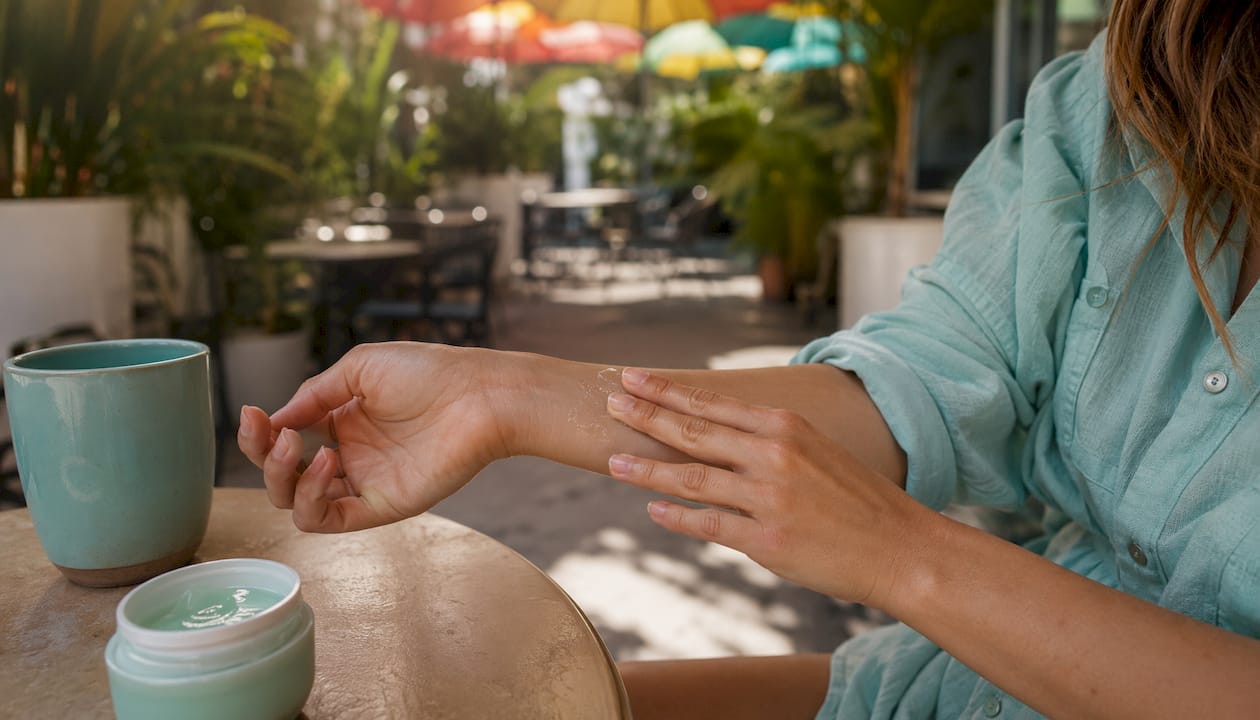
Antioxidants like vitamin E help neutralize free radicals generated by UV exposure, reducing oxidative stress that would otherwise accelerate cellular damage and visible aging. Tocopherol also supports the skin’s lipid barrier, which UV radiation degrades. Its oil-soluble nature makes it a natural fit for emollient-rich formulas designed for the later stages of sunburn recovery.
4. Bisabolol
Bisabolol is a naturally derived compound found in chamomile. It inhibits pro-inflammatory markers in the skin, reducing visible redness and sensitivity after sun exposure. Its gentle profile makes it a reliable choice for sensitive skin formulations, and it works well alongside other actives without causing irritation.
5. Centella Asiatica
Centella Asiatica, often labeled “cica,” supports collagen production and helps restore barrier function, two processes that UV exposure directly disrupts. Encapsulated Centella Asiatica delivers active compounds deeper into the skin with more controlled release than standard versions, preserving efficacy until the point of absorption. This makes encapsulated forms meaningfully more effective in after-sun formulations.
6. Panthenol (vitamin B5)
Panthenol was identified in 15 of 84 after-sun products in the same market analysis that tracked vitamin E prevalence. It converts to pantothenic acid in the skin, where it supports wound healing, deep hydration, and tissue repair. It is water-soluble, which makes it easy to incorporate into gels and lightweight lotions suited for the first 24 hours post-sun.
7. Ceramides and peptides
Ceramides are lipids that make up roughly half of the skin’s outer barrier. UV exposure depletes them, leaving skin permeable and reactive. Replenishing ceramides through topical application helps seal the barrier and reduce sensitivity. Peptides and ceramides ease inflammation, improve barrier and cell health, and aid in moisture retention. Amino acids and peptides appeared frequently among the after-sun products in the Springer market analysis, with acetyl hexapeptide-1 being the most frequently detected.
8. Chamomile (Chamomilla recutita)
Chamomile extract is a powerful antioxidant that also calms inflammation and supports cell renewal. It appeared in 26 of 84 after-sun products in the published market study. Its active compound, bisabolol, is often extracted and used independently, but the full chamomile extract brings additional polyphenols that contribute to free radical defense.
9. Honey Bee Defensin-1
Honey Bee Defensin-1 is a naturally occurring peptide found in honey. It combines antibacterial action with skin-repairing support, which is particularly useful when the skin barrier is compromised after sun exposure. It promotes skin regeneration and helps retain moisture, addressing both the hygiene risk and the hydration deficit that sunburned skin faces.
10. Marine ingredients: Laminaria and ectoine
Marine-derived ingredients are a newer category in after-sun care. Laminaria sp. extracts appeared in a smaller subset of products in the Springer analysis, and ectoine, derived from marine algae and bacteria, appeared in some products. Laminaria extracts help counteract melanin dysregulation and support skin recovery from photodamage. Ectoine attenuates DNA damage caused by UV radiation, targeting a mechanism that most botanical ingredients do not reach.
| Ingredient | Primary function | Evidence level |
|---|---|---|
| Aloe vera | Cooling, hydration, mild anti-inflammatory | Clinical and in vivo |
| Glycerin | Humectant, moisture retention | Clinical |
| Vitamin E | Antioxidant, barrier lipid support | In vitro, in vivo |
| Bisabolol | Anti-inflammatory, soothing | In vitro, clinical |
| Centella Asiatica | Barrier repair, collagen support | In vitro, in vivo |
| Panthenol | Wound healing, deep hydration | In vivo, clinical |
| Ceramides | Barrier rebuilding, permeability control | Clinical |
| Peptides | Barrier health, inflammation reduction | Clinical |
| Chamomile | Antioxidant, anti-inflammatory | In vitro, in vivo |
| Honey Bee Defensin-1 | Antibacterial, skin regeneration | In vitro |
| Laminaria sp. | DNA repair support, melanin regulation | In vitro, in vivo |
What should you avoid immediately after sun exposure?
Several common skincare actives become harmful on UV-stressed skin. Strong actives like retinoids, AHAs, BHAs, alcohol, and heavy fragrances should be avoided immediately after sun exposure because they irritate and delay healing on a compromised barrier. Retinol on freshly burned skin essentially adds chemical irritation on top of UV damage. Exfoliating acids accelerate peeling before the skin is ready, increasing infection risk.
Safe vs. risky ingredients post-sun:
- Safe: aloe vera, glycerin, hyaluronic acid, ceramides, panthenol, bisabolol, centella asiatica, vitamin E, chamomile
- Avoid: retinoids, AHAs (glycolic, lactic acid), BHAs (salicylic acid), alcohol-based toners, heavy synthetic fragrances, benzocaine and similar “-caine” topicals
The Mayo Clinic specifically warns against products containing benzocaine, which can irritate sunburned skin and has been linked to methemoglobinemia, a serious condition that reduces the blood’s oxygen-carrying capacity.
Harmful physical practices compound the problem. Applying ice directly to burned skin causes secondary damage, as does popping blisters, which removes the protective layer the body forms to prevent infection. Picking at peeling skin pulls away barrier tissue before new cells are ready. The American Academy of Dermatology advises leaving blisters intact and applying petroleum jelly to protect them while they heal.
How to use after-sun skincare products effectively
A phased approach produces the best results. Starting with cooling, high-moisture gels within the first 24 hours rapidly reduces skin temperature and inflammation. A high-percentage aloe vera gel or a centella-rich water gel applied to damp skin delivers immediate relief and slows water loss. After 24–72 hours, once the acute inflammation subsides, transitioning to lipid-rich lotions containing ceramides and squalane helps mitigate transepidermal water loss and rebuild the barrier. This two-stage structure mirrors how the skin itself recovers: first cooling and calming, then structural repair.
Application tips by recovery phase:
- Hours 0–24: Apply a cooling gel (aloe vera, centella asiatica, panthenol) to damp skin after a cool shower. Reapply whenever skin feels tight or hot.
- Hours 24–72: Introduce a ceramide-rich lotion or cream. Layer over a thin humectant base if skin is still reactive.
- Day 3 onward: Resume a gentle moisturizer with barrier-supporting ingredients like shea butter and ceramides. Avoid actives until peeling is complete.
Gel formulations absorb faster and feel lighter on hot, inflamed skin, making them the right delivery system for the first phase. Creams and lotions, with their higher lipid content, suit the repair phase better. The distinction between after-sun formulations and standard moisturizers centers on lighter textures, cooling actives, and anti-inflammatory ingredients that regular body lotions typically omit.
Pro Tip: Cool your after-sun gel in the refrigerator before applying. The drop in temperature provides immediate relief and slows the inflammatory response more effectively than room-temperature application.
For mild to moderate sunburn, the Mayo Clinic recommends applying 1% hydrocortisone cream up to three times a day for three days to reduce inflammation, alongside consistent moisturizing. Drinking extra water is equally important: sunburn draws fluid to the skin’s surface, accelerating dehydration throughout the body.
What dermatologists and researchers say about after-sun care
The clinical consensus on after-sun products is clear and worth stating plainly: these products soothe and hydrate, but they do not reverse deep sun damage. Understanding that boundary helps set realistic expectations and guides smarter product choices.
Experts confirm that after-sun products serve a supportive role, not a reparative one. The antioxidant activity of vitamin E and polyphenols helps neutralize free radicals that continue damaging cells after UV exposure ends, but this is mitigation, not reversal. Barrier repair through ceramides and squalane reduces the window during which skin remains permeable and reactive, which has real downstream benefits for long-term skin health.
The Springer Nature analysis of 84 after-sun products found that amino acids and peptides, alongside aloe vera, carry the strongest clinical evidence of any ingredient category in the space. That finding aligns with dermatologist recommendations that consistently prioritize humectants and barrier-repair actives over more exotic or trending ingredients. You can explore common beauty myths debunked by science if you want more context on what after-sun care can realistically deliver.
Multi-stage management, with early emphasis on cooling hydration and later focus on lipid-rich barrier repair, reflects both the science of skin recovery and the practical experience of dermatologists who treat sunburn regularly. The SPF and skincare connection matters here too: burned skin still needs sun protection the following day, since damaged skin is more photosensitive, not less.
Key Takeaways
Aloe vera, vitamin E, ceramides, and peptides carry the strongest clinical evidence for soothing and repairing UV-stressed skin, but no after-sun product reverses deep sun damage.
| Point | Details |
|---|---|
| Vitamin E prevalence | Tocopherol and derivatives appear in over 70% of after-sun products analyzed in published research. |
| Phased application | Use cooling gels in the first 24 hours, then switch to ceramide-rich lotions from 24–72 hours onward. |
| Ingredients to avoid | Retinoids, AHAs, BHAs, alcohol, and heavy fragrances delay healing on compromised post-sun skin. |
| Encapsulation advantage | Encapsulated Centella Asiatica delivers active compounds deeper and more consistently than standard forms. |
| Realistic expectations | After-sun products soothe and hydrate; they do not repair deep UV damage, per dermatologist consensus. |
Miamibeachbum formulates with the beach in mind and the science to back it up. If you are building a post-sun routine that actually holds up, the Bum + Body collection covers the barrier-repair phase with body care built for skin that has been through a long day in the sun. For a full introduction to what Miamibeachbum puts into its formulas, the Bodycare Discovery Set is the clearest starting point.