


Reapply sunscreen at least every two hours during any sun exposure. That baseline shrinks fast: swimming, heavy sweating, or towel drying strips product off skin immediately, so reapply right after, not on the two-hour clock. A higher SPF number doesn’t buy extra time between applications. SPF 50 still needs the same reapplication schedule as SPF 30.
TL;DR:
- Reapply sunscreen immediately after swimming, towel drying, or heavy sweating, rather than waiting for the two-hour mark, to maintain effective protection.
- Using multiple coats or layers can increase protection by up to three times, mainly by covering gaps missed during initial application.
- Reapplication frequency should vary based on activity, with indoor exposure requiring every four to six hours and high-friction outdoor sports needing refreshes every 40 to 80 minutes.
- Applying the correct amount, about one ounce for full body and a small dollop for the face, and rubbing it fully into the skin enhances actual SPF performance.
- Water-resistant labels set a maximum duration, not an absolute guarantee; towel drying and friction remove protection faster than water alone.
Table of Contents
- Why Sunscreen Reapplication Frequency Matters More Than SPF Number
- When to Reapply Sunscreen: A Scenario-by-Scenario Timetable
- How to Reapply Sunscreen the Right Way
- Reapplying Sunscreen Over Makeup Without Ruining It
- What “Water-Resistant” and SPF Labels Actually Mean
- Common Sunscreen Reapplication Mistakes and How to Fix Them
- Practical How-Tos Behind the Bum: Applying the Research
- Sunscreen Reapplication at High Altitude and on Reflective Surfaces
- Reapplication Guidance for Children and Sensitive Skin
- Do Clothing and Shade Reduce How Often You Need to Reapply?
- Making the Two-Hour Rule Actually Work in Real Life
- Where Miamibeachbum Fits Into Your Reapplication Routine
- Sources
- FAQ
Why Sunscreen Reapplication Frequency Matters More Than SPF Number
Sunscreen isn’t a coat of paint that stays put once it dries. It’s a thin film sitting on top of skin, and that film breaks down from friction, sweat, water, and simple time passing. The American Academy of Dermatology recommends reapplying at least every two hours specifically because the film thins out well before most people notice.
SPF measures how much protection a product provides while it’s actually sitting on skin at the tested thickness. It says nothing about how long that layer survives contact with a towel, a pool, or a gym mat. Research on sunscreen thickness dynamics shows the film degrades on skin over time, following a pattern closer to gradual decay than a sudden drop off, which is why timed touch-ups work better than waiting for visible signs of wear.
Here’s the detail most people miss entirely:
- A study on multiple sunscreen applications found that a second coat can boost on-skin protection by up to 3.1 times compared with a single application.
- That gain doesn’t come from more SPF. It comes from covering gaps the first layer missed.
- The American Academy of Dermatology’s own guidance points to user error, not product failure, as the leading cause of sunburn.
Pro Tip: Most sunburns happen not because sunscreen “stopped working,” but because too little went on in the first place. A second layer early in your day fixes more than a strict two-hour countdown ever will.
When to Reapply Sunscreen: A Scenario-by-Scenario Timetable
The two-hour rule is your default setting, not your only setting. Certain activities remove sunscreen instantly, and no clock matters once that happens.
Swimming, heavy sweating, and towel drying all call for immediate reapplication, according to American Cancer Society guidance. Waiting out the full two hours after a swim is the single most common reapplication mistake beachgoers make.
Indoor sun exposure gets treated too casually. Sitting near a bright window for a long stretch, especially during a commute or a desk job with strong afternoon light, still exposes skin to UVA rays through glass. The Skin Cancer Foundation recommends reapplying every four to six hours in that setting, or whenever you step outside and back in.
Short outings deserve more thought than they usually get. A ten-minute dog walk feels too brief to matter, but if you’re heading back out again within the hour, that second trip should trigger a touch-up rather than relying on a morning application to cover the whole day.
Here’s how the main scenarios stack up:
| Scenario | Reapply timing |
|---|---|
| General outdoor sun exposure | Every 2 hours |
| Swimming | Immediately after exiting water |
| Heavy sweating or workouts | Immediately after, or as soon as practical |
| Towel drying | Immediately after drying off |
| Near windows or indoor bright light | Every 4 to 6 hours |
| High-friction sports (running, cycling) | As often as every 40 to 80 minutes depending on wear |
| Brief errands with repeat outdoor trips | Before each additional trip outside |
Abrasion from a wetsuit, a running belt, or repeated hand-drying wears through the film faster than a calm beach day ever would.
The practical rule: match your reapplication to what your skin is actually doing, not just what the clock says. A person lounging under an umbrella and a person training outdoors for two hours are on completely different timelines, even if they applied the same product at the same time that morning.
How to Reapply Sunscreen the Right Way
Getting the timing right does nothing if the application itself is thin or incomplete. Consumer testing from outlets like Wirecutter consistently finds that most people apply far less than the amount used in official SPF testing, which means real-world protection often falls short of the number on the bottle.
- Measure roughly 1 ounce for full-body coverage, about a shot glass worth, for an average adult in a swimsuit. Face and neck need a separate, smaller amount, closer to a nickel-sized dollop.
- Apply 15 to 30 minutes before heading outside. Research on sunscreen timing shows this window gives the product time to settle into skin rather than sitting on the surface where it rubs off in the first few minutes of activity.
- Rub creams in fully. Don’t leave visible white streaks or thick patches. Uneven coverage is one of the biggest gaps between lab-tested SPF and what your skin actually gets.
- For sprays, use a generous pass, roughly six seconds per limb, then rub or smooth the mist into skin. Spraying alone and walking away leaves gaps a light breeze can widen.
- Consider a two-coat touch-up within your first hour outside. That early second layer catches spots the first pass missed and lines up with the protection gains found in multiple-application research.
- Layer sunscreen under, not mixed into, moisturizer or makeup-friendly serums. Blending products together dilutes the film thickness that SPF testing depends on.
Pro Tip: If you’re using a spray, hold it close enough that you can see product landing on skin, not just misting into the air around you. Then rub it in exactly like a cream. Sprays that never get touched are the most common source of missed coverage.
For a closer look at spray technique specifically, this 6-second-per-limb method breaks down how to get real coverage without soaking your towel. And if you’re combining sunscreen with a daily lotion routine, layering order matters more than most people realize, covered in this guide on how to layer sunscreen and body lotion correctly.
Reapplying Sunscreen Over Makeup Without Ruining It
Rubbing a cream sunscreen into a full face of makeup is a nonstarter, so the workaround has to change with the product, not the schedule.
- SPF setting sprays designed specifically for reapplication are the most reliable option. Look for one meant to sit over makeup rather than a general body spray.
- Mineral SPF powders work well for oily skin types and touch-ups on the go, though they tend to offer lighter coverage than a spray or serum.
- Sheer mineral serums disturb makeup the least when patted rather than rubbed, making them a solid pick for anyone worried about smudging foundation.
- Blot first, then mist or dust in short bursts rather than one heavy pass, and pat gently to distribute instead of rubbing.
- Test compatibility with your foundation before a big day. Some formulas pill or streak over certain bases, and it’s better to find that out at home than at the beach.
Miamibeachbum’s Save Face SPF 50 sheer mineral serum was built for exactly this kind of layering, but the technique matters as much as the product. For a full walkthrough, the six-step routine for reapplying spray sunscreen over makeup covers the order of operations in more detail, and this piece on working SPF into a daily makeup routine is worth a read if you wear SPF under makeup most days.
What “Water-Resistant” and SPF Labels Actually Mean
“Water-resistant” is not a synonym for waterproof, and no sunscreen sold today claims to be waterproof. The FDA’s own overview of sunscreen testing explains that water-resistance claims are based on specific test windows, typically 40 or 80 minutes of water exposure, after which the product’s protective performance is measured again.
That distinction matters because it sets a hard ceiling on how long you can rely on a water-resistant label before reapplying, and that ceiling has nothing to do with SPF value:
- A “40-minute water-resistant” product is tested to that specific window, not indefinitely.
- An “80-minute water-resistant” product buys you roughly double that swim time before performance was verified to hold.
- Neither claim means the product survives towel drying afterward. Friction from a towel removes far more product than water alone.
Here’s the myth that refuses to die: SPF 50 does not mean 50 minutes of protection. SPF measures the fraction of UV rays a product blocks while it’s intact on skin, not a countdown timer. An SPF 50 product left untouched in ideal conditions could theoretically protect for hours, but sweat, water, sand, and friction end that theoretical window long before the two-hour mark in most real situations. Houston Methodist’s guidance on reapplication makes the same point: water-resistant labels are relative, not absolute, and swimmers and athletes should reapply after drying off even when their product claims 80-minute resistance.
The practical takeaway for anyone swimming or working out: dry off, then reapply, regardless of how much time is left on the water-resistance window. Toweling off does the damage water-resistance testing didn’t account for.
Common Sunscreen Reapplication Mistakes and How to Fix Them
Most sunburns trace back to a handful of repeatable errors rather than bad luck or a weak product.
- Applying too little. The gap between tested SPF and real-world protection comes almost entirely from under-application. One thin pass rarely delivers the coverage printed on the label.
- Skipping ears, the back of the neck, the tops of feet, and hands. These spots burn constantly because they’re easy to forget and get direct sun at odd angles.
- Not reapplying after toweling off. This is the single most avoidable miss at the beach or pool, since drying removes product mechanically regardless of the water-resistance rating.
- Trusting a morning application to last all day. One layer at 8 AM does not protect through a full afternoon outside.
- Relying on a spray mist without rubbing it in. A fine mist that sits on the surface without being distributed leaves thin patches a breeze can worsen.
Watch for red flags that mean “reapply now” regardless of the clock: visible rubbing off on clothing, heavy sweat beading on skin, sand or towel abrasion, or a fading sheen where the product used to sit visibly on the surface.
A few habit hacks make this realistic instead of aspirational. Keep a travel-size sunscreen in your bag or car so reapplication doesn’t depend on remembering to bring the full bottle. Time touch-ups to natural breaks, lunch, a halftime, a rest stop, rather than trying to track exact minutes. A phone reminder set for two hours works better than intention alone. For related habits worth breaking, this rundown of common skincare and sunscreen combo mistakes covers a few more that quietly undercut protection.
Pro Tip: A touch-up within your first hour outside, before you feel like you need one, catches the spots your first application missed and measurably improves how evenly you’re covered for the rest of the day.
Practical How-Tos Behind the Bum: Applying the Research
There are guides available on reapplication technique that align with the clinical guidance covered here, not to replace it. The step-by-step routine for reapplying spray sunscreen over makeup walks through blotting, misting, and patting in an order that keeps foundation intact while still delivering full coverage.
The six-seconds-per-limb spray method exists because spray sunscreens fail more often from under-application than from any flaw in the formula itself, echoing the same under-application pattern dermatologists point to as the leading cause of sunburn. And the guide on layering sunscreen with body lotion addresses a question that comes up constantly: whether mixing products dilutes protection. It does, which is why order and timing matter as much as the products themselves.
Each of these routines maps directly back to the two-hour baseline and the immediate-reapplication triggers dermatology groups recommend. The goal isn’t a different set of rules for makeup wearers or spray users. It’s the same rules, adapted to a format that actually gets used consistently.
Sunscreen Reapplication at High Altitude and on Reflective Surfaces
Snow, water, and sand don’t just fail to block UV rays. They bounce them back at skin from angles sunscreen applied for direct overhead sun doesn’t always anticipate. Reflected light hits the underside of a chin, the inside of a nostril, or the back of a knee in ways flat ground rarely does.
High altitude compounds the problem. Thinner atmosphere at elevation lets more UV radiation through, and skiers and hikers routinely underestimate their exposure because cold air feels protective when it isn’t. On a snowy slope, reapplication every two hours still applies, but the case for a two-coat start is stronger, since reflected glare off snow adds exposure on top of direct sun.
Water and sand work the same way, at a lower intensity. A day at the beach means UV exposure from above, plus reflection off the water and the sand itself, plus the near-certainty of swimming and toweling off at some point. That combination is exactly why beach days deserve reapplication checkpoints tied to activity, not just the clock, hopping out of the water, drying off, resettling on a towel, each one is its own trigger.
The practical fix is the same across every reflective environment: treat the two-hour rule as a maximum, not a target, and reapply sooner whenever glare, altitude, or water exposure stack on top of direct sun.
Reapplication Guidance for Children and Sensitive Skin
Kids need the same two-hour baseline adults do, but they blow through it faster. Sweat, water play, sand, and constant hand-to-face contact remove sunscreen from a child’s skin quicker than from an adult standing still, so reapplication after any swim break or towel-off matters even more for younger skin.
Mineral formulas built around zinc oxide or titanium dioxide tend to sit better on sensitive and reactive skin than chemical filters, since they work by sitting on the surface rather than being absorbed. That’s worth knowing for anyone with eczema, rosacea, or a history of reacting to fragranced sunscreens. A gentler formula doesn’t mean a longer interval between applications, though. Sensitive skin still degrades under sun, sweat, and friction at the same rate as any other skin type.
Parents managing sunscreen for kids at the pool or beach often find that a scheduled reapplication, tied to specific breaks rather than a running mental clock, works far better than trying to track elapsed time while also watching swimmers. A resource worth a look for anyone managing sun protection for young children is this guide on avoiding common first-time parent mistakes, which touches on sun safety alongside broader early-parenting routines.
Do Clothing and Shade Reduce How Often You Need to Reapply?
Clothing changes the equation more than shade does. A tightly woven shirt or a rash guard blocks a meaningful share of UV rays outright, which means skin underneath it needs far less frequent reapplication than exposed skin nearby, sometimes none at all during a short outing if the fabric is dense enough.
Shade is less reliable than it feels. Sitting under a beach umbrella or a tree cuts direct exposure, but reflected UV off sand, water, or pavement still reaches skin, and a breeze or shifting sun angle can expose parts of the body that felt covered minutes earlier. Shade reduces intensity; it doesn’t reset the clock to zero.
The practical rule: exposed skin, whether in full sun or partial shade, stays on the two-hour baseline. Skin fully covered by opaque, sun-protective fabric can go longer between reapplications, but the moment that clothing comes off, damp shirt, rolled-up sleeves, swapped shorts, the two-hour countdown effectively restarts for that skin.
Making the Two-Hour Rule Actually Work in Real Life
The two-hour rule is easy to state and hard to live by, which is exactly where most sun protection advice falls apart. Commuters get maybe thirty seconds of sun crossing a parking lot and skip reapplication because it feels pointless, until those thirty-second exposures add up across a week of summer. Makeup wearers avoid touch-ups because rubbing in a cream ruins their whole look, so they simply skip it rather than find a compatible alternative.
The fix isn’t stricter discipline. It’s matching the method to the moment: sprays and powders for makeup days, a travel tube in every bag, a reminder tied to lunch or a meeting break rather than a strict two-hour alarm nobody checks. Carry what you’ll actually use, and schedule reapplication around your day instead of an arbitrary clock.
— Ayssa
Where Miamibeachbum Fits Into Your Reapplication Routine
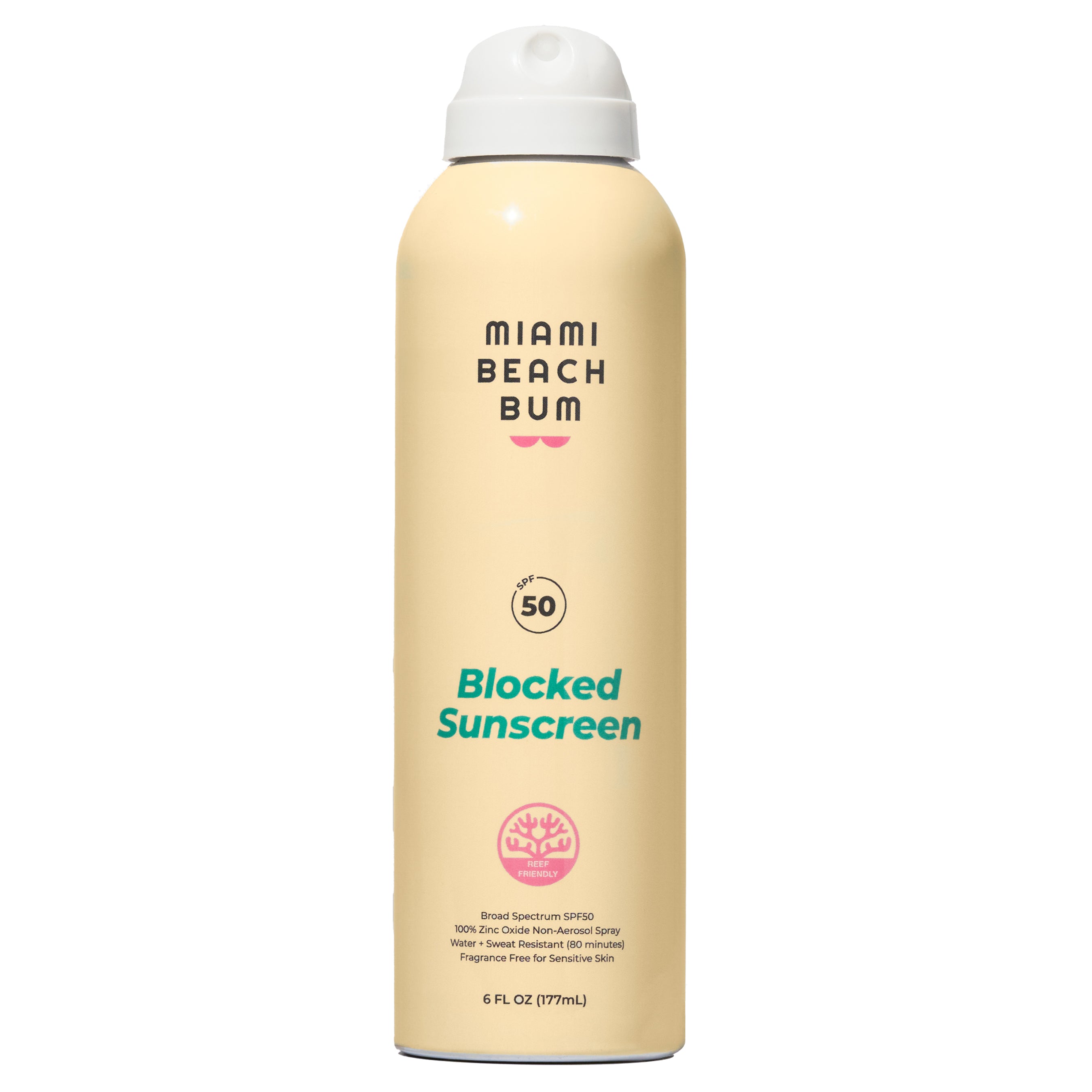
Reapplying every two hours only works if the product on hand makes it easy, and that’s the gap most sunscreen routines fall into. Blocked SPF50 is built for exactly the full-body touch-ups this article walks through, easy to rub in fully rather than leaving the streaky, thin coverage that undercuts real protection.
For face touch-ups over makeup, Save Face SPF 50 sheer mineral serum was designed to layer without disturbing foundation, which solves the exact problem covered in the makeup section above. If you want to build a full reapplication kit without guessing what to buy first, the Bodycare Discovery Set bundles starter sizes so you can find what fits your routine before committing to full bottles. Reapplication only becomes a habit when the product is already in your bag, not back home in a cabinet. Start with a travel-friendly set and build the two-hour habit around it.
This article is general information, not a substitute for advice from a qualified doctor. Consult a qualified healthcare professional about your own circumstances before acting on anything here.
Sources
- How to apply sunscreen — American Academy of Dermatology
- How to use sunscreen — American Cancer Society
- Sunscreen: How to help protect your skin from the sun — FDA
- Multiple application benefits study — PMC
FAQ
How often do I really need to reapply sunscreen?
At least every two hours during any sun exposure, and immediately after swimming, heavy sweating, or towel drying, according to the American Academy of Dermatology.
What happens if I don’t reapply sunscreen every two hours?
Protection thins as the sunscreen film degrades from friction, sweat, and time, which raises the risk of sunburn even if you applied a strong SPF that morning.
Does SPF 50 mean I only need to reapply every 50 minutes?
No. SPF measures how much UV radiation a product blocks while intact on skin, not a countdown timer, so SPF 50 still follows the standard two-hour reapplication rule, or sooner after water or heavy sweat.
How often should I reapply sunscreen when swimming?
Reapply immediately after getting out of the water and drying off, regardless of whether your product is labeled water-resistant for 40 or 80 minutes, since towel drying removes product mechanically.
Can a mineral serum or powder replace a full sunscreen reapplication over makeup?
Yes, for makeup-friendly touch-ups, sheer mineral serums like Save Face SPF 50 or SPF setting sprays and powders work well when blotted and patted in rather than rubbed, keeping foundation intact while restoring protection.