


Use about 1 ounce, roughly a full shot glass, to cover exposed skin from head to toe, and about 1 teaspoon, a nickel-sized dollop, for your face, neck, and ears. That’s the amount tested to deliver the SPF printed on the bottle. Reapply at least every two hours, and immediately after swimming, toweling off, or heavy sweating. Most people use far less than this, which is why sunburns happen even with high-SPF products.
TL;DR:
- Applying less than two milligrams per square centimeter significantly reduces the SPF protection, often resulting in SPF 15 or lower in real-world use.
- Most people underestimate the amount needed, typically using only half to a third of the recommended coverage, increasing sunburn risk despite high SPF labels.
- Reapplication should occur at least every two hours, ideally starting 15 to 30 minutes after initial application, especially after swimming or heavy sweating.
- Common missed spots include ears, hairline, back of the neck, and tops of feet, requiring extra attention with a mirror or another person’s help.
- Practicing measurement techniques, like the two-finger and shot-glass methods, helps ensure enough sunscreen is applied for proper protection.
Table of Contents
- How Much Sunscreen Should You Actually Apply?
- When Should You Apply and Reapply Sunscreen?
- How Do You Measure Sunscreen Correctly?
- What Mistakes Are Sabotaging Your Sunscreen?
- What Does a Sun Care Specialist Say About Getting the Dose Right?
- Why Most Sunscreen Advice Undersells the Measurement Problem
- Get the Right Coverage With Blocked SPF50
- Sources
- FAQ
How Much Sunscreen Should You Actually Apply?
Sunscreen SPF ratings come from a lab test that applies product at exactly 2 milligrams per square centimeter of skin. That’s the only amount at which the labeled number means anything. Apply less, and you’re not getting SPF 50. You might be getting something closer to SPF 15 or 20, depending on how thin your layer is.
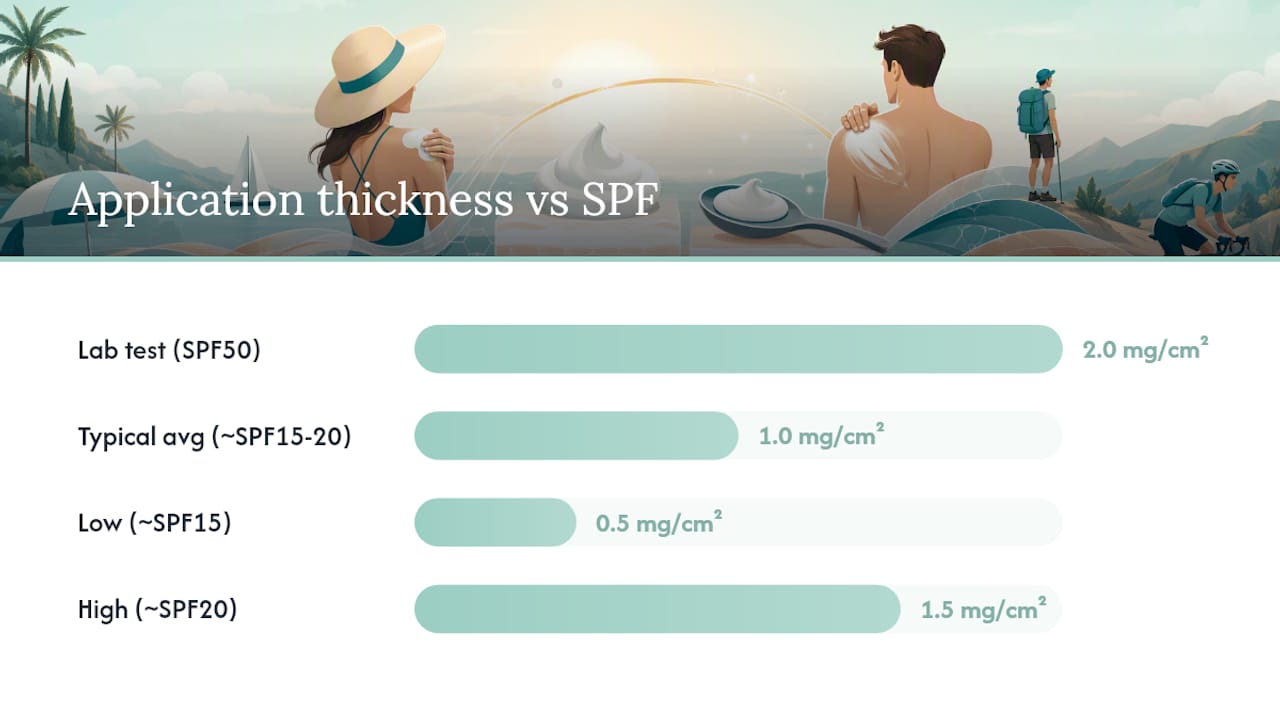
The gap between the lab standard and real life is significant. Research shows the average person applies somewhere between 0.5 and 1.5 milligrams per square centimeter, less than half the tested thickness in many cases. That single habit explains most of the “but I was wearing sunscreen” sunburns you hear about every summer.
Translated into things you actually own, the FDA and the Skin Cancer Foundation both point to the same simple targets:
- Full body: about 1 ounce, or a shot glass filled to the brim
- Face, neck, and ears: about 1 teaspoon, roughly a nickel-sized dollop
- Each arm: about a half teaspoon
- Each leg, front and back: about 1 teaspoon
- Torso, front and back: about 1 to 1.5 teaspoons
Bigger bodies and more exposed skin need more product than these baseline figures. If you’re 6’4" and headed to the beach in a swimsuit, don’t ration a shot glass meant for someone 5’4" in shorts and a t-shirt. When you’re unsure, apply more. Nobody has ever gotten a worse burn from a thicker layer of sunscreen.
When Should You Apply and Reapply Sunscreen?
Apply sunscreen 15 to 30 minutes before you head outside. Chemical filters need that window to bind properly to skin and form a stable protective film, and even mineral formulas settle in better with a short head start rather than going on seconds before you walk out the door.
From there, the maintenance schedule matters as much as the first application. The FDA recommends reapplying at least every two hours, and sooner under any of these conditions:
- Right after swimming, even with a “water resistant” label
- Immediately after toweling off
- After heavy sweating during exercise or outdoor work
- Sooner than two hours if you’re at high altitude or near reflective surfaces like sand or snow
A modeling study on reapplication timing found something worth building into your routine: reapplying 15 to 30 minutes into your time outside, rather than waiting the full two hours for your first reapplication, reduces cumulative UV exposure compared to sticking rigidly to the two-hour mark. Your skin absorbs the most UV damage in the early part of sun exposure, so catching any thin spots early pays off.
High SPF is not a loophole. SPF 50 filters more UVB at the tested thickness than SPF 30, but neither one buys you extra time between applications. The Cleveland Clinic is direct about this: reapply every two hours regardless of the number on the bottle. If you’ve been telling yourself SPF 50 means you can skip the noon reapplication, that’s the mistake to drop first.
How Do You Measure Sunscreen Correctly?
Nobody carries a scale to the beach, so dermatologists lean on hand-based shortcuts that get you close enough to the tested amount without any math.
- The two-finger rule for your face. Squeeze a line of sunscreen along your index and middle finger, from the base to the tip of each. That strip roughly equals the teaspoon needed for face, neck, and ears combined.
- The three-finger rule for face and neck together. Some practitioners extend the line across three fingers when neck and ear coverage needs a bit more product. It’s a widely used estimate rather than an official measurement, but it’s a reasonable way to judge whether you’re using enough.
- The shot-glass method for your body. Fill a shot glass with lotion once for your whole exposed body, or portion it out by area: a half teaspoon per arm, a full teaspoon per leg, one to 1.5 teaspoons across your torso front and back.
- The spray technique. Spray sunscreen directly into your palm first, then rub it on by hand rather than spraying straight onto skin. Wind carries away a large share of aerosol product before it ever lands, and spraying into your hands first gives you a real, visible dose instead of a guess. Aim for 4 to 6 full spray passes per limb, then rub until you see an even sheen across the skin.
Pro Tip: Set a phone timer for two hours the moment you apply sunscreen at the beach or pool. Willpower fades faster than SPF does, and a timer removes the guessing entirely.
What Mistakes Are Sabotaging Your Sunscreen?
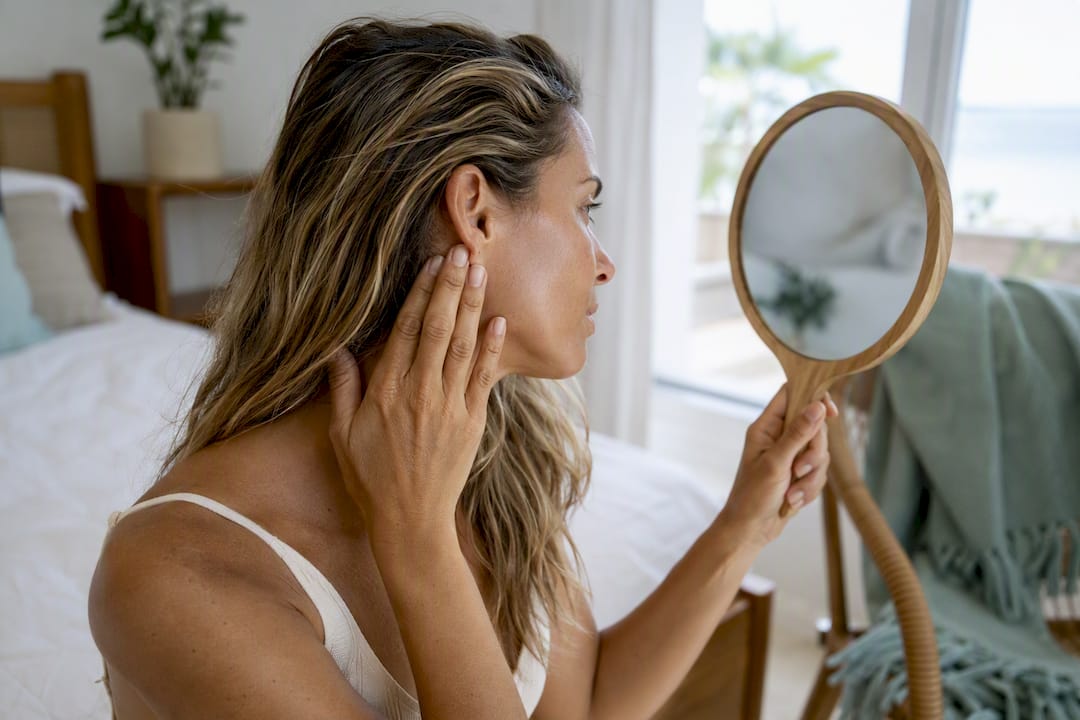
The ears, hairline, tops of feet, and back of the neck are the areas people miss most consistently, mostly because you can’t see them without a mirror or a second pair of eyes; for protection of commonly missed spots like hands and feet, consider checking out Handcrème met SPF to help guard against pigment and aging. Ask a friend to check your back and shoulders before a long day outside, or use a hand mirror to spot check your own ears and hairline.
Layering order also trips people up. Sunscreen goes on after moisturizer but before makeup, and before bug repellent too. If you apply a full sunscreen layer and then dust on SPF-rated powder or foundation, treat the makeup as a bonus, not your real protection; the sunscreen underneath is doing the actual work.
Water-resistant labeling has a shelf life, too. “Water resistant (40 minutes)” or “(80 minutes)” means the SPF holds up for that stretch of swimming, not the whole afternoon. Reapply as soon as you’re out of the water and dry, not after another hour of lounging.
- Missed spots: ears, hairline, feet, back of neck, part line
- Layering order: sunscreen, then makeup or repellent, never the reverse
- Water resistance: reapply after swimming or toweling, not “eventually”
Pro Tip: If you’re worried about using too much sunscreen, stop worrying. Nearly every dermatology source pushing this topic agrees the real-world failure is under-application, not over-application.
What Does a Sun Care Specialist Say About Getting the Dose Right?
Ayssa, a contributor who has spent years testing how sunscreen actually behaves outside a lab setting, at the beach, on a run, layered under makeup at a wedding…
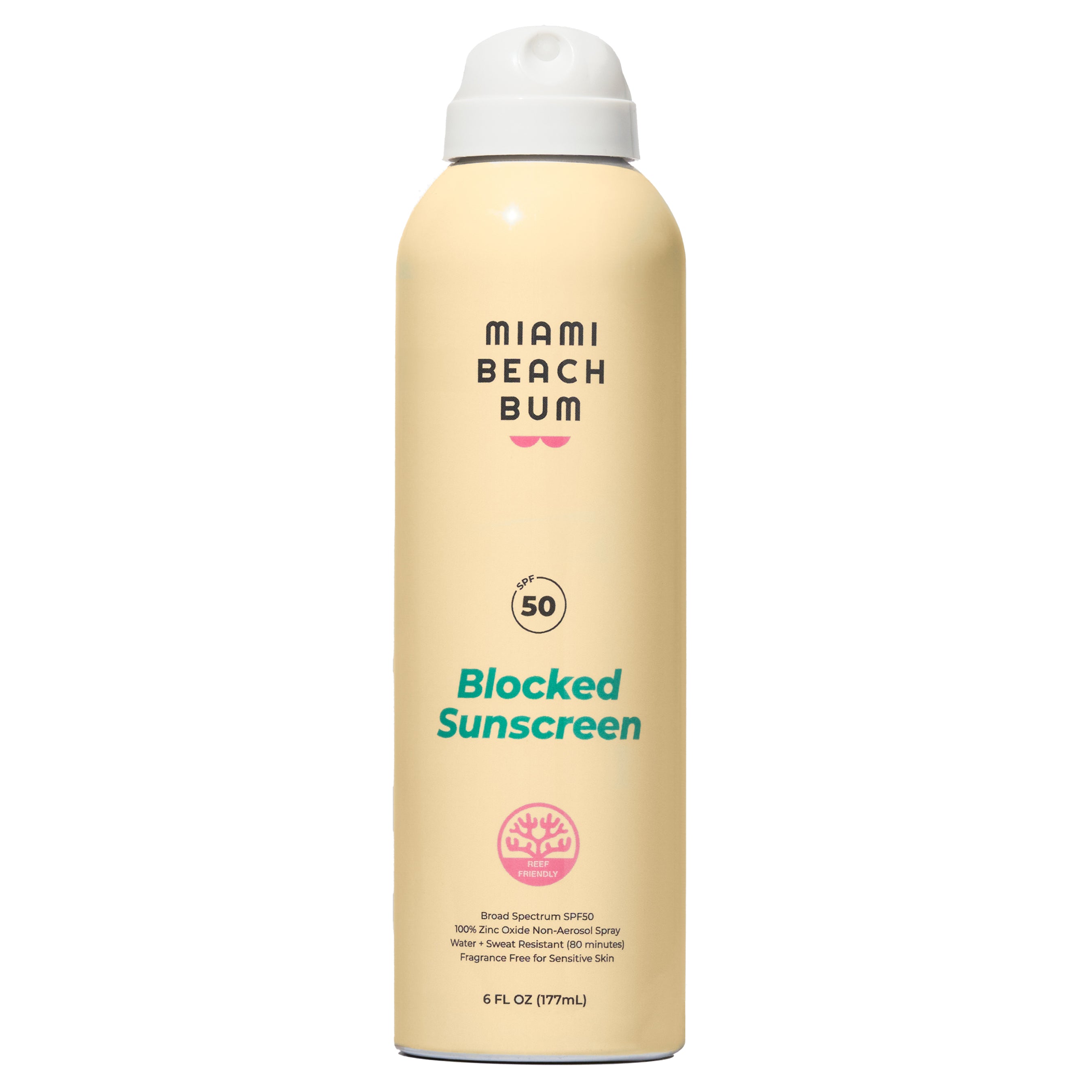
A few habits make the biggest difference in practice. When applying a spray formula like Blocked SPF50, spray into your hand and count your passes per limb rather than waving the nozzle in the general direction of your skin. If you’re reapplying over makeup later in the day, pat rather than rub, and consider a setting mist step first so the new layer doesn’t drag foundation with it…
Why Most Sunscreen Advice Undersells the Measurement Problem
Most sunscreen content tells you to “apply generously” and calls it a day. That advice isn’t wrong, but it’s vague enough to be useless. Nobody knows what “generous” means until they’ve actually filled a shot glass and felt how much product that really is compared to the thin swipe most of us settle for.
The bigger blind spot is timing, not quantity. People fixate on SPF numbers, chasing 50 over 30, without changing the habit that actually determines whether that number means anything: reapplying on schedule. A PubMed modeling study found reapplying early in your exposure window beats waiting for the two-hour mark, yet almost no consumer guidance mentions this. It’s a small adjustment with an outsized payoff.
If you take one thing from this article, measure your sunscreen once. Fill an actual shot glass, compare it to what you normally squeeze into your palm, and notice the gap. That single exercise fixes more sunburns than any SPF upgrade ever will.
— Ayssa
Get the Right Coverage With Blocked SPF50
Miami Beach Bum makes it easier to hit these numbers with a mineral formula built for the amounts dermatologists actually recommend, not the thin layer most bottles get away with. Blocked SPF50 is a reef-safe lotion designed to spread to full coverage at the 1-ounce body dose and nickel-sized face dose covered above, without the greasy overload some mineral sunscreens leave behind.
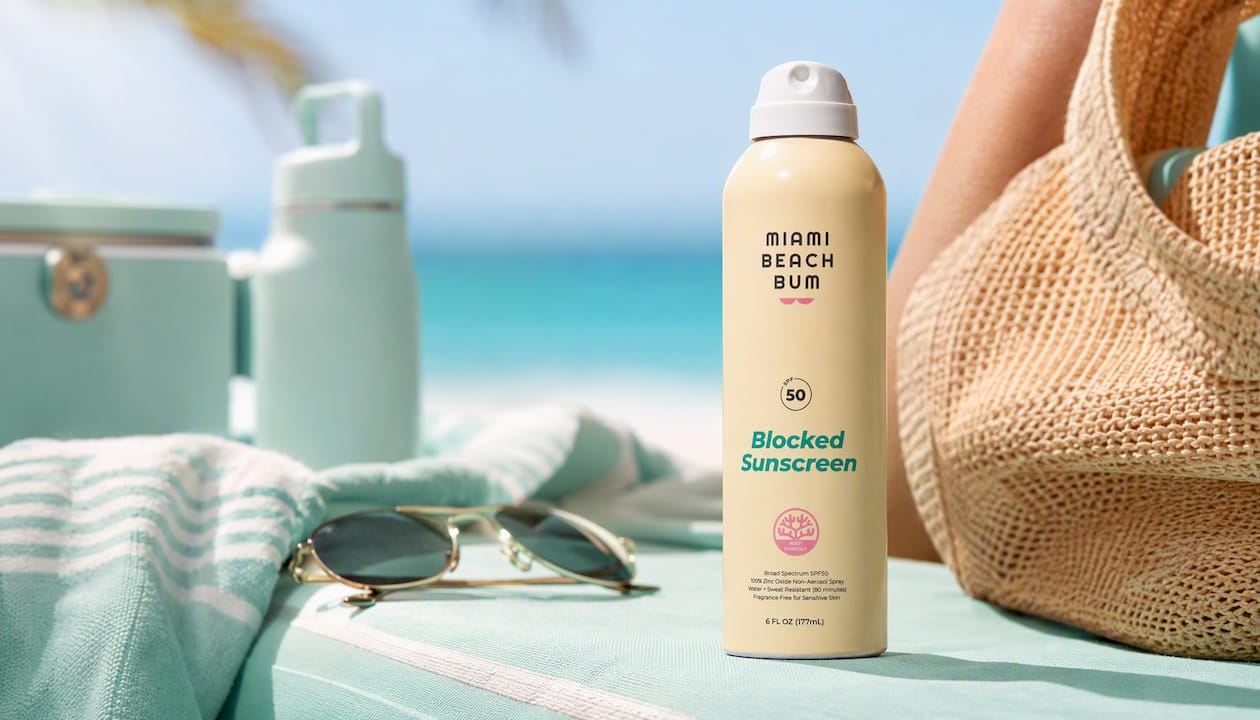
For body coverage, fill a shot glass and work it in section by section: arms, legs, torso front and back, until you’ve used the full amount. For your face, a nickel-sized dollop spread with the two-finger method gets you to the tested thickness without a chalky finish. Set that two-hour reapplication timer the moment you apply, and keep a travel-sized bottle in your beach bag so reapplying after a swim takes ten seconds instead of a special trip back to the car. Order Blocked SPF50 today and build the habit right from the first application.
This article is general information, not a substitute for advice from a qualified doctor. Consult a qualified healthcare professional about your own circumstances before acting on anything here.
Sources
- Sunscreen: How to help protect your skin from the sun | FDA
- When should sunscreen be reapplied? | PubMed
- Ask the Expert: How Much Sunscreen Should I Be Using on My Face and Body? | Skin Cancer Foundation
- Simple dosage guide for suncreams will help users | PMC (BMJ)
FAQ
What Is the 3-Finger Rule for Applying Sunscreen?
It’s a hands-on shortcut where you squeeze a line of sunscreen along two or three fingers to estimate the roughly one teaspoon needed for your face and neck. Dermatologists treat it as a useful practical heuristic rather than a formal regulatory measurement.
Is SPF 50 Too Strong for Your Face?
No. SPF 50 filters more UVB than SPF 30 at the same application thickness and is safe for daily facial use; the number doesn’t make it “too strong,” it just means more filtration if you apply the full amount.
How Long Does 50 mL of Face Sunscreen Last?
At roughly one teaspoon per application for face, neck, and ears, a 50 mL bottle provides multiple applications, so daily use lasts about a week and a half if you apply correctly.
Can You Apply Too Much Sunscreen?
Practically speaking, no. Nearly every dermatology and regulatory source agrees the far more common problem is applying too little; a thick, even layer at the recommended shot-glass and nickel amounts is the correct target, not an overdose to avoid.