


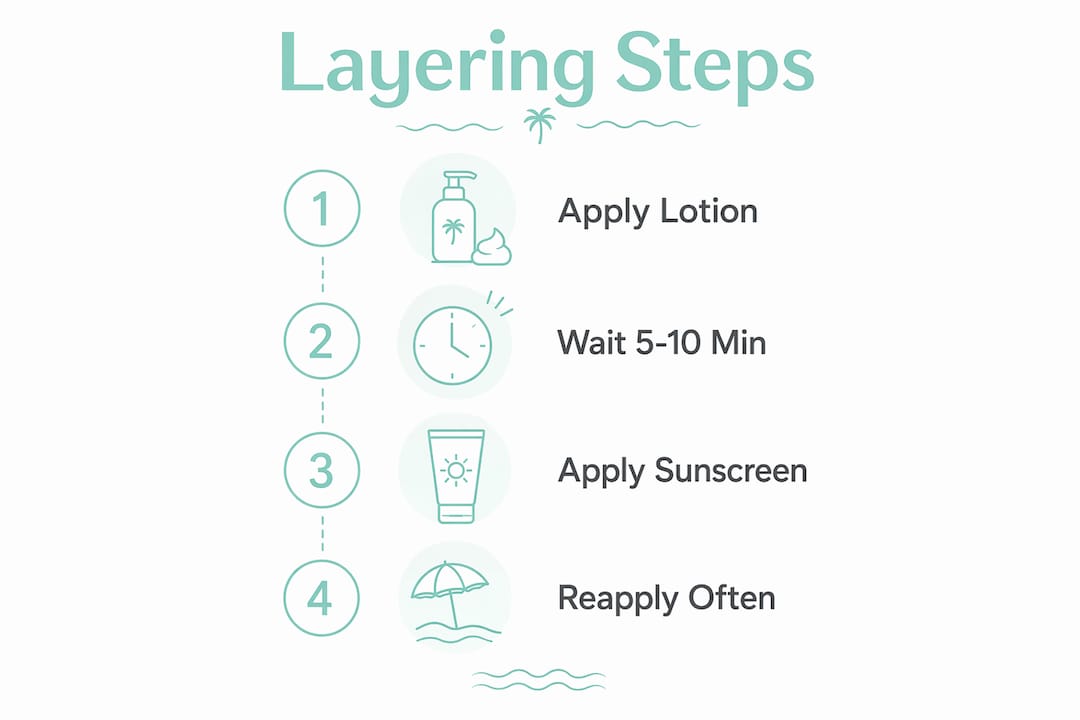
Sunscreen goes on last. That single rule covers the majority of layering mistakes people make. Apply your body lotion first, let it absorb briefly, then apply sunscreen as the final step before going outside. For a full-body application, use about 1 ounce of sunscreen, roughly the amount that fills a shot glass. Reapply regularly when outdoors, and immediately after swimming, sweating, or toweling off.
Table of Contents
- How to layer sunscreen body lotion correctly, step by step
- Why sunscreen goes last: the thin-to-thick rule explained
- How sunscreen format changes your layering technique
- Common mistakes that cut your real SPF protection
- Quick-reference: amounts, wait times, and reapplication
- Key Takeaways
- The case for treating SPF as a body care step, not an afterthought
- Blocked SPF50: when a dedicated body sunscreen is the right call
- Trusted sources and further reading
How to layer sunscreen body lotion correctly, step by step
Follow this sequence every time. The steps below cover both a quick daily routine and a full beach or sports day.
- Start with clean, dry skin. Shower or wash the areas you plan to treat. Pat dry. Sunscreen and lotion both absorb better on clean skin.
- Apply any water-based serum first (if you use one). Thin, water-based products absorb fastest and should always go on before thicker creams.
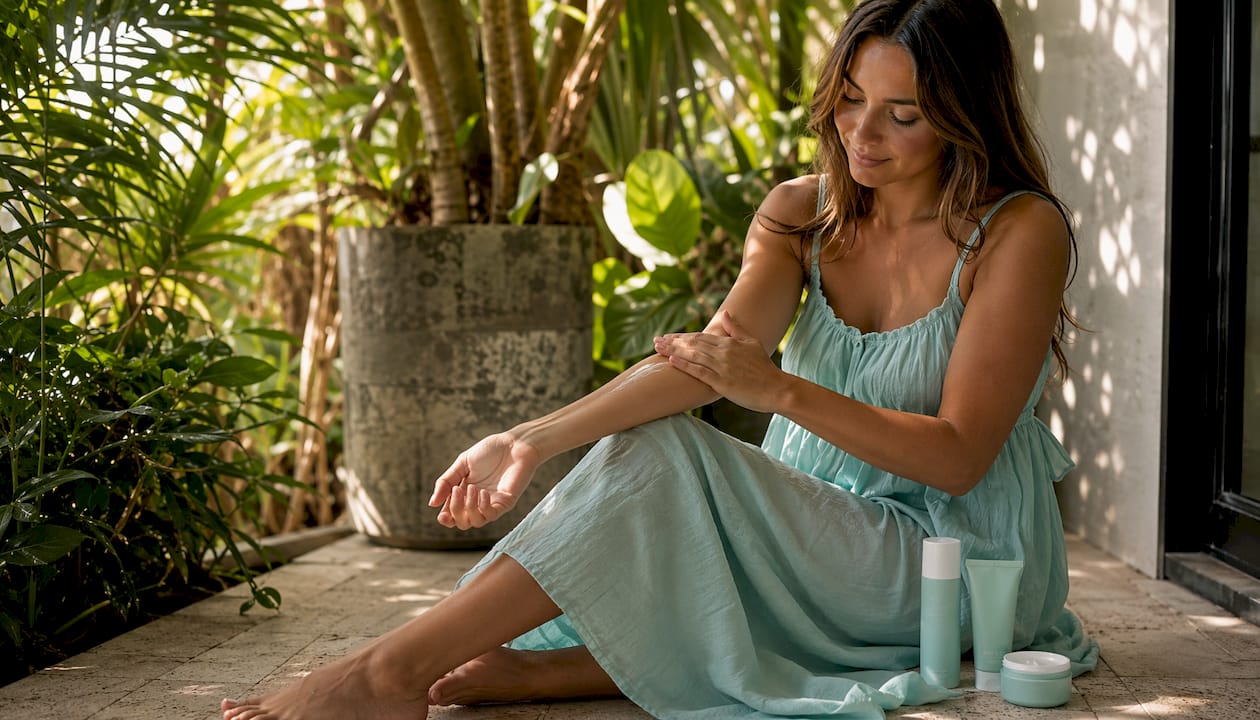
- Apply body lotion to areas that need hydration. Focus on dry zones like elbows, knees, and shins. Massage it in and give it 1–2 minutes to absorb before the next step. For guidance on choosing the right formula, the daily moisturizer ingredients guide from Miamibeachbum covers what to look for.
- Apply sunscreen as the final layer. Cover all exposed skin. Use the full 1-ounce dose for your body. Do not rub it in so aggressively that you remove the lotion underneath.
- Wait before sun exposure. Mineral sunscreens work immediately. Chemical sunscreens need about 15 minutes to activate, so apply them before you leave the house, not on the beach.
- Cover the spots people skip. Ears, back of the neck, tops of feet, and the scalp part all need sunscreen. These are among the most common sites for sun damage.
- Reapply every 2 hours. After swimming, sweating, or toweling off, reapply immediately regardless of how much time has passed.
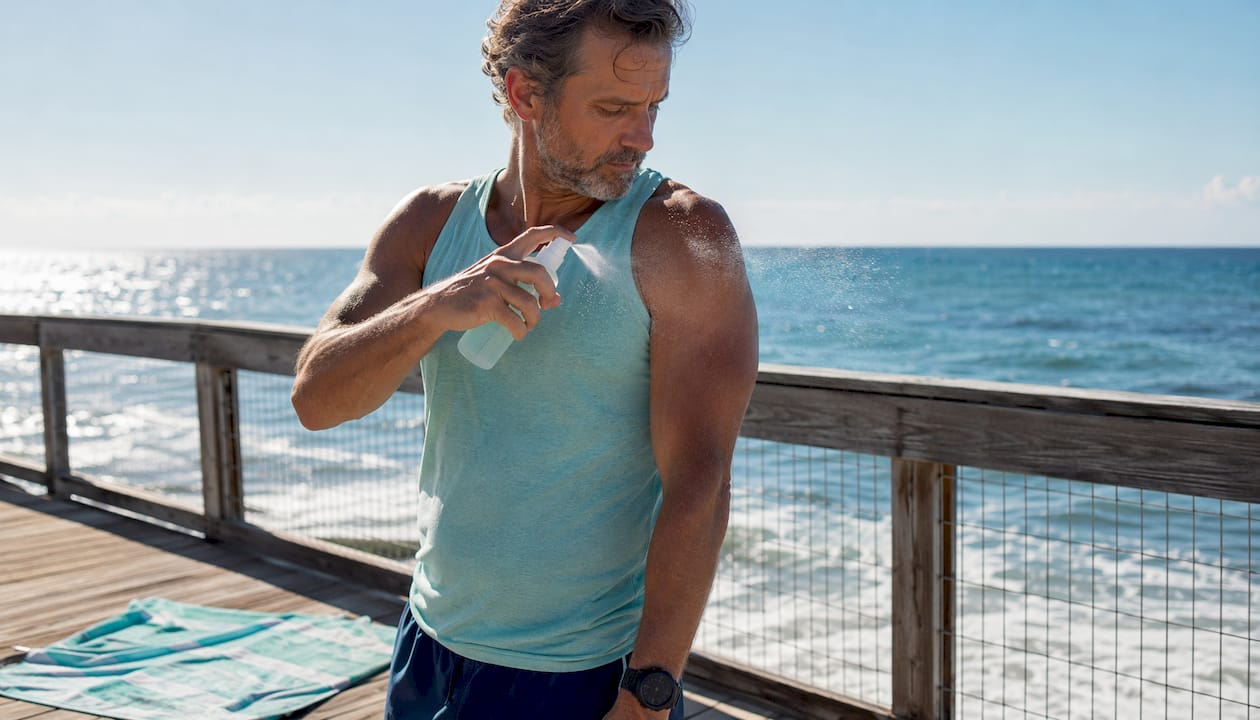
For re-application during the day, sprays and sticks are practical. Spray sunscreen onto skin, then rub it in. Skipping the rub-in step leaves gaps in coverage.
Why sunscreen goes last: the thin-to-thick rule explained
Skincare layering follows a simple principle: apply products from thinnest to thickest consistency, and water-based before oil-based. Sunscreen sits at the end of that sequence because it functions as a surface barrier. Anything applied on top of SPF can physically displace or dilute the sunscreen film, reducing the protection your skin receives.
Layering order follows solubility. Water-based products absorb into skin quickly and do not interfere with what comes after. Oil-based products and occlusive creams sit on the surface, which is exactly what you want sunscreen to do. Putting a thick lotion over sunscreen breaks that barrier.
The exception worth knowing: a moisturizer with SPF can replace a separate sunscreen step, but only if you apply the correct volume. Most people under-apply SPF moisturizers, which means the labeled SPF is never reached. For low-UV days indoors with brief outdoor exposure, an SPF moisturizer is acceptable. For a full day outside, a dedicated sunscreen applied at the right dose is the more reliable choice.
Chemical vs. mineral timing also matters here. Chemical filters need roughly 15 minutes to absorb and convert UV energy. Mineral filters (zinc oxide, titanium dioxide) sit on the skin surface and reflect UV immediately. If you use a chemical formula, apply it before you do anything else that morning, then layer lotion on top of it only on areas that will be covered by clothing.
How sunscreen format changes your layering technique
Different sunscreen formats require slightly different handling. The table below summarizes the key differences.
| Format | Activation time | Layering note |
|---|---|---|
| Mineral lotion/cream | Immediate | Apply last; rub in gently to avoid removing lotion underneath |
| Chemical lotion/cream | ~15 minutes | Apply before lotion on exposed areas, or apply first and wait |
| Spray | Immediate or ~15 min depending on filter | Spray at arm’s length, then rub in; never spray directly on face |
| Jelly / balm | Varies by filter | Occlusive; works well for active days; apply last over any lotion |
Spray sunscreens are convenient for reapplication and for hard-to-reach areas like the back. The FDA advises never spraying directly on the face and always rubbing sprayed areas to confirm even coverage. Spray at arm’s length, coat the area, then rub it in.
Jelly sunscreens are occlusive by nature, which makes them useful on high-sweat days. They sit on top of skin and resist water and friction better than thin lotions. For more on how jelly formats work in a body routine, Miamibeachbum’s jelly sunscreen guide explains the practical tradeoffs. Apply jelly sunscreen as the absolute last step.
For readers choosing between chemical and mineral formulas, the chemical vs. mineral breakdown from Miamibeachbum covers activation times, skin compatibility, and format options in detail.
Pro Tip: For sensitive or acne-prone skin, choose a broad-spectrum SPF 30+ formula labeled non-comedogenic. Mineral sunscreens with zinc oxide tend to be gentler on reactive skin and work immediately, which removes the timing variable entirely.
Common mistakes that cut your real SPF protection
- Using too little. Most people apply only 25–50% of the amount needed to reach the labeled SPF. The fix is simple: use the full shot-glass dose for the body.
- Applying sunscreen before moisturizer. Lotion on top of SPF disrupts the sunscreen film. Moisturizer always goes first.
- Skipping reapplication. Sunscreen wears off. Reapply every 2 hours and immediately after any water or heavy sweat exposure.
- Missing common spots. Ears, scalp part, back of the neck, tops of feet, and lips are frequently skipped and frequently where sun damage appears first.
- Relying on SPF moisturizer for full days outside. It works for brief exposure. For extended outdoor time, a dedicated sunscreen applied at the correct volume is more reliable.
- Not rubbing in spray sunscreen. Spraying without rubbing leaves uneven patches. Always rub sprayed areas immediately.
Quick-reference: amounts, wait times, and reapplication
Dosage fact: Adults need about 1 ounce of sunscreen for a full-body application. For face and neck alone, two finger-lengths of product is a practical proxy for the right amount.
| What | Rule |
|---|---|
| Full body dose | ~1 oz (shot glass) |
| Face + neck dose | Two finger-lengths |
| Mineral sunscreen | Apply last; effective immediately |
| Chemical sunscreen | Apply ~15 minutes before sun exposure |
| Reapplication | Every 2 hours outdoors |
| After water/sweat | Reapply immediately |
Treat sunscreen as ongoing maintenance, not a single morning step. One application does not last a full day outdoors.
Key Takeaways
Sunscreen goes last on the body, applied in a full 1-ounce dose, and reapplied every 2 hours or after any water or sweat exposure.
| Point | Details |
|---|---|
| Sunscreen goes last | Apply moisturizer first, then sunscreen as the final layer before sun exposure. |
| Use the full dose | About 1 oz for the body; under-dosing reduces real SPF significantly. |
| Timing by format | Mineral sunscreens work immediately; chemical formulas need ~15 minutes to activate. |
| Reapply consistently | Every 2 hours outdoors, and immediately after swimming, sweating, or toweling off. |
| Miamibeachbum Blocked SPF50 | A dedicated body SPF50 suited for beach and sports days when full-dose protection matters most. |
The case for treating SPF as a body care step, not an afterthought
Most sunscreen advice focuses on the face. Body application gets a fraction of the attention, even though the body accounts for the majority of total skin surface exposed on a beach or sports day. That imbalance is worth correcting directly.
The order-of-application rule matters, but dosage is the bigger gap. Dermatologists consistently note that most people underestimate how much sunscreen they actually need. A thin swipe over the shoulders is not a full-body application. The shot-glass standard exists because the SPF testing that produces the number on the label is done at a specific dose. Apply less, and the protection you receive is proportionally lower.
There is also a tendency to treat sunscreen as a one-time morning step. For anyone spending real time outdoors, that mindset leads to gaps. Reapplication is not optional. It is the part of the routine that maintains protection through the actual hours of exposure.
For sensitive or reactive skin, format selection matters as much as order. Mineral formulas with zinc oxide are gentler and work immediately, which simplifies the timing question. A natural body care routine built around gentle, non-irritating ingredients pairs well with a mineral SPF for anyone managing reactive skin.
The honest position: a good SPF moisturizer is better than nothing, but it rarely delivers full protection at the volumes most people use. A dedicated body sunscreen, applied correctly, is the more dependable option for any day with meaningful sun exposure.
Blocked SPF50: when a dedicated body sunscreen is the right call
An SPF moisturizer covers low-UV days. For the beach, a long run, or any day where you will sweat, swim, or spend hours in direct sun, a dedicated body sunscreen is the more reliable choice. Miamibeachbum’s Blocked SPF50 is formulated specifically for body application on high-exposure days. It fits directly into the routine described above: apply your lotion first, then Blocked SPF50 as the final layer before heading out.
The dosage rule applies here the same as any other sunscreen. Use the full shot-glass amount for the body. Reapply every 2 hours, or sooner after water or heavy sweat. For readers building out a full body care routine alongside their SPF, the Bodycare Discovery Set from Miamibeachbum offers a practical starting point. Check out Blocked SPF50 and find the format that fits your routine.
Trusted sources and further reading
| Source | What it covers |
|---|---|
| FDA: Sunscreen guidance | SPF standards, broad-spectrum requirements, spray safety, dosage, and reapplication rules |
| American Cancer Society: How to use sunscreen | Product selection, SPF values, and sunscreen as a cancer-prevention tool |
| AAD: How to apply sunscreen | Dermatologist-backed dosage and application technique |
| ColumbiaDoctors: Correct sunscreen application | Activation timing, missed spots, and practical coverage guidance |
| Miamibeachbum: Chemical vs. mineral sunscreen | Format comparison, activation times, and skin compatibility |
Recommended
- SPF in Your Daily Makeup Routine: What Really Works – Miami Beach Bum
- Chemical vs. Mineral Sunscreen: Which one is right for you? | Miami Beach Bum®
- Jelly Sunscreen Explained: Benefits, Uses, and Top Picks – Miami Beach Bum
- How to Read a Sunscreen Label:A Marine Scientist’s Ingredient Decoder – Miami Beach Bum