


Stop treating sunscreen as just another step you squeeze in before running out the door. The single fix: apply enough sunscreen (about 1 ounce for your full body) 15 minutes before sun exposure, then reapply every two hours. That one behavior change does more for your actual protection than switching to a higher SPF number.
Three things to do right now:
- Check the expiry date on your current sunscreen bottle.
- Measure out roughly a shot glass worth of product and compare it to what you normally use.
- Set a two-hour phone reminder for your next outdoor day.
Table of Contents
- Why timing, amount, and reapplication determine your real SPF
- The 10 most common skincare sunscreen combo mistakes
- How to layer serums, actives, and makeup without losing SPF
- A practical coverage checklist: amounts, missed spots, and formats
- Real-world reapplication for makeup-wearers, athletes, and commuters
- Common sunscreen problems and quick fixes
- Key Takeaways
- The fix is simpler than the product stack
- Routine-friendly SPF options from Miamibeachbum
- Useful sources
Why timing, amount, and reapplication determine your real SPF
The SPF number on a label is measured under lab conditions with the full recommended amount applied correctly. In real life, most people apply only 25–50% of the recommended amount, which cuts delivered protection well below what the label promises. A high SPF number does not compensate for under-application or skipped reapplication.
The FDA recommends applying sunscreen about 15 minutes before going outside, using roughly 1 ounce for an average adult’s full body, and reapplying at least every two hours. The AAD adds that applying once in the morning is not enough for ongoing outdoor exposure. Quantity, timing, and reapplication together determine whether your SPF 50 actually behaves like SPF 50.
The 10 most common skincare sunscreen combo mistakes
These are the sunscreen application errors that show up most often in multi-step routines, along with a one-line fix for each.
-
Underapplying. Most people use far less than the recommended 1 ounce for the body. Fix: use a full shot glass for the body; about one teaspoon for the face and neck.
-
Applying sunscreen under moisturizer. Sunscreen needs to sit on top as the final film-forming layer. Fix: apply moisturizer first, let it set, then apply sunscreen last before makeup.
-
Skipping reapplication. Only about one-third of Americans reapply every two hours while outside. Fix: set a phone alarm or schedule reapplication around natural breaks.
-
Layering incompatible textures that cause pilling. Applying sunscreen on top of a heavy base product, or rubbing it in aggressively, triggers pilling. A Skin Research & Technology study found pilling occurs frequently when sunscreen is applied over certain base products. Fix: let each layer set before applying the next; pat rather than rub.
-
Relying on SPF in makeup or moisturizer alone. The amount of SPF-containing foundation most people apply is too thin to deliver the labeled protection. Fix: apply a dedicated sunscreen underneath and treat makeup SPF as a bonus, not your primary defense.
-
Missing common spots. Ears, eyelids, scalp part, lips, neck, chest, hands, tops of feet, and the back of the neck are frequently skipped. Fix: run a quick coverage audit before heading out.
-
Ignoring water-resistance timing. Water-resistant labels mean 40 or 80 minutes of protection during activity, not all day. Fix: reapply on that schedule when swimming or sweating.
-
Not waiting 15 minutes before going outside. Chemical sunscreens need time to absorb and form a protective film. Fix: apply sunscreen before getting dressed so the wait is built in.
-
Using expired or poorly stored sunscreen. Heat and light degrade active ingredients. Fix: check the expiry date; discard after three years or per label instructions; store away from direct heat.
-
Assuming high SPF removes the need to reapply. SPF 100 still breaks down with sweat, friction, and time. Fix: reapply every two hours regardless of SPF level, and choose broad-spectrum, SPF 30+ as your baseline.
How to layer serums, actives, and makeup without losing SPF
The correct order for a morning routine is: cleanse, thinnest water-based serums, actives (vitamin C, acids), moisturizer, sunscreen, then makeup. Sunscreen goes on last before makeup because it needs an unbroken film on the skin surface to work.
Dos and don’ts with strong actives:
- Do apply vitamin C serum before sunscreen. It sits under the sunscreen layer and does not reduce SPF efficacy.
- Do not mix a chemical exfoliant (AHA/BHA) and a new sunscreen formula on the same morning without patch-testing first. Ingredient interactions can cause sensitivity or pilling.
- Do wait 60–90 seconds between layers so each product sets before the next goes on.
- Do not rub sunscreen over a still-tacky serum. Pat it on instead.
Retinol belongs in your PM routine, not AM, so it rarely conflicts with sunscreen directly. If you use a retinoid in the morning, apply sunscreen over your moisturizer and allow extra set time.
Pro Tip: Tinted mineral sunscreens double as a light base and reduce white cast. They also offer added protection against visible light, which can worsen hyperpigmentation. If you want to simplify your morning stack, a tinted SPF can replace a separate primer or light foundation.

For more on how SPF fits into a full makeup routine, the Miamibeachbum guide on SPF in your daily makeup routine covers the layering steps in detail.
A practical coverage checklist: amounts, missed spots, and formats
How much to use:
- Full body: ~1 ounce (a standard shot glass)
- Face and neck: ~1 teaspoon
- Adjust slightly for larger body frames, but always err toward more
Commonly missed spots (per ColumbiaDoctors):
- Ears: Use a finger to trace the outer edge and behind the ear.
- Eyelids: Use a mineral formula here; chemical filters can sting.
- Scalp part: A stick or powder SPF works well along the part line.
- Lips: Use an SPF lip balm; lips have no melanin protection.
- Neck and chest: Apply downward strokes to cover the décolletage fully.
- Hands: Reapply after washing hands.
- Tops of feet: Easy to forget on beach days; apply before putting on sandals.
- Back of neck: Especially important for anyone with short hair.
Storage and expiry: Sunscreen degrades when stored in heat or direct sunlight. Keep it out of your car’s glove compartment in summer. Discard after three years or the date on the label, whichever comes first.
Real-world reapplication for makeup-wearers, athletes, and commuters
Reapplication every two hours is non-negotiable. The format you carry determines whether you actually do it.
- Makeup-wearers: Blot excess oil first, then press a translucent SPF powder over your makeup using a brush. For targeted areas like the forehead or cheeks, an SPF stick lets you reapply without disturbing foundation.
- Athletes and outdoor workers: Use a water-resistant formula and reapply on the label’s schedule: every 40 or 80 minutes depending on the product’s rating. Apply to dry skin before activity starts.
- Commuters and desk workers: A portable SPF spray or stick in your bag makes midday reapplication fast. Schedule it around lunch or a coffee break.
- Everyone: Carry an SPF lip balm. Lips are one of the most commonly missed spots and one of the easiest to protect on the go.
For activity-specific planning, Miamibeachbum’s outdoor sun protection guide covers reapplication timing for high-movement days.
Water-resistance is time-bounded. “Water-resistant” on a label means the product maintains its SPF for 40 or 80 minutes during water exposure, not indefinitely. Towel drying removes the film entirely, so reapply immediately after.
Common sunscreen problems and quick fixes
| Problem | Why it happens | Quick fix |
|---|---|---|
| Pilling | Sunscreen applied over a tacky or incompatible base; rubbing motion disrupts the film | Let previous layers set; pat sunscreen on; switch to a lighter texture |
| White cast | Mineral filters (zinc oxide, titanium dioxide) scatter light | Try a tinted mineral formula or a sheer chemical SPF |
| Eye sting | Chemical UV filters migrate toward eyes | Use a mineral SPF around the eye area |
| Transfer to clothes | Sunscreen not fully absorbed before dressing | Wait 2–3 minutes after applying before putting on clothing |
| Sunscreen fades fast | Expired product, heat storage, or insufficient amount | Check expiry; store correctly; apply the full recommended amount |
Pro Tip: If pilling keeps happening despite waiting between layers, the issue is likely a texture mismatch. Switch to a lighter lotion or gel sunscreen and see if the problem resolves before changing your entire routine. Peptide-based serums from resources like Copper Peptides Store are generally lighter in texture and tend to layer more cleanly under sunscreen.
Key Takeaways
Applying the right amount of sunscreen at the right time, to every exposed area, and reapplying every two hours is the complete formula for real-world SPF protection.
| Point | Details |
|---|---|
| Use enough product | Apply ~1 ounce for the full body and ~1 teaspoon for the face and neck. |
| Timing and reapplication | Apply 15 minutes before sun exposure; reapply every two hours or per water-resistance schedule. |
| Layer sunscreen last | Sunscreen goes on after moisturizer and before makeup to preserve the protective film. |
| Cover missed spots | Ears, eyelids, lips, scalp part, hands, and feet need sunscreen too. |
| Miamibeachbum options | Save Face SPF 50 Sheer Mineral Facial Serum for the face; Bodyguard SPF 30 for body and active use. |
The fix is simpler than the product stack
Most sunscreen failures come down to three habits, not three products. People under-apply, skip reapplication, and miss the same spots every time. Fixing those three things costs nothing and takes about 30 extra seconds per application.
The skincare industry does a good job selling new formulas. It does a less consistent job reminding people that a $10 SPF 30 applied correctly outperforms a $60 SPF 50 applied once and forgotten. Habit nudges help: keep a travel stick on your desk, set a midday phone reminder, and do a quick coverage check in the mirror before leaving the house. Small, consistent changes protect skin more reliably than any product upgrade.
Routine-friendly SPF options from Miamibeachbum
If the fixes above made you realize your current sunscreen is fighting your routine rather than fitting it, two Miamibeachbum products are worth knowing about.
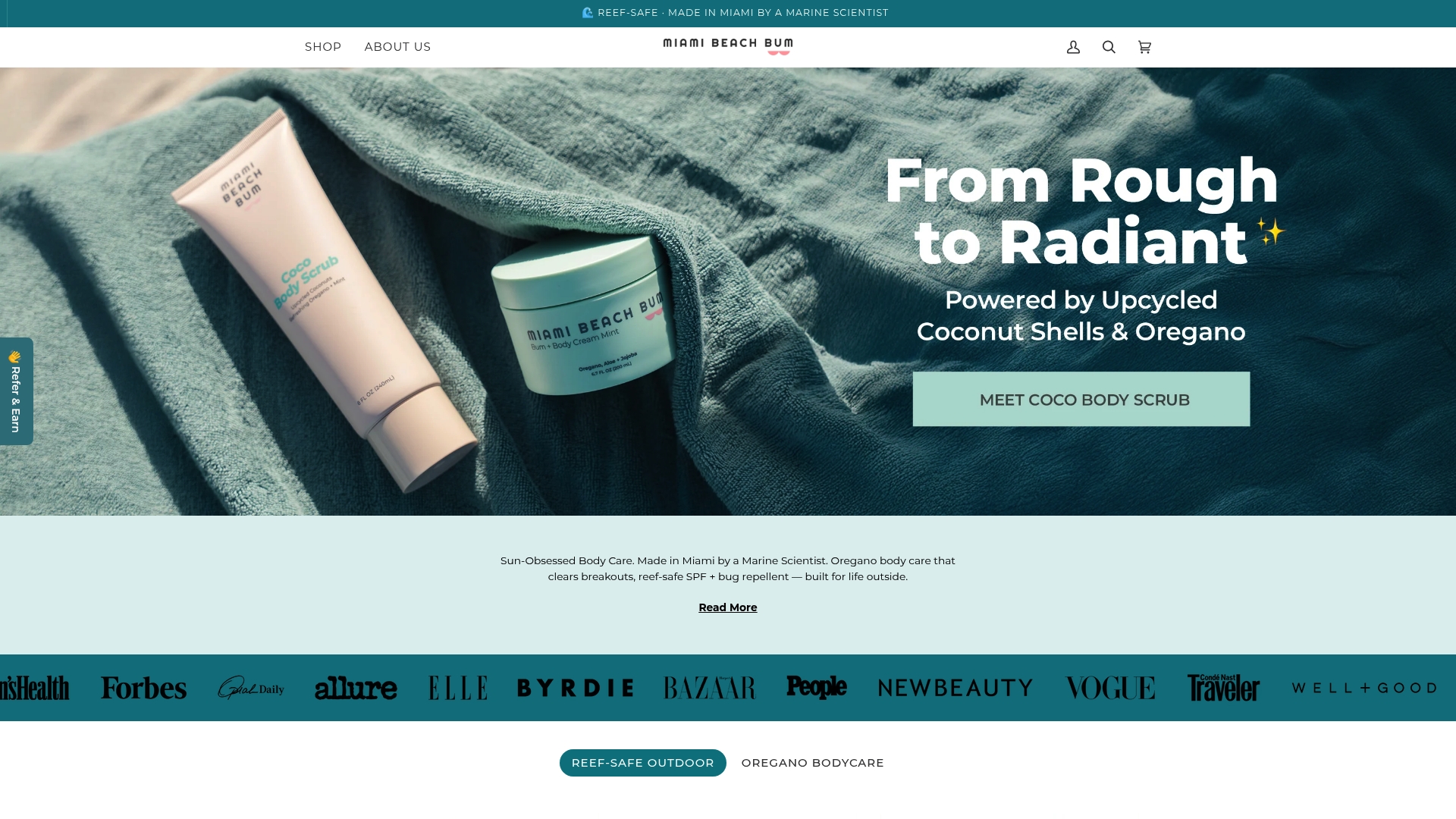
The Save Face SPF 50 Sheer Mineral Facial Serum is built for multi-step routines. It sits lightly over serums and moisturizers without pilling, works well around the eye area thanks to its mineral formula, and skips the heavy white cast that makes many mineral SPFs hard to wear daily. For the body, Bodyguard SPF 30 is water-resistant and designed for active days when reapplication needs to keep up with movement and sweat. Both products map directly to the fixes in this article: a sheer facial SPF that layers cleanly, and a body SPF that holds up to the 40/80-minute water-resistance schedule. Browse the full body care range to find the right fit for your routine.
This article is general information, not medical or dermatological advice. Confirm current sunscreen guidelines with the FDA, AAD, or a qualified dermatologist for your specific situation.
Useful sources
- FDA Sunscreen Guidelines — The regulatory standard for application amount, timing, reapplication frequency, and water-resistance labeling. Use this for label-specific guidance.
- AAD Sunscreen FAQs — Dermatology-backed recommendations on SPF selection, reapplication, and broad-spectrum protection.
- AAD Common Sunscreen Mistakes — Data on under-application rates and reapplication behavior; practical fixes from board-certified dermatologists.
- ColumbiaDoctors: How to Apply Sunscreen Correctly — Clinical guidance on commonly missed coverage areas; useful for building a full-body application checklist.
- Skin Research & Technology: Pilling Study — Practitioner-level research on why pilling occurs when sunscreen is layered over base products and how application technique affects outcomes.