


Sun protection for outdoor skateboarding is defined as the combined use of SPF 30+ broad-spectrum sunscreen, UPF-rated clothing, and physical barriers to defend against UV damage and heat exposure. Skaters spend hours on concrete under direct sun, often without realizing how quickly UV radiation accumulates. Peak UV hours run from 10:00 AM to 4:00 PM, and concrete surfaces can reach temperatures that compound the risk well beyond what the air temperature suggests. This sun protection skateboarding outdoor guide covers every layer of defense you need, from product selection and gear to timing, hydration, and post-skate skin repair.
What sunscreen should skaters use outdoors?
Choosing the right sunscreen is the single most effective step in any skateboarding sun safety routine. The American Medical Association sets SPF 30+ broad-spectrum as the minimum standard for outdoor activity. Broad-spectrum coverage blocks both UVA rays, which age skin, and UVB rays, which cause burns.
Application technique matters as much as the product itself. Health authorities recommend applying about 1 ounce of sunscreen 15–30 minutes before heading outside. That is roughly a shot glass worth of product for full body coverage. Most skaters apply far less, which cuts protection significantly.
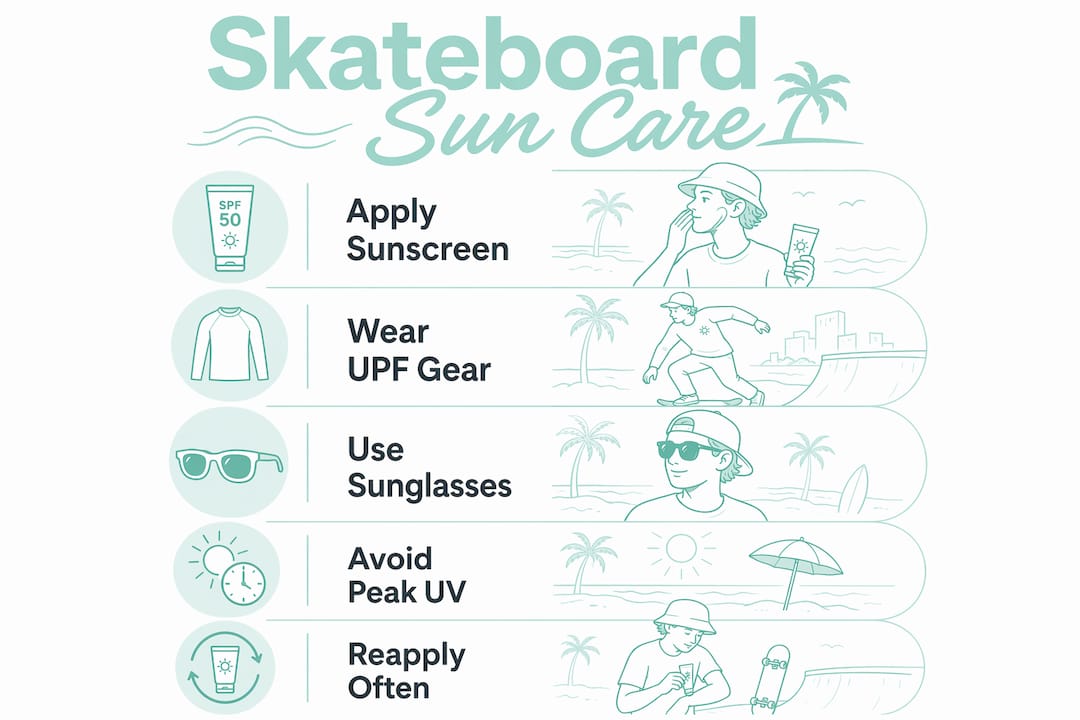
Reapplication is where most people fail. The standard guidance calls for reapplying every 90–120 minutes during active sessions. Sweat accelerates breakdown, so if you are grinding rails in july heat, reapply closer to the 90-minute mark.
Water-resistant sunscreen is not waterproof. Water-resistant labels specify either 40 or 80 minutes of protection during water or sweat exposure. After that window, the product is gone regardless of SPF rating. Reapplication frequency matters more than chasing a higher SPF number once you are above 30.
Product formats that work for skaters:
- Spray formulas apply fast and cover hard-to-reach spots on the back of the neck and ears
- Stick formats work well for the face and around the eyes without dripping into your eyes mid-session
- Cream formulas give the most even coverage and are best applied before you leave home
- Mineral options using zinc oxide or titanium dioxide sit on the skin surface and are less likely to irritate skin broken from falls
Pro Tip: Apply sunscreen to the tops of your feet and the back of your hands. These spots get direct sun exposure during skating and are almost always missed.
For skaters who want to understand the difference between chemical and mineral formulas before buying, Miamibeachbum’s sunscreen type breakdown explains the practical tradeoffs for active outdoor use.
How does clothing and gear improve UV protection for skaters?
Clothing is the most reliable UV barrier available. Unlike sunscreen, it does not wear off, sweat off, or require reapplication. UPF-rated apparel blocks a defined percentage of UV radiation, and UPF 50 blocks over 98% of UV rays from reaching the skin.
Effective skate-specific protection includes lightweight, moisture-wicking long sleeves and ventilated helmets. The key is choosing fabrics that breathe. A tight-weave synthetic long sleeve in a light color keeps UV off your arms without trapping heat the way a cotton hoodie would.
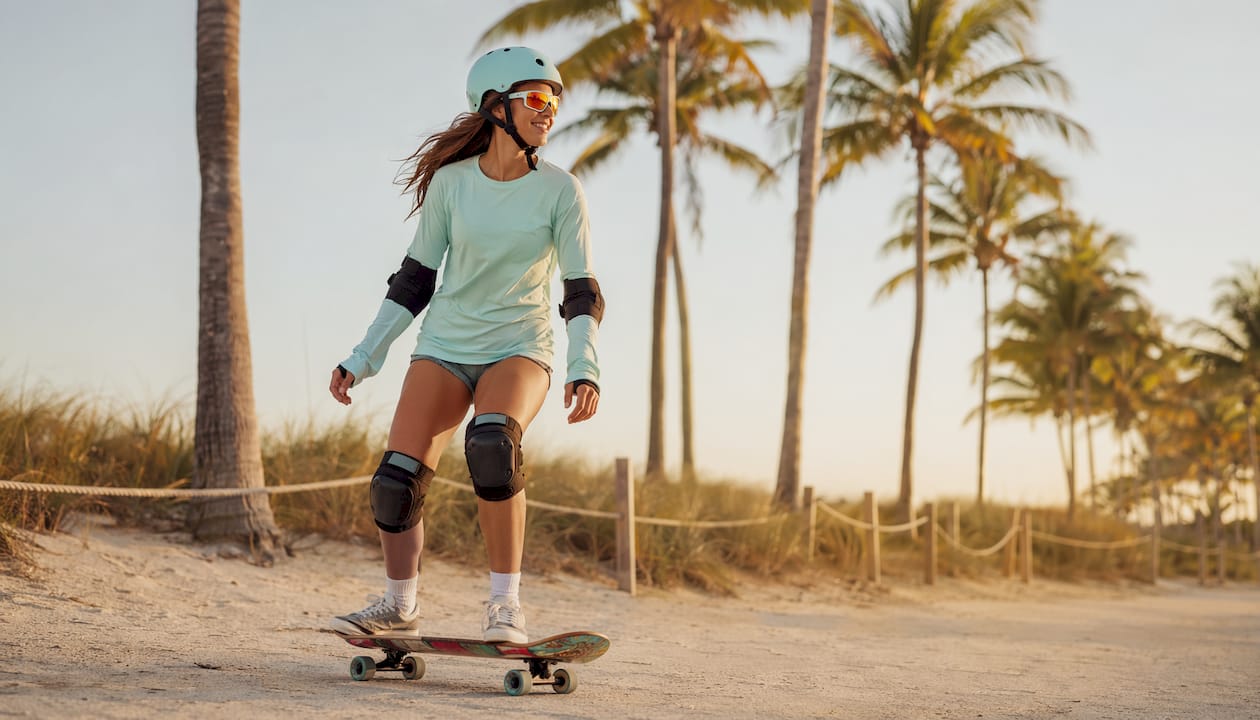
Color choice is not just aesthetic. Dark-colored protective gear absorbs heat substantially, causing discomfort or burns when concrete is already radiating heat upward. Light-colored, loose-fitting gear reflects heat and keeps your body temperature lower during long sessions.
Gear checklist for outdoor skate sessions:
| Gear Item | UV Protection Feature |
|---|---|
| UPF 50 long-sleeve shirt | Blocks over 98% of UV rays reaching skin |
| Ventilated helmet | Reduces heat buildup while protecting the head |
| Wrap-around sunglasses | Blocks 99%+ UV rays to reduce eye fatigue from concrete glare |
| Light-colored loose pants | Reflects heat, covers legs from direct sun |
| Cap or bucket hat | Shields face and neck during rest breaks |
Sunglasses deserve special attention. Concrete reflects UV light upward directly into your eyes. Wrap-around frames that block at least 99% of UV rays reduce cumulative eye damage and cut the fatigue that comes from squinting through a full afternoon session. Standard fashion sunglasses without UV certification offer almost no protection.
Falls expose skin that clothing normally covers. Knee pads and elbow pads protect against abrasion, but they also keep those areas covered from sun. Skaters who wear protective pads for safety reasons get a secondary UV benefit they rarely think about.
For high-SPF facial protection that holds up during active sessions, Miamibeachbum’s Save Face SPF 50 mineral facial serum is built for exactly this kind of extended outdoor exposure.
When should you skate to avoid peak UV exposure?
Timing is the most underused tool in outdoor sun protection. The American Cancer Society identifies the window between 10:00 AM and 4:00 PM as the period of highest UV radiation. Skating outside that window cuts your UV exposure significantly without changing your routine much.
Early morning sessions before 9:00 AM and late afternoon sessions after 5:00 PM offer the best conditions. Light is still good, temperatures are lower, and UV index readings are a fraction of midday levels. Serious skaters who want long outdoor sessions should split them: one session before 10:00 AM and another after 4:00 PM.
Heat from the ground compounds the problem. Concrete and asphalt surfaces reach 50–60°C in direct sunlight. That is 122–140°F radiating upward from the surface you are skating on. Your body absorbs heat from both above and below simultaneously, which raises your core temperature faster than the air temperature alone would suggest.
- Schedule morning sessions before 10:00 AM when UV index is low and surfaces are still cool
- Take shade breaks every 30–45 minutes during midday sessions to let your body temperature drop
- Watch for heat exhaustion signs including heavy sweating, weakness, cold or pale skin, and nausea
- Move sessions indoors or to shaded parks when the UV index exceeds 8
- Plan rest spots near shade structures before you start skating, not after you already feel overheated
Hydration is not optional during outdoor skating. Dehydration slows reaction times and impairs balance, which makes falls more likely. The minimum is 500ml of water per hour. For sessions running longer than 60 minutes, add electrolytes to replace what sweat removes.
Drink before you feel thirsty. Thirst is a late signal. By the time you notice it, your reaction time and balance are already affected. Carry a water bottle and set a timer to drink every 20 minutes during outdoor sessions.
Pro Tip: Freeze your water bottle the night before. It stays cold longer in summer heat and gives you a cold surface to press against your wrists or neck to cool down fast between runs.
What post-skate skincare does your skin actually need?
Skin takes real damage during outdoor skate sessions. Wind, sweat, and dust degrade the skin moisture barrier during outdoor sessions, leaving skin vulnerable to sensitivity and premature aging. Most skaters wash their face and call it done. That is not enough.
The moisture barrier is the outermost layer of skin that keeps water in and irritants out. When it is compromised, skin becomes reactive, dry, and prone to breakouts. Rebuilding it after every session is what separates skaters who age well from those who look weathered by their mid-30s.
Professional-grade serums focused on moisture barrier repair outperform basic moisturizers for post-skate recovery. Look for ingredients like niacinamide, ceramides, and hyaluronic acid. These rebuild the barrier rather than just sitting on top of it.
Post-skate skincare routine for outdoor skaters:
- Rinse immediately after skating to remove sweat, sunscreen residue, and environmental particles
- Apply a barrier-repair serum while skin is still slightly damp to lock in moisture
- Follow with a moisturizer that contains ceramides or fatty acids to seal the serum in
- Use SPF the next morning even if you are not skating, since UV damage accumulates daily
- Avoid harsh exfoliants on days you skate heavily, as skin is already stressed from environmental exposure
Miamibeachbum’s SPF and skincare benefits guide explains how daily SPF use fits into a broader skin health routine, which is relevant for skaters building a consistent post-session practice. For a partner option that combines moisturizing and sun protection, Qloud9’s moisturizing SPF 30 cream addresses both hydration and UV defense in one step.
Key Takeaways
Effective sun protection for outdoor skateboarding requires SPF 30+ sunscreen applied correctly, UPF-rated gear, session timing outside peak UV hours, and consistent post-skate skin repair.
| Point | Details |
|---|---|
| Use SPF 30+ broad-spectrum sunscreen | Apply 1 ounce 15–30 minutes before skating and reapply every 90–120 minutes. |
| Wear UPF-rated, light-colored gear | Light fabrics block UV and reflect heat from concrete surfaces reaching 50–60°C. |
| Skate outside peak UV hours | Avoid 10:00 AM to 4:00 PM; schedule sessions before 10:00 AM or after 4:00 PM. |
| Hydrate with electrolytes for long sessions | Drink at least 500ml of water per hour and add electrolytes for sessions over 60 minutes. |
| Repair skin after every session | Use barrier-repair serums with ceramides or niacinamide to prevent chronic sensitivity. |
Sun protection is part of skate culture now
I have watched skaters dismiss sunscreen as something for beach tourists, not park regulars. That attitude is changing, and it should. The skaters I know who have been at it for 15 or 20 years are the ones who started taking skin seriously early. The ones who did not are dealing with sun damage, sensitivity, and in some cases, dermatologist visits they could have avoided.
The misconception I hear most often is that water-resistant sunscreen handles sweat all day. It does not. That label means 40 or 80 minutes of protection during activity. After that, you are unprotected regardless of what the bottle says. Reapplication is the habit that actually protects you, not the SPF number.
The other thing skaters underestimate is concrete heat. You are not just absorbing UV from above. You are standing on a surface that can hit 140°F and radiates heat upward through your shoes and legs. Timing your sessions and wearing the right gear color are not minor details. They are the difference between a productive afternoon and heat exhaustion.
Sun protection does not have to slow you down or change your style. A light-colored long sleeve, a good pair of wrap-around sunglasses, and a stick sunscreen in your bag are all it takes to skate longer, feel better, and protect your skin for the long run.
— Ayssa
Miamibeachbum products built for outdoor skaters
Miamibeachbum was built by people who spend serious time outdoors and understand what skin actually goes through during extended sun exposure.
The Bodyguard SPF 30 is formulated for active use, meaning it holds up during sweaty sessions without leaving a heavy residue. For the face, the Save Face SPF 50 sheer mineral serum gives high-level protection without clogging pores or interfering with your vision mid-session. After skating, the body care collection covers skin recovery with products designed for people who put their skin through real outdoor conditions. These are not generic formulas. They are made for the kind of exposure skaters actually deal with.
FAQ
What SPF level do skaters need for outdoor sessions?
SPF 30+ broad-spectrum sunscreen is the minimum standard for outdoor skateboarding. Higher SPF offers marginally more protection, but consistent reapplication every 90–120 minutes matters more than SPF level above 30.
How often should you reapply sunscreen while skating?
Reapply every 90–120 minutes during active sessions, or sooner if you are sweating heavily. Water-resistant sunscreen loses effectiveness after 40–80 minutes of activity, so timing your reapplication is critical.
What are the best hours to skate and avoid UV damage?
Skate before 10:00 AM or after 4:00 PM to avoid peak UV radiation hours. The American Cancer Society identifies the 10:00 AM to 4:00 PM window as the highest-risk period for UV exposure.
Does dark clothing protect against sun during skateboarding?
Dark clothing absorbs more heat from concrete surfaces that can reach 50–60°C, increasing thermal load and risk of discomfort or burns. Light-colored, loose-fitting UPF-rated clothing offers better UV and heat protection for skaters.
Why does post-skate skincare matter for outdoor skaters?
Wind, sweat, and dust break down the skin moisture barrier during outdoor sessions, leading to sensitivity and premature aging. Applying a barrier-repair serum with ceramides or niacinamide after skating rebuilds that protection before the next session.