


The correct routine is simple: shake the can, hold it close, spray until your skin glistens, then rub it in like lotion and reapply every two hours or right after you swim. The American Academy of Dermatology and dermatologists quoted across multiple outlets agree that skipping the rub-in step is where most people lose protection. The steps below break down exactly how to do it right.
TL;DR:
- Applying spray sunscreen requires shaking the can thoroughly to remix ingredients and holding it 4 to 6 inches from the skin for even coverage.
- Rubbing the spray into the skin immediately after application is essential to ensure patch-free, effective protection, especially on difficult areas like the back and scalp.
- Spray sunscreen should never be used indoors or in windy conditions, and cans must be kept away from flames and checked for recalls or expiration dates.
- Using lotion for the initial full coverage and spray for quick reapplications later creates a more reliable sun protection routine.
- Reapply spray sunscreen every two hours outdoors or immediately after swimming or heavy sweating, using double coats where necessary for adequate coverage.
Table of Contents
- How Do You Apply Spray Sunscreen Correctly?
- What Are the Safety Risks of Spray Sunscreen?
- Spray or Lotion: Which Should You Use First?
- How Often Should You Reapply Spray Sunscreen?
- What Mistakes Do People Make With Spray Sunscreen?
- Where Can You Learn More From Miami Beach Bum?
- Why Most Spray Sunscreen Advice Skips the Hard Part
- Build Your Spray Sunscreen Routine With Miami Beach Bum
- Sources
How Do You Apply Spray Sunscreen Correctly?
Getting real SPF protection from a spray bottle takes more coordination than most people assume. The can makes it look effortless, but the sequence matters, and skipping a step is how you end up with a sunburn stripe down your shoulder blade.
- Shake the can well. The Klein Dermatology guidance notes that mineral and chemical ingredients separate in the bottle, and shaking remixes them so you’re not spraying diluted product for the first few seconds.
- Check the label first. Grab a formula with broad-spectrum SPF 30 or higher and water resistance if you’re headed near a pool or the ocean.
- Hold the can 4 to 6 inches from your skin. Any farther and product drifts away in the air instead of landing where you need it.
- Spray continuously for about 6 seconds per limb. That timing, drawn from dermatologist guidance on common spray sunscreen mistakes, gives you a rough guide for arms, legs, chest, and back. Watch for the skin to glisten with a visible sheen. That sheen is your signal you’ve used enough.
- Rub it in immediately. Use quick, even strokes to spread the product before it dries. There’s no such thing as a true no-rub spray. Rubbing is what turns a misty coating into an even layer, and an uneven layer means patchy protection no matter what the label promises.
- Handle your face differently. Spray into your palms first, then apply with your hands the way you would a lotion. This keeps you from inhaling aerosolized particles or getting product in your eyes, a technique Harvard Health recommends specifically for facial coverage.
- Get help with your back, and don’t skip your scalp part or the tops of your ears. Ask someone to spray the middle of your back, or use a long-handled applicator if you’re solo.
Pro Tip: The AAD’s shot-glass rule still applies to spray formats. A full-body application should use roughly one ounce, about the volume of a shot glass, so a standard six-ounce can typically hold only six full applications. If your bottle is lasting all summer, you’re probably underapplying.
What Are the Safety Risks of Spray Sunscreen?
Spray sunscreen carries a few real hazards that lotion doesn’t, and most of them trace back to where and how you apply it.
- Never spray in an enclosed space like a bathroom or car. Dermatologists warn that inhaling aerosolized particles indoors is a real concern, so step outside or spray into your hands first.
- Skip windy days, or switch strategy. Wind carries the mist away before it settles on skin, so spray into your palms and rub on manually instead.
- Keep the can away from open flames. Aerosol sunscreens are flammable, so let skin dry fully before standing near a grill or fire pit.
- Aim away from your face to avoid eye irritation. Use the cupped-hand method instead of spraying directly at your head.
- Check for recalls and expiration dates. Some spray formulas have faced ingredient-related recalls, so a quick label check before your trip is worth the thirty seconds it takes.
Spray or Lotion: Which Should You Use First?
Neither format wins outright. Each does a different job well, and the smartest routine usually uses both.
Lotion measures more predictably, which makes it the better choice for your first, full coverage application of the day. You can see exactly how much you’re using, and there’s no risk of wind stealing product before it reaches your skin.
- Lotion or cream: best for your base layer each morning, especially on your torso and legs where full coverage matters most.
- Spray: best for fast reapplication midday, awkward spots like your back, and situations where you’re moving between activities.
- Water-resistant formulas: choose these for swimming or heavy sweating, and follow the label’s 40 or 80 minute rating rather than guessing.
Layering both formats plays to their strengths instead of forcing one product to do a job it’s not built for.
How Often Should You Reapply Spray Sunscreen?
Reapplication is where a lot of good intentions fall apart. The rule is straightforward. Reapply every two hours outdoors, and immediately after swimming or heavy sweating once you’ve hit the water-resistance window listed on your bottle.
- Start with a lotion base in the morning for even, measurable coverage.
- Carry spray for touch-ups during the day. It’s faster to apply over sandy skin or a swimsuit line than lotion is.
- Double-coat if spray is your only option. Go over each area twice to compensate for the harder-to-measure application.
- Layer in physical protection. A wide-brim hat, UPF clothing, and shade cut your reapplication burden significantly, and pairing sunscreen with SPF clothing gives you a buffer on the days you forget to reapply on schedule.
- Set a phone alarm for two-hour intervals, and use the glistening test as your visual check before you head back outside.
What Mistakes Do People Make With Spray Sunscreen?
Most sunburns from spray sunscreen trace back to one of a handful of repeat offenders. Run through this list before you head out the door.
- Using too little product. Consumer testing shows people often apply only about one-third of the recommended amount, which is a major reason spray users get burned even after “applying sunscreen.”
- Skipping the small spots. Tops of feet, ear tips, the back of the knees, and your scalp part are the areas people forget most often.
- Not rubbing it in. One thorough pass with your hands after spraying is non-negotiable for even coverage.
- Spraying in wind or indoors. Move outside to calm air, or switch to the hands-first method.
- Using expired or heat-damaged cans. A bottle left in a hot car all summer can lose potency well before its printed expiration date.
Statistic to remember: if you’re only misting your skin and moving on, you may be getting roughly a third of the coverage the label promises. Glistening skin, not a light sheen, is the visual cue that tells you you’ve used enough.
Where Can You Learn More From Miami Beach Bum?
Miamibeachbum has covered this topic from a few angles worth exploring, including how to layer sunscreen and body lotion correctly, the most common sunscreen combo mistakes, and what a facial mist for sun protection actually does. If you have a diagnosed skin condition, rosacea, eczema, or a history of reactions to aerosol formulas, talk to a dermatologist before switching products. Ayssa’s take on the full routine follows below.
Why Most Spray Sunscreen Advice Skips the Hard Part
The marketing around spray sunscreen sells convenience: spritz and go, no mess, no rubbing required. That promise is largely false, and it’s the reason so many people get burned while believing they did everything right.
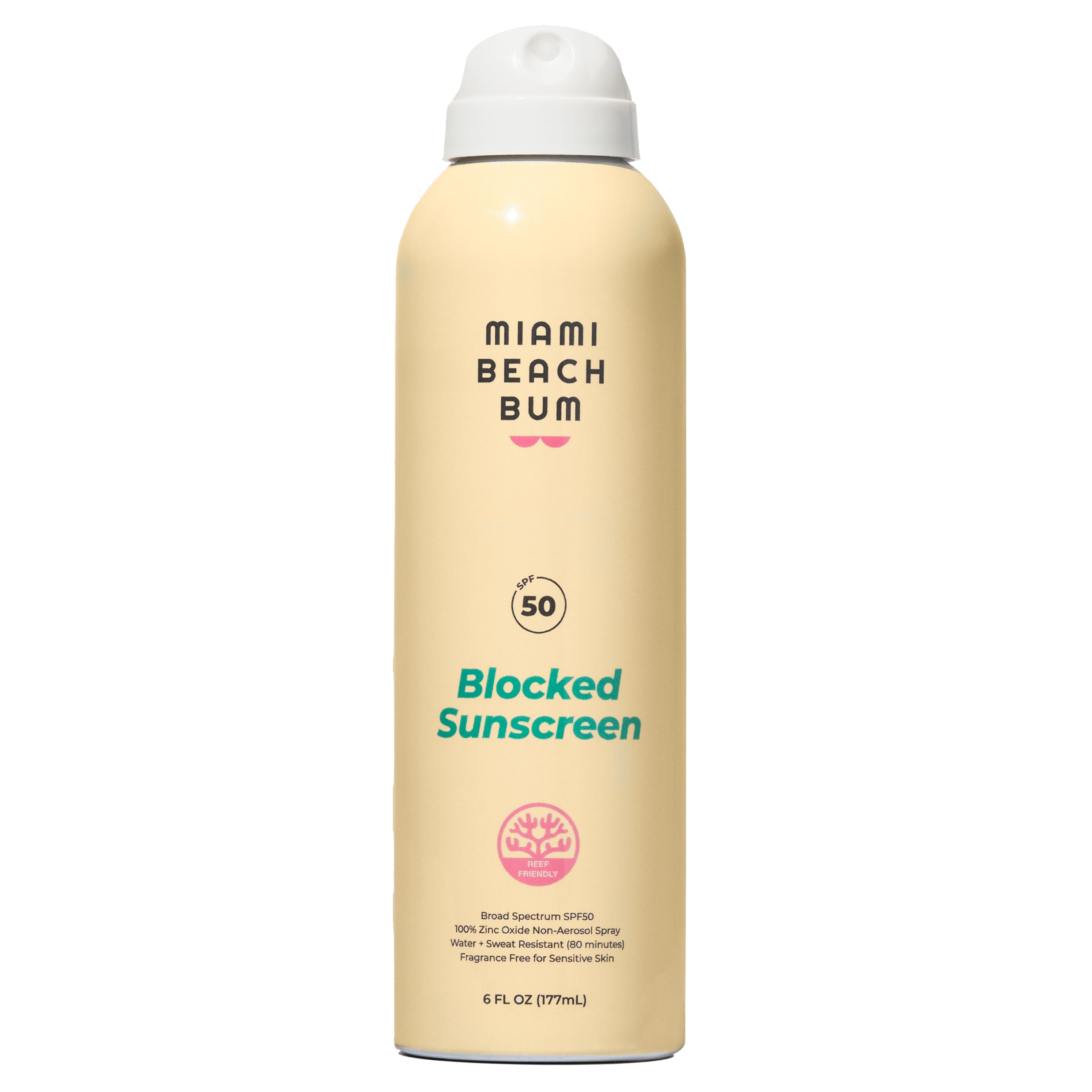
What the evidence actually supports is less glamorous but far more useful. Glistening skin as a visual cue, six seconds per limb as a timing anchor, rubbing in as a non-negotiable step. These are measurable, repeatable behaviors, not vague suggestions to “reapply often.”
Where conventional advice falls short is treating spray sunscreen as a standalone solution rather than one piece of a layered routine. A lotion base in the morning, followed by spray for touch-ups throughout the day, solves the measurement problem sprays create while keeping the convenience that makes them worth using at all.
If you take one thing from this, prioritize the rub-in step over everything else. It costs you ten extra seconds and it’s the difference between real protection and a false sense of coverage. Everything else, timing, quantity, layering, works better once that habit is locked in.
— Ayssa
Build Your Spray Sunscreen Routine With Miami Beach Bum
Miamibeachbum built its lineup around exactly the layering routine dermatologists recommend, so you’re not guessing which product covers which job.
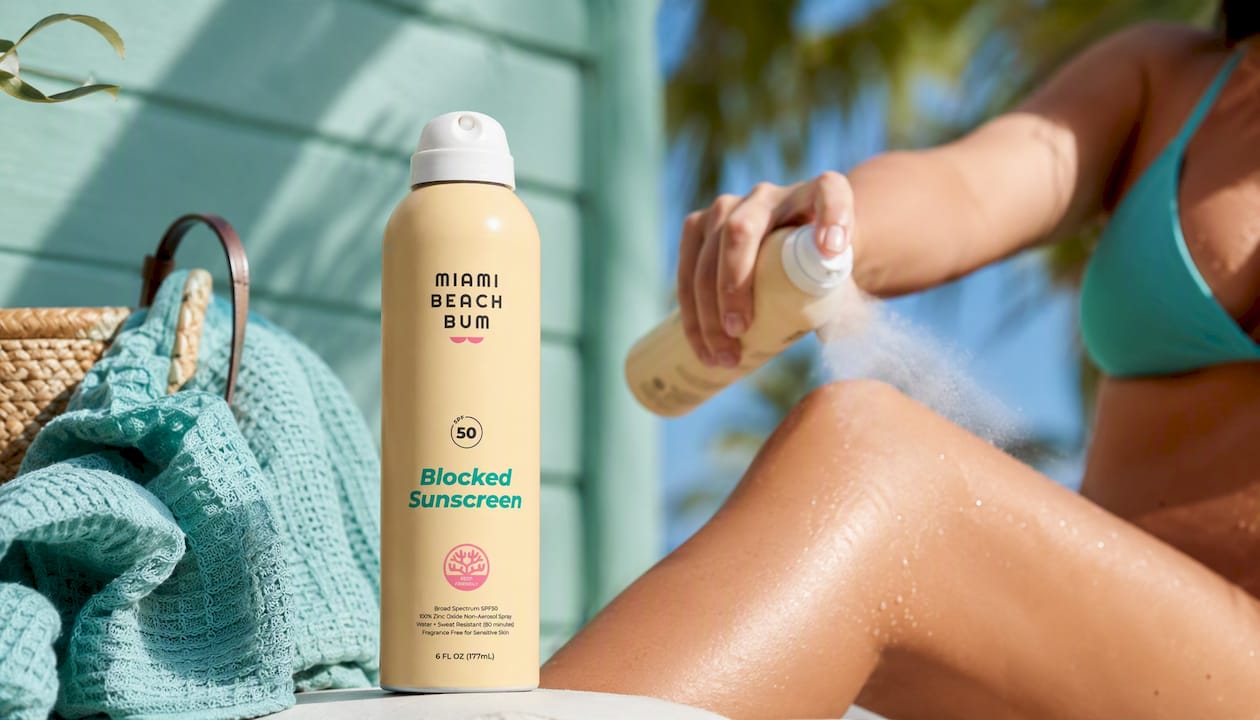
For your base layer, reach for Blocked SPF50, a body sunscreen formulated for long beach days and primary coverage before you head outside. For your face, where inhalation risk and eye irritation matter most, Save Face SPF 50 gives you a sheer mineral option built for touch-ups without clogging pores or stinging your eyes. After a full day of sun, Bum + Body Cream helps calm irritation and restore moisture your skin lost to heat and salt water. If you swim often, pair Blocked with Hair Shield to keep your scalp and strands protected too. Daily wear calls for a lighter routine; a full beach day calls for the complete lineup. Start with the Blocked SPF50 body sunscreen and build your routine from there.
Sources
- How to use stick and spray sunscreens
- 6 Major Mistakes Dermatologists Wish You’d Stop Making With Spray Sunscreen
- Does spray-on sunscreen work as well as lotion?
- How to apply spray sunscreen — Good Housekeeping