


Apply broad-spectrum sunscreen with at least SPF 30 to the backs of your hands and any exposed forearm every single morning, or skip the lotion altogether and wear UPF 50+ sleeves or gauntlets instead. Either one works. What doesn’t work is treating your hands and arms as an afterthought while you carefully cover your face. The American Academy of Dermatology and Skincancer both flag hands and forearms as chronically exposed sites that need the same daily attention as your face. Miamibeachbum builds reef-safe SPF specifically for this kind of everyday, all-over coverage.
Here’s what to do starting tomorrow morning:
- Rub broad-spectrum sunscreen with at least SPF 30 into the backs of both hands and up the forearms, and let it absorb before you touch a steering wheel or pull on gloves.
- Stash a sunscreen stick in your bag or car so reapplying after you wash your hands takes ten seconds, not a detour to the bathroom.
- Swap to UPF 50+ sleeves or fingerless gauntlets on days you know you’ll wash your hands repeatedly, drive for hours, or garden past lunch.
- Reapply sunscreen every two hours during extended outdoor time, no matter how “already tan” your arms look.
Key Takeaways
Daily protection for hands and arms comes down to one consistent habit: SPF 30+ every morning, reapplied after washing, or UPF 50+ fabric worn as a set-and-forget alternative.
| Point | Details |
|---|---|
| Apply SPF 30+ daily | Cover the backs of both hands and exposed forearms with broad-spectrum sunscreen every morning. |
| Reapply after washing | Handwashing, swimming, and sweating strip sunscreen, so keep a stick or tube within reach. |
| Follow the two-hour rule | Reapply every two hours during prolonged outdoor exposure, regardless of water resistance claims. |
| Switch to UPF for high-wash days | UPF 50+ sleeves or fingerless gauntlets suit driving, gardening, and repeated handwashing. |
| Pair SPF with barrier repair | Miamibeachbum’s Blocked SPF50 and Save Face SPF 50 offer reef-safe, non-greasy daily protection for hands and arms. |
Sourced Guidance on Hand and Arm Sun Protection
| Recommendation | Source |
|---|---|
| Apply SPF 30+ broad-spectrum sunscreen to hands every morning | American Academy of Dermatology |
| Reapply after handwashing, swimming, or sweating | American Academy of Dermatology |
| Choose broad-spectrum, water-resistant formulas for chronically exposed skin | Skincancer |
| Pair daily SPF with barrier repair (moisturizers, retinoids, antioxidants) | Frieder Dermatology |
| Follow a protect-repair-rebuild routine for sun-damaged hands | Agullo Plastic Surgery |
For more on layering SPF with your existing routine, Miamibeachbum’s guide on layering sunscreen and body lotion and ZenChemy Lab’s piece on skin hydration both go deeper into keeping the skin barrier healthy alongside daily sun protection.
This article is general information, not a substitute for advice from a qualified doctor. Consult a qualified healthcare professional about your own circumstances before acting on anything here.
Table of Contents
- How to Protect Hands and Arms From Sun Every Day
- Sunscreen, UPF Clothing, or UV Gloves: Which Should You Use?
- What to Look For in a Sunscreen for Hands and Arms
- How Much Sunscreen Should You Use, and How Often?
- When Should You Choose UPF Clothing Instead of Sunscreen?
- Everyday Products That Make Sun Protection Effortless
- Try Blocked SPF50 for Daily Hand and Arm Protection
- Sources
How to Protect Hands and Arms From Sun Every Day
A workable daily routine has exactly two moving parts: something you do in the morning, and something you do after your hands get wet. Overcomplicate it and you’ll skip it by Thursday.
Morning: After cleansing, apply broad-spectrum SPF 30+ to the backs of both hands and up to where your sleeve line sits, roughly a nickel-sized amount total. Give it 60 to 90 seconds to set before you grab your keys or slip on driving gloves, since rubbing it off half-absorbed defeats the purpose.
After every handwash: This is the step almost everyone skips, and it’s the one dermatologists flag most. A dermatology-recommended routine treats reapplication after washing as non-negotiable, not optional. Keep a stick by your bathroom sink and a travel tube in your bag or desk drawer so there’s zero excuse.
When you know you’re in for a long exposure day (a road trip, a full afternoon in the garden, a stadium event), swap the lotion habit for UPF sleeves or gauntlets before you head out. Put them on once and you’re covered for hours without thinking about it again.

Pro Tip: Pair one stick with your morning routine and a second one in your car’s console. The friction that kills most sunscreen habits isn’t forgetting, it’s not having the product within arm’s reach when you remember.
Sunscreen, UPF Clothing, or UV Gloves: Which Should You Use?
None of these three options is universally “better.” They solve different problems, and most people end up using two of them depending on the day.
Sunscreen gives you flexible, bare-skin coverage that works for short errands, desk work near a window, or a quick walk. The tradeoff is that it needs reapplication after washing, swimming, or heavy sweating, which makes it a weaker fit for anyone whose hands are in and out of water all day.
UPF 50+ clothing and sleeves offer permanent, fabric-based protection that doesn’t wash off, wear thin, or need topping up. Once you put on a UPF 50+ sleeve, that protection stays put for the entire day regardless of how many times you wash your hands or wipe sweat off your arms. Cyclists and outdoor workers gravitate here because reapplying lotion mid-shift or mid-ride simply isn’t practical.
UV gloves and gauntlets solve a narrower but very real problem: driving. A greasy palm on a steering wheel is annoying, and a fingerless UV gauntlet gives you sun coverage on the back of the hand and forearm while keeping your grip dry. They’re also a smart pick for anyone who washes their hands dozens of times a day, from healthcare workers to parents of toddlers.
Match the option to your actual day:
- Commuters and drivers: fingerless UV gauntlets, since car windows block UVB but let a meaningful share of UVA through.
- Outdoor workers and gardeners: UPF 50+ sleeves, because reapplying sunscreen every hour while working isn’t realistic.
- Short errands and desk-adjacent days: a quick swipe of SPF 30+ is enough.
- Cyclists and runners: moisture-wicking UPF sleeves that won’t slide or trap heat.
What to Look For in a Sunscreen for Hands and Arms
Not every sunscreen on your shelf is built for hands. Skin here is thinner and drier than most other body areas, and it takes more friction (steering wheels, keyboards, dish soap) than almost anywhere else on your body.
SPF and spectrum come first. Look for SPF 30 or higher with broad-spectrum protection, meaning it blocks both UVB (the burn-causing rays) and UVA (the aging and deep-damage rays). Skipping broad-spectrum coverage means you’re only defending against half the problem.
Texture matters more here than almost anywhere else. A rich, heavy lotion that feels great on your chest will leave your hands greasy on a keyboard or steering wheel within minutes. Sticks and fast-absorbing gel formulas tend to win for daily hand and arm use because they don’t leave residue on everything you touch.
Water resistance claims need a reality check. A sunscreen labeled water-resistant for 40 or 80 minutes is describing swimming or sweating, not scrubbing your hands with soap. Treat every handwash as a reset button regardless of what the label says.
If you have sensitive skin or care about reef-safe formulation, mineral sunscreens built on zinc oxide or titanium dioxide tend to be gentler and avoid the chemical filters that some marine ecosystems and sensitive skin react to. This is where a reef-safe formula earns its keep, since it protects your skin without the tradeoffs some chemical filters carry.
Pro Tip: If a sunscreen leaves a white cast on your hands, rub it in more thoroughly before it fully sets, or size down to a sheer mineral formula made for visible, high-friction areas like hands and face.
How Much Sunscreen Should You Use, and How Often?
Most people apply about a quarter of what they actually need on their hands and forearms, which is a big part of why hands age faster than the rest of the body.
- Apply enough to see a faint sheen. For both hands and forearms combined, that’s roughly a half-teaspoon, more than most people intuitively use.
- Reapply immediately after handwashing. Soap and water strip sunscreen almost completely, so a wash at 9 a.m. means your 8 a.m. application is already gone.
- Reapply after swimming or heavy sweating, even with water-resistant formulas.
- Follow the two-hour rule for prolonged outdoor exposure, resetting the clock regardless of how the last application held up.
- Reapply before driving long distances, since dashboard glare and window-filtered UVA add up over hours behind the wheel.
- Reapply after using hand sanitizer, which strips product almost as effectively as soap and water.
Dermatologists specifically call out hands as one of the most frequently neglected areas in a daily SPF routine, which is a major reason hands show visible sun damage years before the face does. That gap between what people apply to their face versus their hands is where most preventable damage happens.
Pro Tip: Set a recurring reminder on your phone for early afternoon. By the two-hour mark after your morning application, most people have already washed their hands enough times to have lost meaningful coverage.
When Should You Choose UPF Clothing Instead of Sunscreen?
Some days call for a garment, not a tube. If you’re washing your hands more than a few times an hour, sitting in a car for a multi-hour drive, or spending a full day outdoors without breaks, sunscreen reapplication stops being realistic and fabric-based protection takes over.
High-wash environments are the clearest case. Healthcare workers, food service staff, and parents managing constant diaper changes and meal prep don’t have time to reapply lotion every 20 minutes. A UPF 50+ sleeve or glove eliminates that math entirely, since fabric-based UV protection doesn’t wash out or wear off the way lotion does.
Long, unbroken exposure is the second case. Road trips, open-air concerts, and stadium events all put you in the sun for stretches longer than any two-hour reapplication window can realistically cover, especially if sunscreen isn’t within reach.
If you have sensitive or reactive skin, look for UPF fabrics that carry an OEKO-TEX certification or use woven mineral fibers rather than a chemical UV coating, since those tend to cause less irritation over repeated wear. On fit, fingerless gauntlets keep your grip and dexterity intact for driving or fine hand work, while full-finger gloves suit gardening or anything involving thorns, tools, or rough surfaces.
Pro Tip: Keep a pair of UPF sleeves in your glove compartment. Car windows block most UVB but let a meaningful share of UVA through, so “the sun isn’t even hitting me” while driving is a myth worth retiring.
Everyday Products That Make Sun Protection Effortless
The habit that survives is the one with the least friction. That usually means picking formats that fit into pockets, bags, and existing routines rather than adding a new step.
- Sunscreen sticks are the single easiest format for backs of hands, since there’s no mess, no need to wash your hands afterward, and they slide into a bag or glovebox without leaking.
- Travel-size tubes by the sink turn post-handwash reapplication into a two-second habit instead of a chore you’ll eventually skip.
- Lightweight UPF 50+ sleeves or fingerless gauntlets cover commuting, gardening, and long outdoor stretches without a single reapplication.
- A hand cream or antioxidant serum layered after sunscreen helps maintain the skin barrier and gradually fades existing sun spots, an approach echoed in clinician-recommended hand routines that pair daily SPF with barrier repair. A resource like ZenChemy Lab’s guide to hand cream ingredients is a good place to understand what to look for in a repair formula.
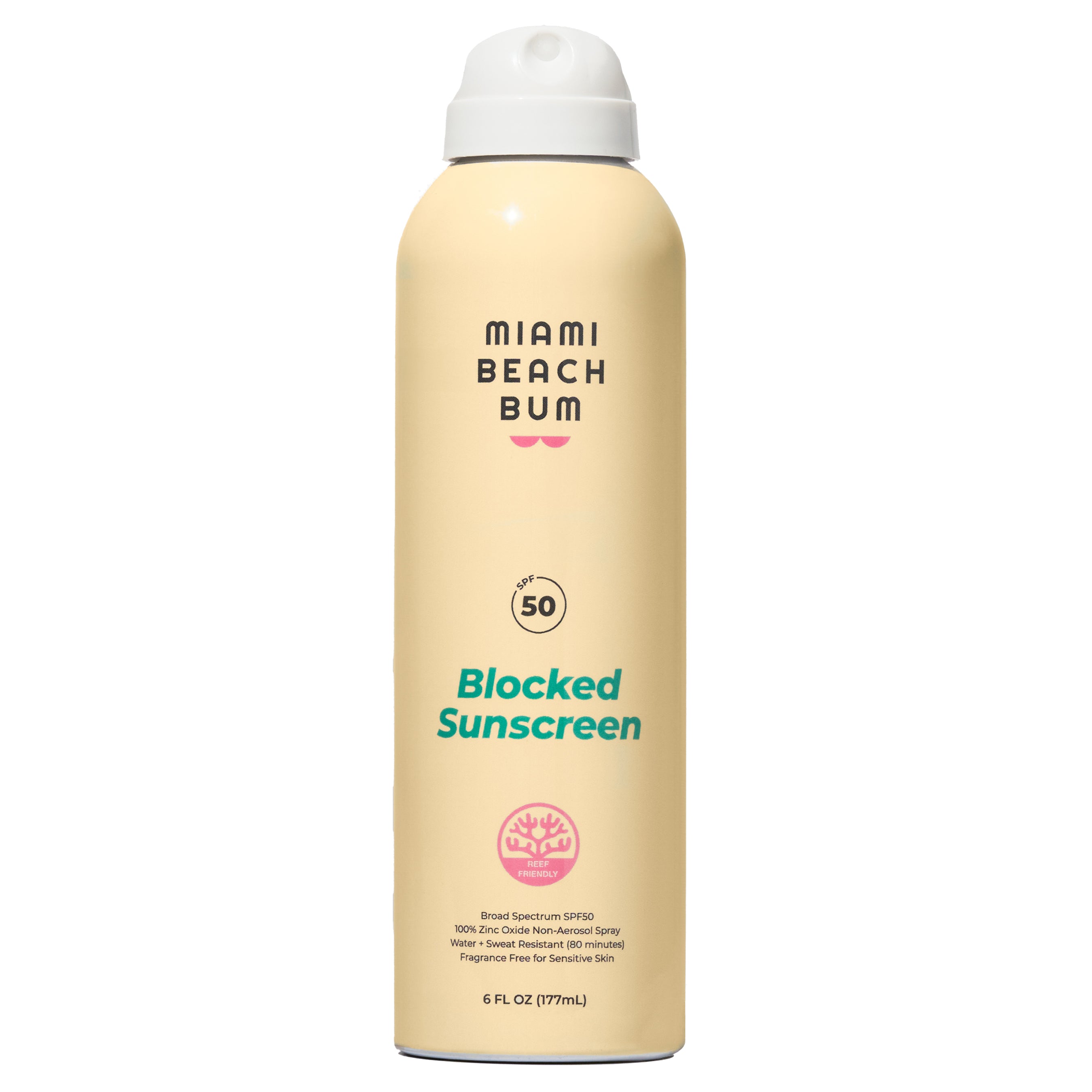
For the SPF itself, Miamibeachbum makes two formulas built for exactly this kind of daily, high-visibility use: Blocked SPF50, a reef-safe mineral sunscreen suited to hands, arms, and body, and Save Face SPF 50, a sheer mineral serum light enough to double up on the backs of your hands when you want a non-greasy, near-invisible finish.
Pro Tip: Layer sunscreen first, let it absorb, then follow with a hand cream to lock in moisture without diluting your SPF. Applying them in the wrong order is one of the most common mistakes people make with daily sun care.
Why daily habits beat sporadic effort
Most sun damage on hands and arms isn’t caused by one bad day at the beach. It’s the accumulation of a thousand small gaps, the days you meant to reapply and didn’t, the years you protected your face religiously and let your hands fend for themselves. That’s why Miamibeachbum leans so hard on repeatable habits over occasional, heavy-handed effort: a stick you actually use every day beats a premium lotion that sits in a drawer.
Consistency also compounds in a way sporadic protection never does. A sunscreen stick reapplied after every handwash, or a pair of UPF sleeves worn on every long drive, prevents the vast majority of visible aging and precancerous change over time, because it closes the gap between what you intend to do and what you actually do. Pair that daily SPF habit with a moisturizer that supports your skin barrier, and you’re not just preventing new damage, you’re giving your skin the conditions it needs to recover from the damage already done.
Try Blocked SPF50 for Daily Hand and Arm Protection
If you’ve been relying on whatever sunscreen is left in the bottle from your last beach trip, it’s worth switching to a formula actually built for daily, high-friction use. Blocked SPF50 is Miamibeachbum’s reef-safe mineral sunscreen, formulated to absorb quickly and skip the greasy residue that makes people avoid reapplying on their hands.
Use it the way this article outlines: a nickel-sized amount across the backs of both hands and up your forearms each morning, reapplied after every handwash, swim, or heavy sweat session, and again every two hours if you’re outdoors for a long stretch. If you want a lighter, near-invisible option for the backs of your hands specifically, Save Face SPF 50 works well as a sheer mineral alternative that layers easily under gloves or a driving grip.
Grab Blocked SPF50 today and add it to your morning routine, or pick up the Bodycare Discovery Set if you want to try Miamibeachbum’s reef-safe lineup, including barrier-repair creams, before committing to a full-size bottle.