


TikTok functions as a rapid discovery and amplification layer for body-care products, and it favors anything that is visually demonstrable, easy to slot into a routine, and one tap away from purchase. That’s the real answer to how TikTok shapes body care: it doesn’t invent trends so much as it accelerates the ones that photograph well and sell fast. TikTok Shop’s body-care category has grown fastest around subcategories like tanning and sunscreen precisely because those products show a visible before-and-after in fifteen seconds. But growth in views and sales doesn’t equal proof that something works.
- A viral clip is a signal to research, not evidence of efficacy.
- Products that demonstrate visually (glow, tan, texture change) spread faster than products with invisible benefits, regardless of which one actually helps your skin.
- More than half of TikTok Shop wellness buyers later doubted their purchase was worth it, according to Glossy’s 2025 reporting, which tells you the hype-to-satisfaction pipeline has real leaks.
Key Takeaways
TikTok accelerates body-care trends by rewarding visual, fast-payoff content, but viral popularity and clinical evidence rarely move at the same speed.
| Point | Details |
|---|---|
| TikTok favors visuals | The algorithm rewards demonstrable results, so aesthetic trends often outpace clinically supported ones. |
| Evidence varies widely | Slugging has partial support; gua sha, dry brushing, and layered acids remain largely unproven. |
| Trust gap is measurable | A notable proportion of TikTok Shop wellness buyers doubted their purchase was worth it. |
| Vetting takes five steps | Check the source, ingredient, evidence, patch test, then weigh cost against benefit before committing. |
| Miamibeachbum offers vetted formulas | Products like Bum + Body Cream and Save Face SPF 50 prioritize ingredient transparency over trend hype. |
Table of Contents
- What Trending Body Care Looks Like on TikTok Right Now
- Which Viral Trends Hold Up Under Clinical Scrutiny
- How the Algorithm Turns a Routine Into a Fad
- What Happens After the Trend Goes Viral
- How to Vet a Viral Body-Care Trend Before You Try It
- Why We Take an Evidence-First Approach to Trend Coverage
- Why Some Trends Spread Faster Than the Facts Can Catch Up
- Viral Trends That Went Right and Wrong
- How TikTok Changed the Game Compared to Instagram and YouTube
- A Vetted Option When You’re Ready to Buy, Not Just Scroll
- Frequently Asked Questions
- Sources
What Trending Body Care Looks Like on TikTok Right Now
The role of TikTok in body care trends shows up most clearly in a handful of repeating formats that dominate the For You page. Each one follows a similar pattern: a simple demonstration, a bold claim, and a product tag.
- Slugging: Coating skin in an occlusive layer (often petroleum jelly) overnight, shown as a glossy, dramatic “after” shot the next morning.
- Skin cycling: Rotating actives and rest nights on a four-day schedule, usually explained with a calendar graphic.
- Gua sha and body gua sha: Stone tools dragged across the face or body, framed as instant “sculpting” and lymphatic drainage.
- Red-light masks and wands: At-home devices promising collagen and glow, filmed under moody lighting for maximum visual payoff.
- Dry brushing: Bristle brushes used pre-shower, marketed for “detox” and smoother skin.
- Oral collagen supplements: Powders stirred into coffee, tied to claims about skin elasticity and hair growth.
- Unconventional acid use: Layering AHAs, BHAs, and retinoids in combinations dermatologists rarely recommend.
- Tanning and glow routines: Bronzing drops, tan extenders, and body oils shown under sunlight for maximum shimmer.
Some of these lean clinical (skin cycling, certain acids), while others are almost entirely aesthetic performance (gua sha, dry brushing). British Vogue’s roundup of trending body-care products shows this split clearly: ingredient-led, low-cost items sit next to purely visual enhancement products, and creators rarely distinguish between the two.
Which Viral Trends Hold Up Under Clinical Scrutiny
A JAAD clinical review cataloged dozens of these TikTok skincare fads and graded the evidence behind each one. The pattern is not encouraging for anyone assuming viral equals verified.
Slugging has some dermatological logic. Occlusives do reduce water loss, which helps genuinely dry skin, but the review found limited controlled data on the dramatic “glass skin” claims attached to it. Skin cycling is mixed: rotating actives to reduce irritation is a reasonable principle, but the specific four-night schedule popularized online has no dedicated trials behind it. Gua sha and dry brushing come back largely unsupported. Any temporary de-puffing or smoothness is mechanical and short-lived, not a lasting skin change. Red-light masks show mixed evidence. Some peer-reviewed data supports low-level light therapy for collagen stimulation, but at-home device strength and exposure time vary too widely to generalize. Oral collagen has a modest, mixed evidence base for skin hydration, well short of the transformative claims in most videos. Layering multiple acids has essentially no support and a documented risk of barrier damage.
| Trend | Claimed Benefit | Evidence Level |
|---|---|---|
| Slugging | Locks in moisture, “glass skin” | Some support for hydration; dramatic claims unproven |
| Skin cycling | Reduces irritation, improves tolerance | Principle sound; specific schedule untested |
| Gua sha / dry brushing | Sculpting, detox, smoother skin | Largely unsupported, effects temporary |
| Red-light masks | Collagen stimulation, glow | Mixed; depends on device strength and use |
| Oral collagen | Elasticity, hydration | Modest, mixed evidence |
| Layered acids | Faster results | Unsupported; irritation risk |
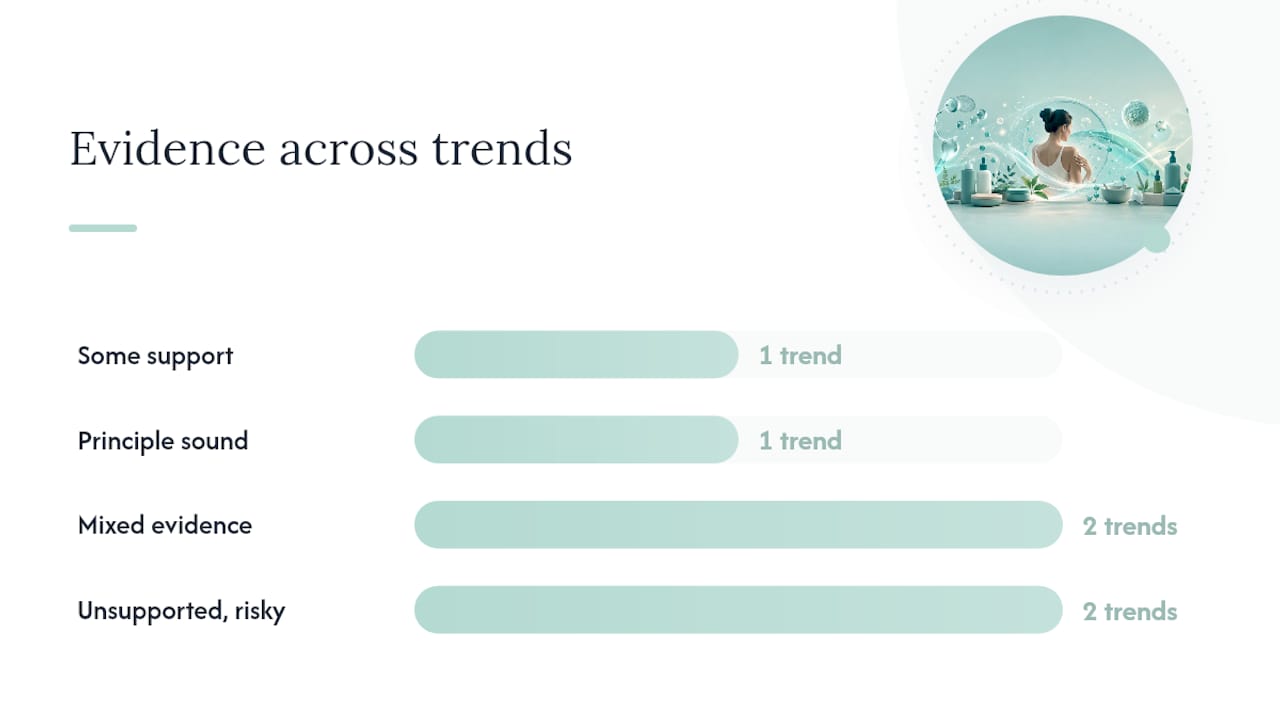
Fifty-five percent of TikTok Shop buyers in a 2025 survey disagreed that a wellness product they bought because of social media was worth it. That statistic lines up almost exactly with how thin the clinical support is for half the trends above.
Pro Tip: If your skin is actively breaking out, irritated, or inflamed, pause any new trend immediately and see a dermatologist before adding anything else to the routine. Layering unverified treatments on compromised skin is how a minor issue turns into a lasting one.
How the Algorithm Turns a Routine Into a Fad
TikTok’s recommendation system rewards completion rate, rewatches, and comments, so a fifteen-second before-and-after clip outperforms a ten-minute explainer nearly every time. That single mechanic explains why visual, fast-payoff routines dominate over nuanced skincare advice.
- Hashtag clusters (#Bodycare, #SkinCycling, #TikTokMadeMeBuyIt) group similar content, so one viral post pulls a wave of copycats into the same feed pattern.
- Micro-influencers with modest followings can outsell established names because TikTok’s algorithm rewards engagement over follower count, letting a niche skincare creator with 20,000 followers move real inventory.
- Creator affiliate payouts through TikTok Shop mean creators earn a commission on every sale their video generates, which shapes what gets filmed and how enthusiastically it gets pitched.
- TikTok Shop lets viewers buy without leaving the app, collapsing the gap between “that looks cool” and “I just ordered it” into a single tap.
Before-and-after formats map directly onto what the algorithm favors: a clear visual delta, a short runtime, and an obvious payoff moment that invites rewatching.
What Happens After the Trend Goes Viral
The purchase surge is real, but satisfaction often lags behind it. The same survey data showing 55% buyer disappointment also found that consumers trust medical professionals far more than paid promotions, even when they still buy based on the promotion. That’s the core tension: TikTok drives the sale, but it doesn’t earn full trust doing it.
- Disclosure remains inconsistent. Many videos blur the line between genuine enthusiasm and paid partnership, which the FTC requires creators to flag clearly and often don’t.
- Before-and-after clips frequently hide confounders like lighting, filters, or temporary swelling reduction, a caution dermatology reviewers have raised directly.
- Unsupervised teens face outsized risk: mixing retinoids, acids, and devices without guidance can cause real dermatologic harm, and a viral trend rarely comes with an age warning.
- Delaying an actual dermatology visit in favor of a trending “fix” is one of the more serious harms tied to viral skincare content.
Look for creators who cite studies, quote licensed professionals, or clearly disclose sponsorships. Brands and creators that point people toward ingredient research instead of relying purely on hype tend to close that trust gap faster than the ones chasing views alone.
How to Vet a Viral Body-Care Trend Before You Try It
Run any trend through this sequence before it touches your skin:
- Check the source. Is this a licensed dermatologist, an esthetician, or a creator with no stated credentials?
- Identify the active ingredient or mechanism. Name it specifically, not just the trend label.
- Search for real evidence. Look for randomized controlled trials or a clinical review rather than testimonials.
- Patch test small. Apply to a small area for several days before going all in, especially with actives.
- Weigh cost against likely benefit. A $40 device with weak evidence isn’t worth the same risk as a $12 after-sun ingredient with a longer track record.
Stop immediately if you notice redness, burning, or breakouts that don’t fade within a day or two. See a dermatologist if a reaction persists past a week or if you’re combining multiple actives and can’t tell which one is the problem.
Pro Tip: Search the ingredient name plus “clinical trial” or “dermatologist review” before searching the trend’s hashtag. You’ll find the real evidence faster than sorting through creator opinions.
Why We Take an Evidence-First Approach to Trend Coverage
Evaluating a body-care trend properly means separating what a video shows from what a study confirms. That’s the standard applied throughout this piece: cross-referencing viral claims against dermatology literature like the JAAD review before repeating them as fact.
- Ingredient claims get checked against known research, not creator captions.
- Sun-care advice draws on formulation science, including how hyaluronic acid actually behaves in a product.
- Product examples referenced here, including Bum + Body Cream, are chosen because their formulations hold up to the same ingredient scrutiny applied to viral products.
Why Some Trends Spread Faster Than the Facts Can Catch Up
Social proof drives most viral body-care behavior. When thousands of comments say “this worked for me,” viewers borrow that confidence instead of forming their own, a shortcut psychologists call informational social influence. Body care adds a second layer: appearance is deeply tied to identity, so a product promising visible change taps directly into self-image, not just skincare curiosity.
TikTok’s format compounds this. A fifteen-second transformation clip triggers a dopamine response tied to novelty and resolution, the same reward loop that makes before-and-after content so rewatchable. Comment sections then become informal focus groups, where agreement snowballs even without any clinical backing behind it.
There’s also a generational trust shift at play. Younger audiences increasingly treat peer creators as more relatable than dermatologists or brand marketing, even while surveys show they still value professional opinions more when explicitly asked. That contradiction, trusting peers in the moment but professionals in principle, explains why disclaimers and dermatologist cameos in viral videos tend to boost both engagement and sales. Creators know it, which is why so many now open videos with “I’m not a dermatologist, but…” before making a claim anyway.
Group identity matters too. Niche communities built around specific concerns (acne, eczema, ingrown hairs) create tight feedback loops where a product recommendation from someone with the same skin issue feels more credible than any generic ad, regardless of actual evidence quality.
Viral Trends That Went Right and Wrong
Slugging is arguably the trend that aged best. It had a plausible dermatological basis (occlusion reduces water loss), a low cost of entry, and low risk for most skin types. Even though the review found the “glass skin” framing overstated, the underlying practice caused little harm and helped genuinely dry skin, making it one of the rare viral trends where hype and function mostly lined up.
Layering multiple acids landed on the opposite end. Videos combining retinoids, AHAs, and BHAs in a single routine promised faster results but instead produced widely reported barrier damage, redness, and peeling among viewers who copied the routine without easing in. Dermatology reviewers flagged this combination specifically as a case where viral enthusiasm outran basic skin science.
TikTok Shop’s commerce side offers its own case study in what works when strategy, not just virality, drives results. One body-care brand’s rise to the top of TikTok Shop combined organic creator content with paid amplification and structured creator partnerships, showing that sustained success depends on strategy layered on top of a viral moment, not the viral moment alone. Brands that treated a single viral clip as the whole plan tended to spike and fade; the ones that built a repeatable content system around it kept selling.
How TikTok Changed the Game Compared to Instagram and YouTube
Instagram-era body care moved at a much slower pace. A trend needed a curated grid post, often a paid partnership with a recognizable name, and it spread mostly through static images and captions that took real effort to produce. YouTube added depth, ten-minute tutorials, ingredient breakdowns, long-form routines, but that depth came at the cost of speed. A YouTube trend could take weeks to build an audience.
TikTok compresses both. A single fifteen-second clip can outperform a year of Instagram posts because the algorithm surfaces content to strangers by default, not just to existing followers. That’s the structural shift: Instagram rewarded who you already followed, TikTok rewards what keeps people watching, regardless of whether they’ve ever seen the creator before.
The result is a much shorter runway between “someone tries something” and “it’s a global fad.” Where Instagram trends often took a full product cycle to peak, TikTok trends can peak and fade within a matter of weeks, driven by the same Shop-integrated commerce tools that let a video convert into a sale before the viewer even finishes scrolling. Global platform scale plays a role here too. TikTok now sits among the largest social platforms worldwide by user count, giving any single viral clip a far larger potential audience than earlier platforms offered at a comparable stage.
A Measured Take on TikTok and Body Care
TikTok’s speed is genuinely useful for discovery, but it was never built to vet claims. My honest read: treat every viral routine as a lead worth researching, not a verdict worth following. The readers who do best simply slow down by one search before they buy.
A Vetted Option When You’re Ready to Buy, Not Just Scroll
Once you’ve run a trend through the checklist above, the next question is simple: whose product actually backs up its claims? That’s where formulation transparency and reef-safe ingredients matter more than follower count. Miamibeachbum builds body care around ingredient education rather than trend chasing, which means the ingredient list holds up to the same scrutiny this article just walked you through.
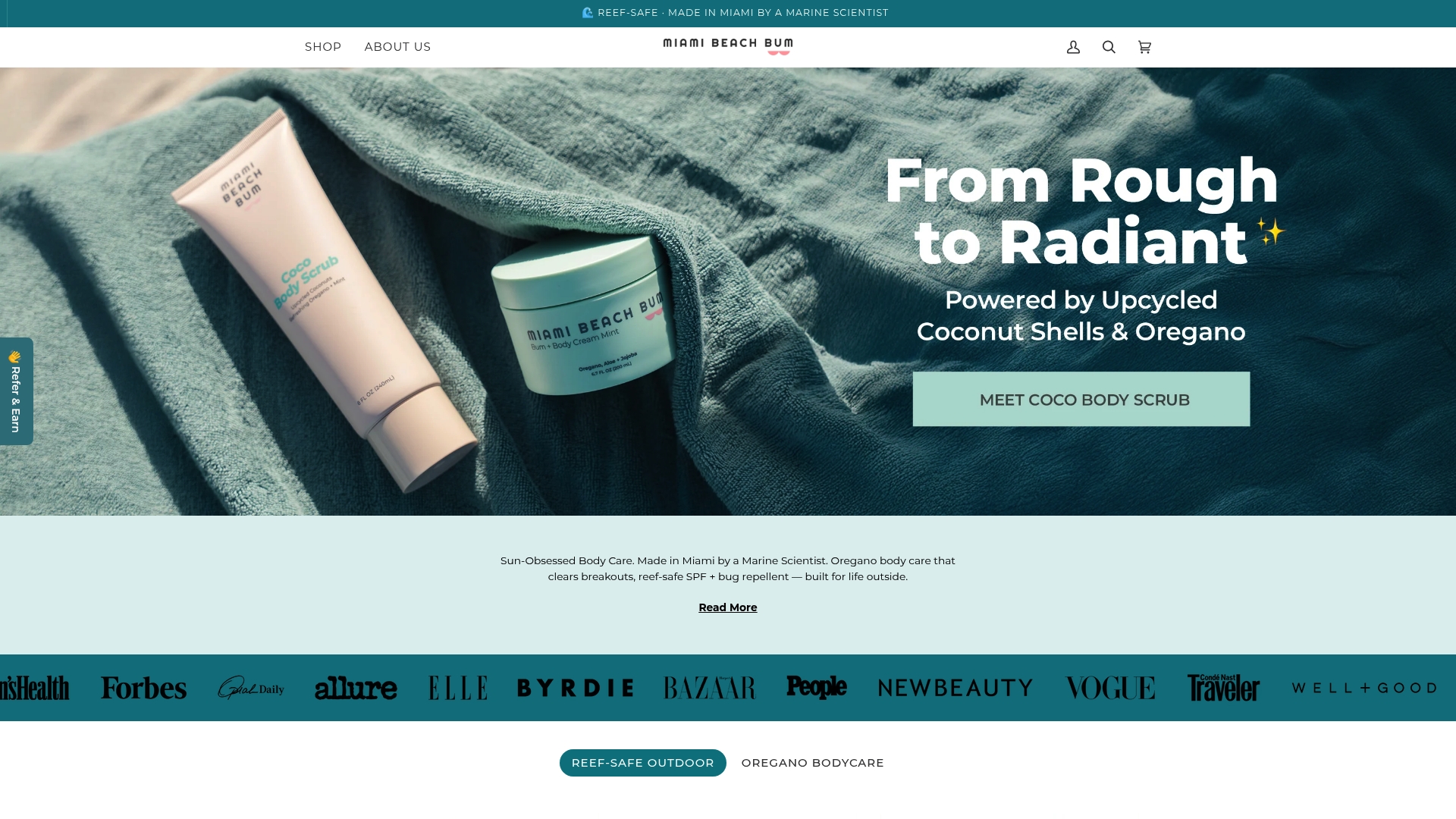
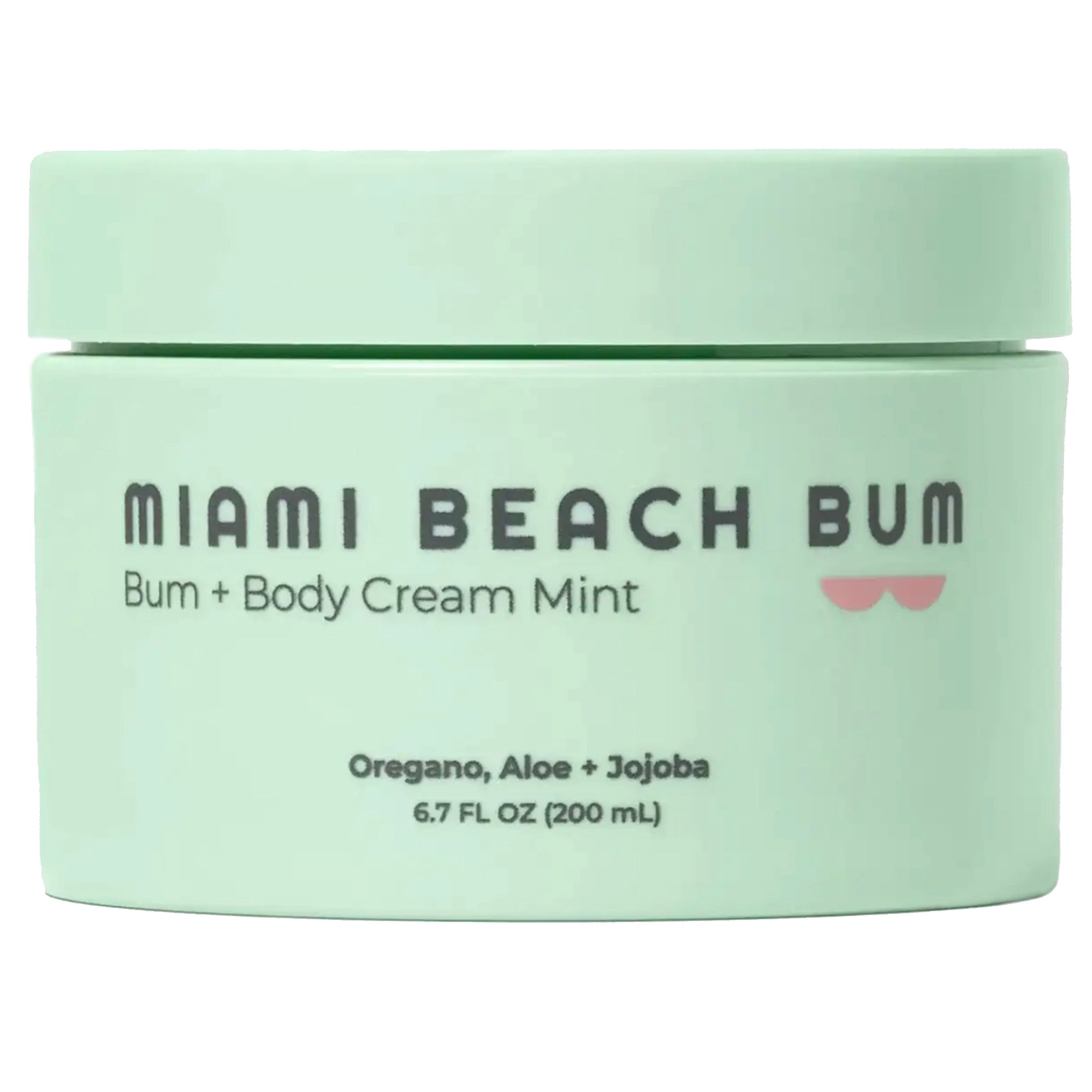
For breakout-prone skin that’s been through a rough patch of viral layering experiments, Bum + Body Cream targets razor burn and body acne with ingredients you can actually research. If sun protection is the goal, Save Face SPF 50 offers reef-safe mineral protection without the guesswork of an unverified tanning trend. Not sure where to start? The Bodycare Discovery Set is a low-risk way to test a full vetted routine before committing to a single product.
Frequently Asked Questions
What is the role of TikTok in body care trends? TikTok acts as a discovery and amplification engine, surfacing visually striking routines to huge audiences and letting viewers buy featured products instantly through TikTok Shop.
Are TikTok skincare trends backed by science? Some are. Slugging and parts of skin cycling have partial clinical support, while gua sha, dry brushing, and combining multiple acids remain largely unsupported by controlled research.
How do I know if a viral body-care trend is safe to try? Check who’s presenting it, identify the exact ingredient or mechanism, search for real clinical evidence, patch test before full use, and stop immediately if irritation appears.
Why do body-care trends spread faster on TikTok than on Instagram or YouTube? TikTok’s algorithm surfaces content to non-followers by default and rewards engagement over follower count, letting a single clip reach strangers instantly instead of relying on an existing audience.
Is it safe for teens to follow TikTok body-care trends? Not always. Unsupervised use of actives, devices, or layered ingredients carries real risk for teen skin, and any persistent irritation warrants a dermatologist visit rather than more trend-following.
This article is general information, not a substitute for advice from a qualified doctor. Consult a qualified healthcare professional about your own circumstances before acting on anything here.
Sources
- Wellness is king on TikTok Shop — but consumer trust is harder to come by
- 52787 TikTok Skincare Trends and their Clinical Evidence
- What’s fueling body care growth on TikTok Shop in 2026?
- TikTok Shop Is the New “It” Beauty Destination - The Robin Report
Recommended
- Body Care Dupes for Luxury Brands: What Actually Works – Miami Beach Bum
- Luxury Body Sun Care Examples: Top SPF Picks for 2026 – Miami Beach Bum
- Body Care for Uneven Skin Tone: Reef-Safe Beach Routine – Miami Beach Bum
- 5 Reasons Why Beauty Editors are Obsessed with Bum + Body Cream | Miami Beach Bum®