


Daily mineral SPF plus targeted actives (AHAs, BHAs, niacinamide) plus measured exfoliation is the fastest safe route to more even body skin tone. Follow this sequence: cleanse, exfoliate 1–2 times per week, apply leave-on actives daily, moisturize, then protect with reef-safe mineral SPF every beach day. Patch-test any new active before full application.
Table of Contents
- What does a 5-step body care routine for uneven skin tone look like?
- Which ingredients actually improve uneven body tone?
- Physical vs. chemical exfoliation: which one actually works for body hyperpigmentation?
- How do you protect healing skin with reef-safe sunscreen on beach days?
- Miamibeachbum products that fit the routine
- How long does it take to see results, and when should you see a dermatologist?
- Beach-day vs. non-beach day: two ready-to-use routines
- What actually causes uneven body skin tone?
- How should you moisturize for different skin types to support even tone?
- When do professional treatments make sense for uneven body tone?
- Antioxidants beyond vitamin C that prevent pigmentation
- How do different body areas need different treatment approaches?
- Lifestyle factors that affect uneven skin tone
- Safe ingredient combinations and what to avoid layering
- Key Takeaways
- The reef-safe approach is the only approach that actually holds
- Miamibeachbum makes the routine simple for beach days
- Useful sources and further reading
What does a 5-step body care routine for uneven skin tone look like?
A short, repeatable routine beats an elaborate one you skip.
- Cleanse. Use a gentle, sulfate-free body wash morning and evening.
- Exfoliate (1–2x per week). Rotate a physical scrub or chemical exfoliant based on skin type. Dermatologists recommend 2–3 times weekly for standard skin; once weekly for sensitive areas.
- Treat. Apply a leave-on active (niacinamide, vitamin C, or AHA lotion) to damp skin after exfoliation days and daily on non-exfoliation days.
- Moisturize. Lock in actives with a barrier-supportive cream. Look for ceramides, shea butter, or squalane. Check daily moisturizer ingredients that support tone correction.
- Protect. Apply reef-safe mineral SPF50 every morning before sun exposure. Reapply every 2 hours on beach days.
Morning vs. evening split: mornings call for antioxidants and SPF; evenings are the window for retinoids, AHAs, or repair creams when you are not heading back into the sun.
Pro Tip: Pick one visible area, like an elbow or inner thigh, and photograph it on day 1. Skin renewal takes roughly a month, so commit at least 14–28 days before evaluating progress.
Which ingredients actually improve uneven body tone?
The right ingredient depends on what is causing the discoloration.
| Ingredient | What it targets | Typical form | Best for |
|---|---|---|---|
| Niacinamide | Post-inflammatory hyperpigmentation (PIH), dark spots | 2–5% in lotion or serum | All skin types, sensitive skin |
| AHAs (glycolic, lactic, mandelic) | Surface cell turnover, texture, dullness | 5–10% in lotion or peel | Dry, normal, dull skin |
| BHAs (salicylic acid) | Clogged pores, body acne, rough texture | 1–2% in wash or lotion | Oily, acne-prone, KP |
| Vitamin C | Oxidative pigmentation, brightness | 3–15% in serum or scrub | Normal, dull, sun-damaged |
| Azelaic acid | PIH, redness, rosacea-type discoloration | 10–20% in cream | Sensitive, rosacea-prone |
| Retinoids | Cellular turnover, texture, scarring | Low-dose in cream | Normal to oily, not sensitive |
Use-cases by skin type:
- Sensitive skin: niacinamide and azelaic acid first; introduce AHAs slowly.
- Dry skin: lactic acid (gentler AHA) paired with a rich moisturizer.
- Oily or acne-prone: BHA body wash plus niacinamide lotion.
- Keratosis pilaris (KP): hybrid exfoliants that combine gentle physical particles with low-dose AHAs or BHAs address both surface buildup and cellular adhesion.
Safety notes: Do not layer AHAs and retinoids on the same evening. Over-exfoliation can trigger PIH, especially in friction-prone areas. Always patch-test a new active on a small area for 48 hours before full-body use.
Physical vs. chemical exfoliation: which one actually works for body hyperpigmentation?
Chemical exfoliants are generally superior for long-term tone improvement. Physical scrubs deliver immediate smoothness but do not change melanin production. For lasting results, pair physical exfoliation with leave-on actives that modulate pigmentation over time.
Stepwise protocol:
- Shower and wet skin thoroughly.
- Apply your chosen exfoliant (scrub or chemical lotion) to the target area.
- For physical scrubs: massage in gentle circular motions for 30–60 seconds. Sugar and jojoba beads are gentler; salt and coarse minerals suit very dry, rough skin only.
- Rinse completely and pat dry.
- Apply moisturizer immediately. Dermatologists recommend moisturizing right after exfoliation to prevent barrier damage and rebound pigmentation.
- Avoid shaving the same area on an exfoliation day to reduce irritation.
- Apply mineral SPF before any sun exposure following treatment.
How do you protect healing skin with reef-safe sunscreen on beach days?
Mineral SPF is non-negotiable for preventing new pigmentation. UV exposure is the primary trigger for melanin overproduction, so any active treatment you apply at night can be undone by a single unprotected beach morning.
Reef-safe means the formula relies on zinc oxide or titanium dioxide rather than chemical UV filters like oxybenzone or octinoxate, which research links to coral reef damage. Miamibeachbum’s Blocked SPF50 uses a mineral base that qualifies as reef-safe and sits at SPF50 for strong UVA/UVB coverage. For more on why mineral formulas work differently, see chemical vs. mineral sunscreen.
Application rule: use roughly a shot glass of SPF for the full body. Apply 15–30 minutes before sun exposure, and reapply every 2 hours or immediately after swimming or heavy sweating.
Layering order: actives first (niacinamide, vitamin C), then moisturizer, then SPF on top. Never mix SPF into your moisturizer — dilution reduces the protection factor. Consistent SPF use supports skin renewal and prevents the cycle of new dark spots forming while old ones fade.
Miamibeachbum products that fit the routine
These products map directly to the 5-step routine above.
- Blocked SPF50: reef-safe mineral SPF50 for the protect step. Apply as the final layer every morning and reapply every 2 hours on beach days. Suits all skin types.
- Bum + Body Cream: formulated to treat razor burn and body acne, making it the right moisturize-step pick for anyone dealing with PIH from shaving or breakouts. Apply to damp skin after actives.
- Coco Body Scrub: a gentle physical scrub for the exfoliate step. Use 1–2 times per week; follow immediately with moisturizer and SPF.
- Bodycare Discovery Set: a trial set for first-time buyers that lets you test multiple steps before committing to full sizes. Patch-test each product on a small area first.
Combine actives and products according to the ingredient rules in the section above. Do not introduce more than one new product per week so you can identify any reaction clearly.
How long does it take to see results, and when should you see a dermatologist?
| Timeframe | What to expect |
|---|---|
| 2 weeks | Smoother texture; some formulations with niacinamide show early spot reduction |
| 4 weeks | Improved brightness; reduced surface dullness from consistent exfoliation |
| 12 weeks | Visible tone improvement in most people using daily actives and SPF |
| 12 weeks | More pronounced results; stubborn PIH begins to respond |
Consistency is the single biggest determinant of visible improvement. Skin renewal cycles take roughly a month, so early changes appear around the 2–4 week mark and more pronounced results by 12 weeks.
Stop and consult a dermatologist if you notice:
- Increased redness, stinging, or burning that does not resolve within 24 hours
- Spreading discoloration or new dark patches after starting an active
- Active infection, open wounds, or severe irritation in the treatment area
- No visible change after 12 consistent weeks (professional options like chemical peels or IPL may be appropriate)
Beach-day vs. non-beach day: two ready-to-use routines
Beach-day routine
Pre-beach (evening before): cleanse, exfoliate if scheduled, apply niacinamide or AHA lotion, moisturize.
Morning of: cleanse lightly, apply vitamin C or niacinamide, moisturize, apply Blocked SPF50 15–30 minutes before leaving. Check skin prep before tanning for full pre-beach guidance.
In water: reapply SPF every 2 hours and immediately after toweling off. Skip retinoids and high-dose AHAs on beach days entirely.
After sun: rinse with cool water, apply a soothing moisturizer or after-sun recovery ingredients, then a light layer of Bum + Body Cream to support barrier repair.
Non-beach day routine
Morning: cleanse, apply vitamin C serum or niacinamide lotion, moisturize, apply mineral SPF (still required indoors near windows).
Evening: cleanse, apply AHA lotion or retinoid (not both), moisturize with a barrier cream.
Weekly: exfoliate 1–2 times, scheduled on evenings when no retinoid is planned for that night.
Timing note: wait 10–15 minutes after applying an active before layering SPF or moisturizer to allow absorption.
What actually causes uneven body skin tone?
Three sources account for most cases. Sun exposure triggers melanin overproduction in exposed areas like the chest, arms, and shoulders, creating patches that deepen over time without protection. Post-inflammatory hyperpigmentation (PIH) follows any skin trauma: razor burn, body acne, ingrown hairs, or friction from clothing all leave behind dark marks as the skin heals. Scarring from deeper wounds or repeated picking adds a third layer of discoloration that sits below the surface and responds more slowly to topical treatment.
Understanding the cause matters because it shapes which actives to prioritize. Sun-driven pigmentation responds well to vitamin C and consistent SPF. PIH from razor burn or acne responds to niacinamide and azelaic acid. Scarring may require professional options.
How should you moisturize for different skin types to support even tone?
Moisturizing is not optional in a tone-correction routine. A compromised skin barrier slows cell turnover and makes actives less effective.
Dry skin needs occlusive ingredients like shea butter or squalane to prevent transepidermal water loss. Apply to damp skin within 3 minutes of showering.
Oily or acne-prone skin does better with lightweight gel-creams or lotions containing ceramides and niacinamide. Heavy occlusives can clog pores and worsen body acne.
Sensitive skin benefits from fragrance-free formulas with colloidal oatmeal or allantoin to calm inflammation before actives are introduced.
KP-prone skin needs a moisturizer with a low-dose AHA or urea to soften keratin plugs while hydrating. Apply after every shower, not just on exfoliation days.
When do professional treatments make sense for uneven body tone?
Home care handles most cases of uneven tone, but some pigmentation does not respond to topical actives alone. Professional chemical peels using trichloroacetic acid (TCA) or glycolic acid at clinical concentrations accelerate cell turnover beyond what over-the-counter products can achieve. IPL (intense pulsed light) and laser therapies target melanin directly and suit sun-damage patterns on the chest, arms, and shoulders.
These options require a consultation. Skin type, pigmentation depth, and cause all affect which modality is appropriate. For in-office facial brightening support, medspa facials can complement a home routine. Professional treatments work best when home care is already in place, not as a replacement for it.
Antioxidants beyond vitamin C that prevent pigmentation
Vitamin C gets most of the attention, but several other antioxidants and anti-inflammatory agents meaningfully reduce pigmentation triggers.
Niacinamide blocks the transfer of melanin to skin cells, making it both an antioxidant and a direct pigmentation modulator. Green tea extract (EGCG) reduces UV-induced inflammation that leads to PIH. Resveratrol inhibits tyrosinase, the enzyme responsible for melanin production. Tranexamic acid interrupts the signaling pathway between UV exposure and melanin synthesis, making it particularly effective for sun-driven discoloration. Licorice root extract contains glabridin, which also inhibits tyrosinase without the irritation risk of hydroquinone.
Combining two or three of these in a routine (rather than relying on a single hero ingredient) tends to produce faster, more stable results.
How do different body areas need different treatment approaches?
Skin thickness and UV exposure vary significantly across the body, and treatment should match.
Arms and shoulders receive the most direct sun exposure and tend to develop sun-driven pigmentation. These areas tolerate stronger AHAs and vitamin C well. Reapplication of SPF here is critical.
Chest and décolletage have thinner, more reactive skin than the arms. Start with lower concentrations of actives and build slowly. PIH from sun damage here can be persistent.
Legs are prone to PIH from shaving and ingrown hairs. BHA body washes and niacinamide lotions address both the acne-like bumps and the resulting dark marks. Avoid coarse salt scrubs on freshly shaved legs.
Elbows and knees have thicker, drier skin that accumulates dead cells quickly. These areas benefit from more frequent exfoliation (up to 3 times per week) and heavier occlusive moisturizers.
Lifestyle factors that affect uneven skin tone
Diet, hydration, and clothing choices all influence how quickly skin tone evens out.
Adequate hydration keeps skin cells plump and supports barrier function, which in turn makes actives more effective. Diets high in antioxidants (leafy greens, berries, omega-3 fatty acids) reduce systemic inflammation that can worsen PIH. Conversely, high-glycemic diets can trigger hormonal fluctuations that increase melanin activity.
Clothing choices matter more than most people realize. Tight synthetic fabrics cause friction that triggers PIH on the inner thighs, underarms, and waistline. Loose, breathable fabrics (cotton, linen) reduce this friction. UPF-rated clothing provides a physical SPF layer for areas that are hard to reapply sunscreen to during a long beach day.
Safe ingredient combinations and what to avoid layering
Some combinations accelerate results; others cause irritation or cancel each other out.
Safe to combine: niacinamide + AHA, niacinamide + vitamin C, AHA + vitamin C (in separate steps), BHA + niacinamide, azelaic acid + niacinamide.
Use with caution: AHA + retinoid (use on alternate evenings, not the same night), vitamin C + benzoyl peroxide (can oxidize and reduce efficacy).
Avoid combining: two high-dose AHAs at once, retinoid + AHA on the same application, physical scrub + chemical exfoliant on the same day.
Layering order for body: water-based actives (niacinamide serum, vitamin C) first, then moisturizer, then SPF. Oil-based products go after water-based ones. Retinoids go on clean, dry skin before moisturizer, in the evening only.
Key Takeaways
Consistent daily mineral SPF combined with targeted actives and measured exfoliation is the most effective approach to body care for uneven skin tone.
| Point | Details |
|---|---|
| Daily mineral SPF | Apply reef-safe SPF50 every morning; reapply every 2 hours on beach days to prevent new pigmentation. |
| Measured exfoliation | Exfoliate 2–3 times weekly for standard skin; once weekly for sensitive areas. Chemical exfoliants produce longer-lasting tone improvement than physical scrubs alone. |
| Targeted actives | Niacinamide, AHAs, and vitamin C address different pigmentation causes; match the ingredient to your skin type. |
| Consistency over speed | Visible improvement takes 14–28 days minimum; most actives show pronounced results by 12 weeks. |
| Miamibeachbum routine fit | Blocked SPF50, Bum + Body Cream, and the Coco Body Scrub map directly to the protect, moisturize, and exfoliate steps. |
The reef-safe approach is the only approach that actually holds
Most tone-correction advice focuses on what you apply at night and ignores what happens the next morning at the beach. That gap is where progress stalls. You can use the best niacinamide lotion available, but if you spend three hours in the sun without mineral SPF, you are resetting the pigmentation clock every single day.
The reef-safe mineral route is not just an environmental choice. Zinc oxide sits on the skin’s surface and physically blocks UV rays immediately upon application, with no activation time. That matters on a beach morning when you are running out the door. Chemical filters need 20–30 minutes to bind to skin before they work, which means most people are unprotected during the window that counts most.
The other piece that gets underestimated is barrier health. Aggressive exfoliation without adequate moisturizing after creates micro-damage that triggers more PIH, not less. The routine works because every step supports the next one: exfoliation clears the path for actives, actives modulate pigmentation, moisturizer protects the barrier, and SPF locks in the progress. Remove any one step and the whole cycle slows down.
Miamibeachbum makes the routine simple for beach days
If you spend real time at the beach, you need products that are built for that environment, not just adapted from a standard skincare shelf.
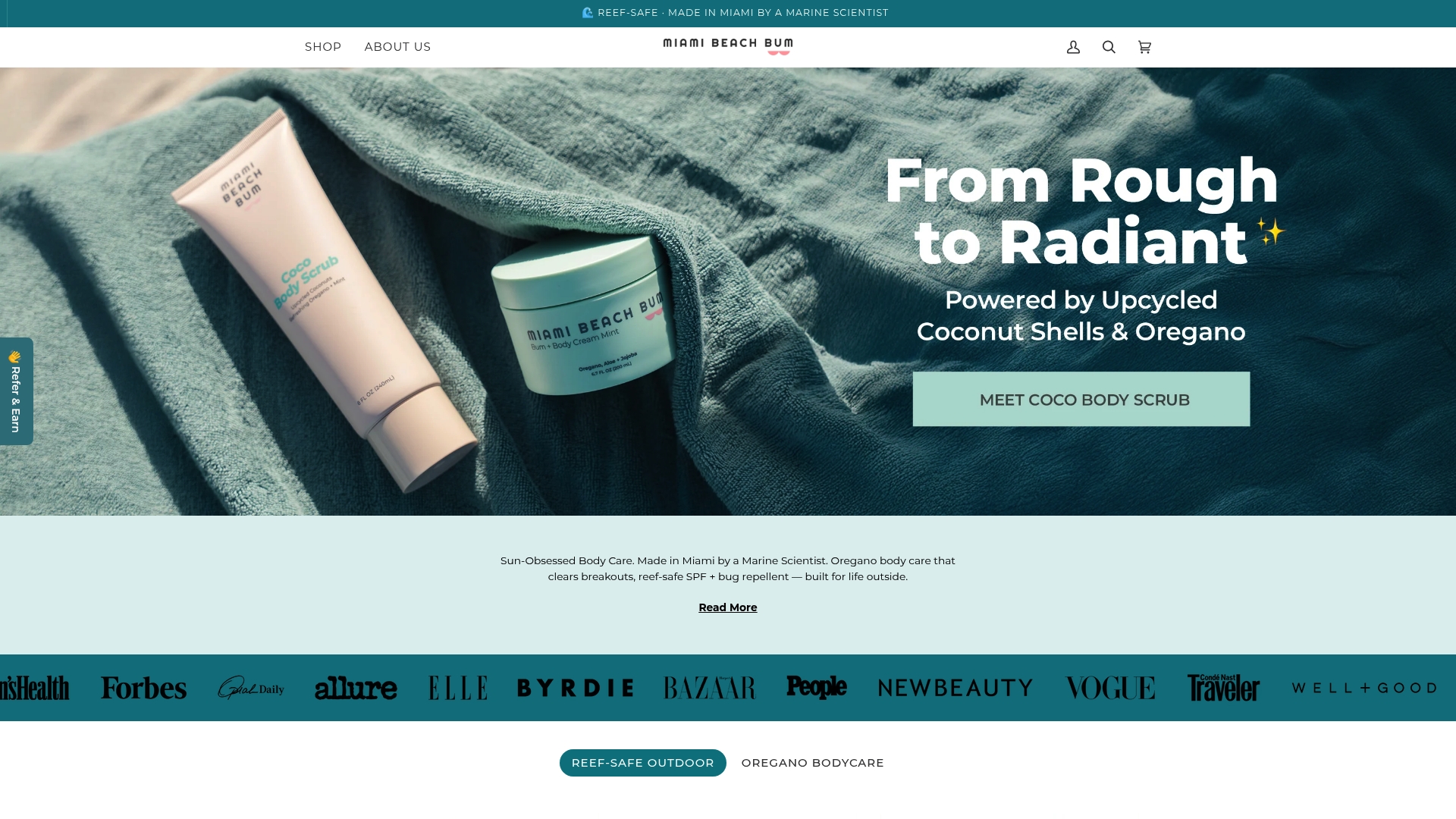
Miamibeachbum formulates with marine and botanical ingredients specifically for beach-lifestyle skin. Blocked SPF50 covers the protect step with a reef-safe mineral formula at SPF50, no white cast, and water-resistant wear. The Bum + Body Cream handles the moisturize and repair step, with a formula designed to calm razor burn and body acne, two of the most common PIH triggers. New to the line? The Bodycare Discovery Set lets you trial the full routine before committing to full sizes. The brand’s marine scientist–made formulations are built around reef-safe standards from the ground up. Shop the set and start the routine this week.
Useful sources and further reading
- Allure: Best Body Scrubs — dermatologist-backed guidance on exfoliation frequency, chemical vs. physical scrubs, and PIH risk.
- Byrdie: Best Body Scrubs, Tested and Derm-Backed — expert testing on scrub particle types, hybrid exfoliants, and KP treatment.
- InStyle: Best Body Scrubs — frequency recommendations and sensitive-skin guidance from dermatologists.
- Laser Skin Solutions Portland: How to Choose a Chemical Peel — clinical overview of professional peel options for stubborn pigmentation.
- Enriched Med Spa: Do Facials Help with Dark Spots? — medspa perspective on in-office brightening treatments.
- Miamibeachbum: Chemical vs. Mineral Sunscreen — practical breakdown of why mineral SPF suits beach-lifestyle skin.
This article is general information, not medical or dermatological advice. Confirm current ingredient guidelines and treatment options with a board-certified dermatologist for your specific situation.