


Reef-conscious beauty means formulating skincare and cosmetics to avoid ingredients that damage coral reefs. The term centers on one practical action: removing chemical UV filters linked to reef harm and replacing them with mineral-based alternatives. Because “reef-safe” carries no legal definition, any brand can print it on a label without proof. Understanding what the phrase actually requires starts with the ingredient list, not the front of the bottle.
What reef-conscious beauty avoids:
- Oxybenzone and octinoxate, the two most studied coral-toxic UV filters
- Octocrylene, homosalate, and avobenzone, which carry growing environmental concern
- Nano-particle mineral filters, which marine life can absorb
What reef-conscious beauty uses instead:
- Non-nano zinc oxide
- Non-nano titanium dioxide
Table of Contents
- Why coral reefs make this worth caring about
- Which ingredients do the most harm to reefs?
- How to choose reef-conscious products confidently
- What regulations and certifications actually exist
- Better alternatives for reef-conscious sun care
- How reef-conscious beauty fits into sustainable beauty overall
- Miamibeachbum makes reef-conscious sun care straightforward
- Key Takeaways
Why coral reefs make this worth caring about
Coral reefs cover less than 1% of the ocean floor yet support roughly 25% of all marine species. They buffer coastlines, sustain fisheries, and serve as early indicators of ocean health. When reefs bleach and die, entire food webs collapse.
Chemical sunscreen ingredients enter reef ecosystems through direct swimming contact and through wastewater systems that carry rinse-off products back to the sea. Scientists have identified oxybenzone and octinoxate as the primary UV filters associated with coral bleaching, though the full environmental picture for most cosmetic ingredients remains incomplete. Limited data does not mean limited risk.
Pro Tip: Wearing a rash guard or UV-protective shirt in the water is the single most effective way to cut sunscreen wash-off at the reef. The National Park Service recommends combining physical sun barriers with reduced product use as the strongest reef-protection strategy.
Which ingredients do the most harm to reefs?
Oxybenzone and octinoxate are the chemicals with the most published evidence linking them to coral bleaching, DNA damage in marine organisms, and disrupted coral reproduction. Hawaii and several other jurisdictions have banned both for this reason. Other chemical filters, including octocrylene, homosalate, and avobenzone, carry varying levels of concern but less definitive research.
| Ingredient | Type | Reef concern level |
|---|---|---|
| Oxybenzone | Chemical UV filter | High |
| Octinoxate | Chemical UV filter | High |
| Octocrylene | Chemical UV filter | Moderate |
| Homosalate | Chemical UV filter | Moderate |
| Avobenzone | Chemical UV filter | Moderate |
| Non-nano zinc oxide | Mineral UV filter | Low |
| Non-nano titanium dioxide | Mineral UV filter | Low |
One critical nuance: nano-particle size matters. Nano-sized zinc oxide and titanium dioxide particles can be absorbed by coral tissue, raising the same concerns as chemical filters. Non-nano particles sit on the skin surface and are far less likely to penetrate marine organisms.
Ingredients to flag on any label:
- Benzophenone-3 (the INCI name for oxybenzone)
- Ethylhexyl methoxycinnamate (octinoxate’s INCI name)
- Any ingredient list that does not specify “non-nano” for zinc oxide or titanium dioxide
How to choose reef-conscious products confidently
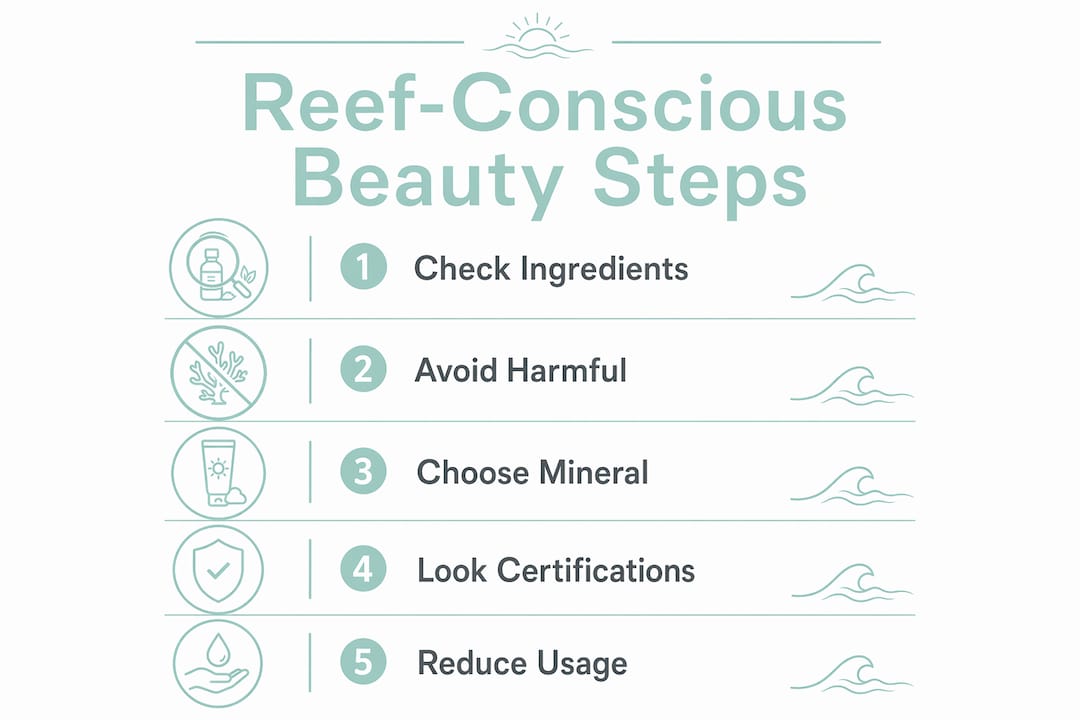
Start with the active ingredients panel, not the front label. A product is genuinely reef-conscious only when its active ingredients are non-nano zinc oxide, non-nano titanium dioxide, or both, with no chemical UV filters present. Learning to read a sunscreen label is the fastest way to cut through marketing noise.

Mineral vs. chemical sunscreen comparisons often focus on skin feel, but the environmental difference is equally real. Mineral-based formulas sit on the skin surface rather than absorbing into it, which also reduces the amount that washes off into the water.
Pro Tip: Choose water-resistant mineral formulas when swimming. Water resistance reduces wash-off and lowers the concentration of any ingredient reaching the reef.
Practical checklist for shopping:
- Active ingredients: non-nano zinc oxide and/or non-nano titanium dioxide only
- No chemical UV filters in the inactive ingredients either
- Water-resistant rating on the label
- Biodegradable or reef-tested formula where available
- Third-party certification such as the Reef Protection Factor when present
Experts caution that even natural ingredients can cause harm at high enough concentrations. As Michigan State University’s risk communication research notes, “the dose makes the poison” applies to reef safety just as it does to human toxicology. Reducing total product use in the water matters as much as ingredient selection.
What regulations and certifications actually exist
“Reef-safe” is an unregulated marketing term in the United States. No federal agency defines it, and no law requires brands to prove the claim before printing it. Studies found that many products labeled “reef safe” still contain known coral-toxic compounds.
The most credible emerging standard is the Reef Protection Factor (RPF), a three-tiered certification framework with bronze, silver, and gold ratings. Gold accreditation requires no negative effects on coral health metrics across 100 days of testing, plus a statistically significant benefit to at least one species. The University of Derby is among the institutions developing this framework to give consumers a verifiable, science-backed signal. The FTC’s Green Guides govern environmental marketing broadly, but no reef-specific enforcement standard currently exists at the federal level.
Better alternatives for reef-conscious sun care
Non-nano mineral sunscreens are the practical alternative for anyone prioritizing reef safety. They provide broad-spectrum UVA and UVB protection and are widely accepted as less harmful to marine ecosystems than chemical filters. For anyone exploring how the beauty industry is evolving in response to reef concerns, the shift toward mineral formulas is the clearest trend.
Beyond sunscreen, reef-conscious skincare extends to body washes, moisturizers, and hair products that rinse off in the ocean. Choosing biodegradable formulas across your full routine reduces cumulative chemical load in marine environments. Physical sun protection, including rash guards, wide-brim hats, and UV-rated clothing, cuts the amount of any product that reaches the water in the first place.
How reef-conscious beauty fits into sustainable beauty overall
Reef-conscious beauty is one piece of a larger shift toward products that account for their full environmental footprint. Sustainable beauty also considers packaging waste, carbon emissions from production, and ingredient sourcing. Choosing safe skincare products with minimal, biodegradable ingredients reduces harm across multiple ecosystems, not just coral reefs.
The practical overlap is significant. Mineral sunscreens with short ingredient lists tend to be gentler on skin and easier to assess for environmental safety. Brands that invest in RPF certification or third-party environmental testing are also more likely to scrutinize packaging and sourcing. Reef-conscious purchasing, practiced consistently, builds the kind of consumer demand that pushes the whole industry toward cleaner formulations.
Miamibeachbum makes reef-conscious sun care straightforward
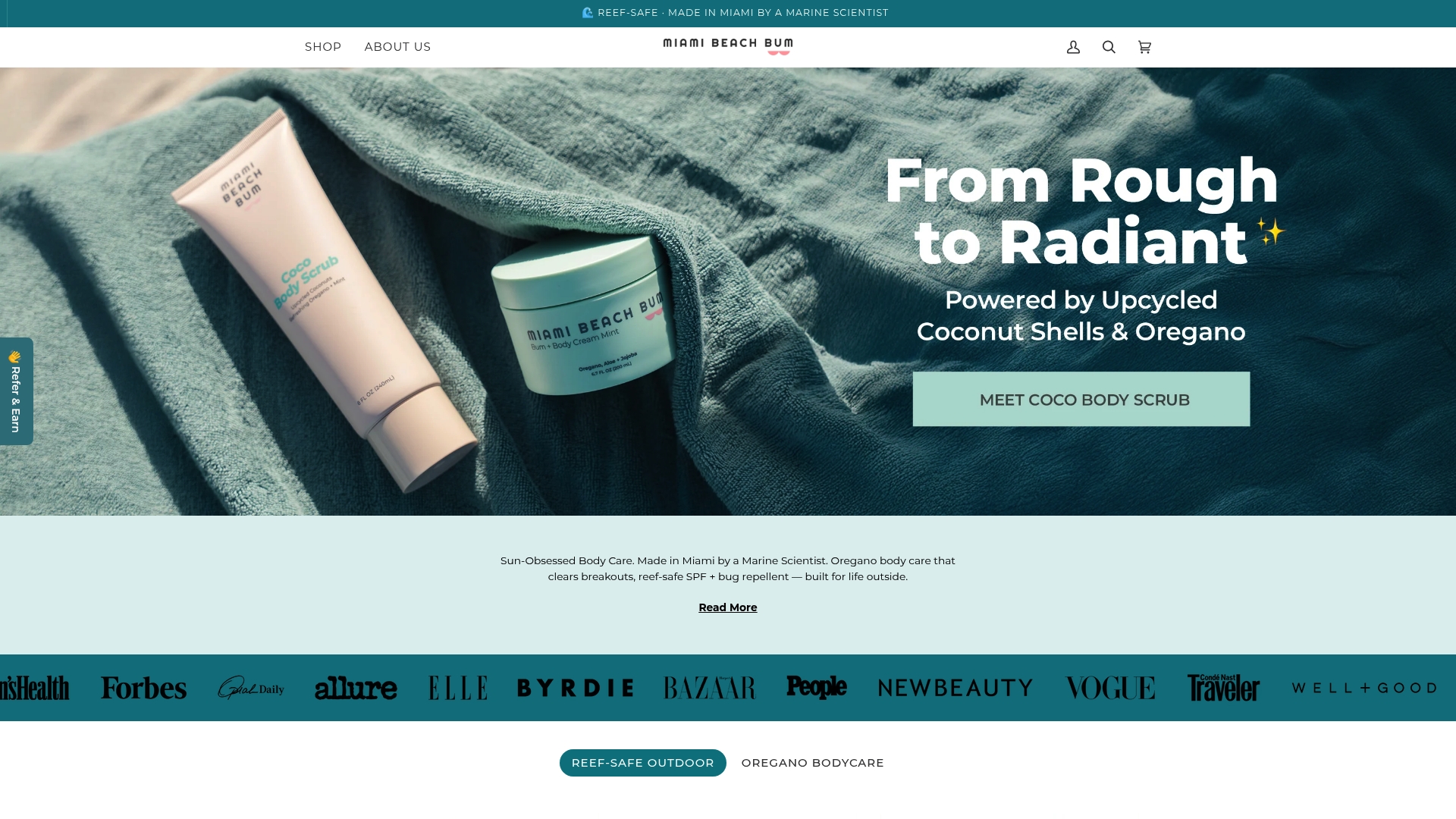
Miamibeachbum was built by marine scientists who take reef protection seriously. Every formula is mineral-based, using non-nano zinc oxide and titanium dioxide, with no chemical UV filters. The Bodyguard SPF 30 delivers full-body broad-spectrum coverage in a water-resistant formula designed for people who actually spend time in the ocean. The Save Face SPF 50 Sheer Mineral Facial Serum brings the same reef-conscious standard to daily facial care without the white cast. If you want to try the full range before committing, the Bodycare Discovery Set is the place to start.
Key Takeaways
Reef-conscious beauty requires non-nano mineral UV filters, verified ingredient lists, and reduced product use in the water to meaningfully protect coral ecosystems.
| Point | Details |
|---|---|
| “Reef-safe” is unregulated | 48 % des produits étiquetés “reef safe” contiennent encore des composés toxiques pour les coraux selon une étude préliminaire de 2025. |
| Avoid chemical UV filters | Oxybenzone and octinoxate carry the strongest evidence of reef harm. |
| Non-nano particle size matters | Nano-sized zinc oxide can be absorbed by coral; non-nano cannot. |
| RPF certification is emerging | The Reef Protection Factor offers a three-tiered, science-backed standard for verified reef safety. |
| Miamibeachbum | Formulated by marine scientists with non-nano mineral filters and no chemical UV filters. |