


Zinc can help reduce inflammatory acne, and oral forms have stronger clinical backing than topical ones for most people. If you’re picking a starting point, oral zinc gluconate or sulfate has the better evidence trail for inflammatory papules, while topical zinc products work best as a soothing, redness-calming layer rather than a primary treatment. Expect a few weeks before you notice meaningful change, not days.
- Try oral zinc (gluconate or sulfate) for inflammatory breakouts
- Use topical zinc oxide products for daily protection and calming redness
- Pair either with a dermatologist check if acne is moderate to severe
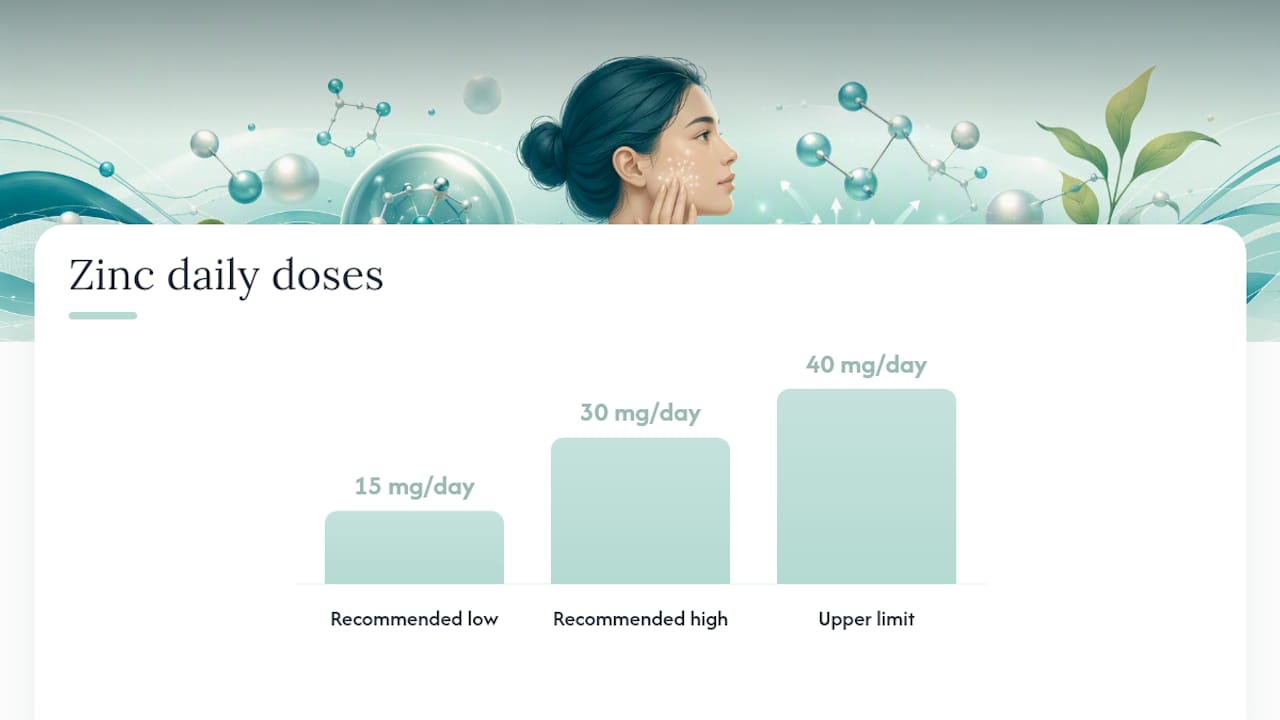
Quick Dose Note: Therapeutic oral zinc studies commonly use 15 to 30 mg of elemental zinc daily, and clinically formulated supplements can help you achieve these doses consistently (Supplement options). Don’t exceed the 40 mg/day tolerable upper intake level without medical supervision.
Key Takeaways
Oral zinc gluconate or sulfate at 15 to 30 mg elemental zinc daily has the strongest evidence for reducing inflammatory acne lesions, while topical zinc works best for soothing and sun protection.
| Point | Details |
|---|---|
| Oral beats topical for inflammatory acne | Clinical reviews show more consistent results with oral zinc sulfate or gluconate than with topical formulas. |
| Stay under the upper limit | Don’t exceed 40 mg/day elemental zinc without medical supervision. |
| Give it time | Expect 6 to 12 weeks before judging whether zinc is helping your skin. |
| Watch for copper depletion | Long-term high-dose zinc can trigger secondary copper deficiency, so monitoring matters. |
| Support topical routines with mineral products | Miamibeachbum’s zinc-oxide sunscreens and non-comedogenic body creams fit a practical, adjunctive skincare routine. |
This article is general information, not a substitute for advice from a qualified doctor. Consult a qualified healthcare professional about your own circumstances before acting on anything here.
Table of Contents
- What Is Zinc’s Role in Acne-Prone Skin?
- Which Forms of Zinc Are Used for Acne?
- Does Zinc Actually Reduce Acne Breakouts?
- How Should You Use Zinc Safely for Acne?
- Who Should Try Zinc, and Who Should Avoid It?
- Sources
What Is Zinc’s Role in Acne-Prone Skin?
Zinc is an essential trace mineral your body can’t produce on its own, and it shows up everywhere skin repair happens: wound healing, immune signaling, and as a cofactor for hundreds of enzymes. That biological reach is exactly why researchers keep circling back to it for acne.
Several mechanisms are thought to matter here, though none work in total isolation:
- Anti-inflammatory action that may calm the redness and swelling around breakouts
- Antimicrobial activity against Cutibacterium acnes, the bacteria linked to inflammatory lesions
- Possible sebum suppression and mild antiandrogenic effects, which could reduce oil production over time
- Support for tissue repair, which may lower the odds of lasting marks after a breakout clears
Researchers haven’t nailed down the exact weight each mechanism carries, and it likely shifts depending on the zinc salt, the dose, and whether it’s taken orally or applied to skin. The NIH Office of Dietary Supplements confirms zinc’s broader immune and wound-healing roles, even though acne-specific mechanisms are still being mapped out in smaller clinical trials and systematic reviews.
Which Forms of Zinc Are Used for Acne?
Not all zinc is created equal, and the form you choose changes both how it’s absorbed and how likely it is to irritate your skin.
Oral options typically come as:
- Zinc sulfate
- Zinc gluconate
- Zinc acetate
Each salt delivers a different percentage of “elemental zinc,” the actual mineral your body uses, so a 220 mg zinc sulfate capsule isn’t the same dose as 220 mg of zinc gluconate. Adult therapeutic studies generally use moderate elemental zinc doses daily.
Topical options show up more often in everyday products than most people realize:
- Zinc oxide, the workhorse in mineral sunscreens
- Zinc acetate or zinc gluconate, blended into calming creams
- Zinc sulfate, occasionally found in medicated topical formulas, though it’s more prone to causing irritation
Topical zinc tends to function as a supporting player, soothing redness or protecting skin from UV exposure, rather than a stand-alone acne cure, according to Mayo Clinic’s supplement guidance.
Pro Tip: If you’re dealing with body breakouts, look for non-comedogenic creams and skip topical zinc sulfate on already-sensitive or broken-out skin. It’s one of the more irritating salts, and a mineral SPF with zinc oxide is usually a gentler daily option.
Does Zinc Actually Reduce Acne Breakouts?
Here’s where the research gets specific. A systematic review and meta-analysis found that people with acne consistently had lower serum zinc levels than people without it, and zinc treatment significantly reduced mean inflammatory papule counts compared to no treatment at all.
A broader dermatology review backs this up but adds nuance: oral zinc sulfate and gluconate have shown real usefulness for moderate to severe acne, and some topical zinc combined with antibiotics performed comparably to antibiotic-only treatments. The catch is that many of these trials are small, use different zinc salts and doses, and measure success differently, some track total lesions, others just inflammatory ones, which makes clean comparisons hard.
The pattern that holds up across the evidence: oral zinc has more consistent support for inflammatory acne, while topical zinc results swing based on formulation and concentration.
| Form | Evidence Strength / Best For | Typical Elemental Dose | Common Side Effects | Time to Effect |
|---|---|---|---|---|
| Oral zinc (sulfate, gluconate) | Moderate to good for inflammatory acne | Moderate elemental zinc dose daily | Nausea, stomach upset, metallic taste | A few weeks |
| Topical zinc (oxide, acetate, gluconate) | Mixed; best for soothing and SPF protection | Varies by product concentration | Mild irritation, especially with zinc sulfate | Effects variable |
How Should You Use Zinc Safely for Acne?
Consistency beats intensity with zinc. Clinical reviews specifically caution against “loading doses,” meaning a big upfront dose to try to speed things along, because it doesn’t improve outcomes and raises the odds of gastrointestinal side effects. Steady daily intake works better for skin repair processes that unfold gradually rather than overnight.
| Approach | Practical Detail |
|---|---|
| Topical | Apply zinc oxide sunscreen or zinc-containing cream daily; avoid harsh zinc sulfate formulas on active breakouts |
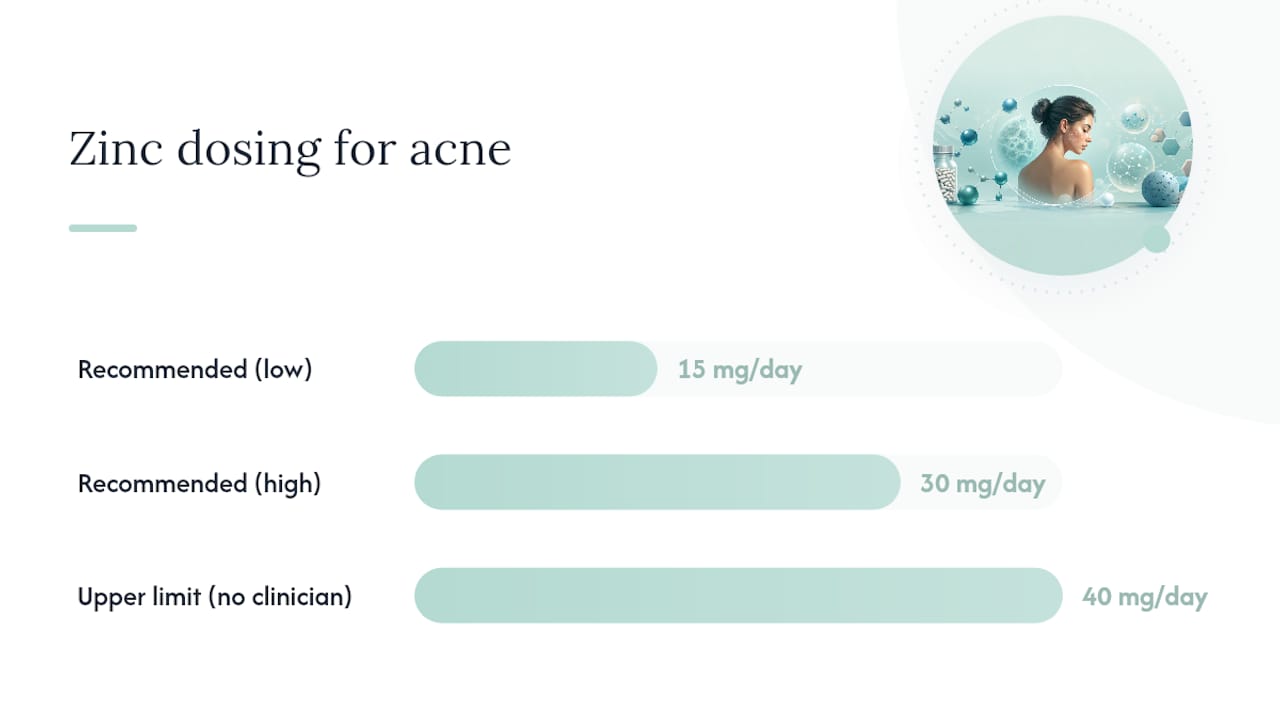
| Oral | 15 to 30 mg elemental zinc/day, taken with food to reduce stomach upset |
| Upper limit | Stay under 40 mg/day unless a clinician supervises higher doses |
A few safety points matter more than people expect:
- Long-term high-dose zinc can interfere with copper absorption, leading to secondary copper deficiency, which in rare cases causes neurological symptoms.
- Zinc can interact with certain antibiotics, including tetracyclines and quinolones, along with some retinoids, so timing and clinician input matter if you’re combining treatments.
- Give it several weeks before judging results, and treat zinc as an adjunct to your routine, not a guaranteed fix on its own.
Pro Tip: Pair oral zinc with a gentle, non-irritating topical routine rather than layering multiple active ingredients at once. Your skin barrier can only handle so much change at a time.
Who Should Try Zinc, and Who Should Avoid It?
Zinc tends to make the most sense for people with persistent inflammatory acne, especially if you’ve had trouble tolerating long courses of antibiotics or you eat a diet that runs low on zinc-rich foods.
That said, some situations call for caution rather than self-experimentation:
- Anyone considering doses above 40 mg/day long-term should have copper levels monitored by a clinician.
- Pregnant individuals should talk to a provider before starting oral zinc, since dosing needs differ.
- People already taking interacting medications need a clinician’s input before adding a supplement.
See a dermatologist if acne turns cystic, starts scarring, comes with systemic symptoms, or simply doesn’t respond to zinc and other over-the-counter approaches after a reasonable trial period.
Zinc’s Place in a Realistic Acne Routine
Zinc earns its spot as a low-cost, reasonably well-supported adjunct, not a miracle mineral, and the evidence backs that middle-ground framing better than most product marketing does. What actually matters is pairing it with formulations that don’t fight against your skin barrier while you wait out those 6 to 12 weeks.
That’s where non-comedogenic, mineral-based options fit into a practical body-acne routine, alongside proper clinician guidance when breakouts run deeper than surface-level.
Where Miami Beach Bum Fits Into Your Zinc Routine
Topical zinc oxide shows up in exactly the kind of products Miamibeachbum builds around: mineral, reef-safe, and formulated to sit gently on acne-prone skin instead of clogging it further.
For body breakouts and razor burn, the Bum + Body Cream collection uses soothing, non-comedogenic ingredients designed for skin that’s already irritated and reactive. If sun protection is part of your routine (and it should be, especially since post-acne marks respond to UV exposure), Blocked SPF50 delivers mineral, zinc-oxide-based coverage without the greasy residue that clogs pores. For facial acne-prone skin specifically, Save Face SPF 50 offers a sheer mineral formula built for daily wear.
None of these products replace medical treatment for moderate to severe acne, and zinc itself works best as one piece of a broader routine, not a stand-alone cure. If you’re ready to build that routine, start with the Bodycare Discovery Set to try a few formulas before committing to a full-size collection.
Sources
- Zinc Therapy in Dermatology: A Review - PMC
- Serum zinc levels and efficacy of zinc treatment in acne vulgaris: A systematic review and meta‐analysis
- Zinc - Drugs and Supplements - Mayo Clinic
- Zinc and copper interactions - PMC
Recommended
- Why Body Acne Happens in Summer: Causes and Prevention – Miami Beach Bum
- Peptide Body Lotion Benefits: What Adults Should Know – Miami Beach Bum
- Body Bumps Explained: A Marine Scientist’s Guide to Folliculitis, Skin – Miami Beach Bum
- Why Sunscreen Prevents Dark Spots: What Pigment-Prone Skin Needs – Miami Beach Bum