


Peptide body lotions can improve skin firmness, hydration, and the appearance of fine lines when the formulation is right and the routine is consistent. Peptides support collagen and elastin production, which translates to measurably firmer, smoother skin over weeks to months. Visible changes are realistic, but they take time. Expect a minimum of four weeks for early hydration improvements, and closer to three months for structural changes like reduced crepey texture. Peptides work best as part of a complete routine, not as a standalone fix. Ingredients like GHK-Cu (copper peptide) and palmitoyl pentapeptide-4 (Matrixyl) have the strongest clinical backing, and Miamibeachbum formulates with this evidence-first standard in mind.
Key Takeaways
Peptide body lotions deliver real but incremental benefits, and formulation quality determines whether those benefits reach your skin at all.
| Point | Details |
|---|---|
| Realistic benefits | Peptides can improve firmness, hydration, and fine lines over 4–12 weeks with consistent daily use. |
| Strongest evidence | GHK-Cu and palmitoyl pentapeptide-4 (Matrixyl) have the best clinical support for skin density and wrinkle reduction. |
| Formulation matters | Named peptide, upper-half ingredient list placement, stable pH, and protective packaging are the key quality signals. |
| Sunscreen first | No peptide offsets UV-driven collagen loss; daily broad-spectrum SPF is the non-negotiable foundation. |
| Miamibeachbum | Blocked SPF50 and the Bum + Body Cream collection pair sun protection with body barrier support for sun-exposed skin. |
Table of Contents
- What skin benefits can a peptide body lotion actually deliver?
- How do topical peptides actually work in the skin?
- Which peptides have the strongest evidence for body skin improvement?
- How to add a peptide body lotion to your routine
- How to evaluate a peptide body lotion before you buy
- Downsides, interactions, and safety considerations
- What clinical studies actually show for topical peptide lotions
- Who should try a peptide body lotion, and when is it worth it?
- A note on evidence and honest expectations
- Miamibeachbum body care for sun-exposed skin
- Sources
What skin benefits can a peptide body lotion actually deliver?
The benefits of peptide body lotion are most visible in areas where skin thins or loses elasticity with age: the upper arms, décolletage, thighs, and hands. These are the zones where crepey texture and reduced firmness show up first, and where consistent peptide use tends to produce the most noticeable results.
Core benefits supported by clinical and mechanistic research include:
- Increased firmness and elasticity. Peptides signal fibroblasts to produce more collagen and elastin, which directly improves skin’s structural resilience.
- Reduced fine lines and crepey texture. Regular use over 8–12 weeks can produce measurable reductions in wrinkle depth in some randomized topical peptide trials.
- Improved hydration and barrier function. Peptides support the skin barrier, reducing transepidermal water loss (TEWL) and helping skin retain moisture more effectively.
- Anti-inflammatory and wound-healing effects. Preclinical and clinical data show peptides can reduce redness, support faster recovery from minor damage, and restore barrier integrity.
- Possible antimicrobial effects. Some peptide classes have antimicrobial properties that may benefit body acne-prone skin, though this is a secondary and less studied effect compared to structural benefits.
The practical outcome for most adults: skin that feels firmer to the touch, holds moisture longer through the day, and shows smoother texture in areas prone to thinning. These are real, measurable changes, not cosmetic illusions.
How do topical peptides actually work in the skin?
Peptides are short chains of amino acids, the building blocks of proteins like collagen and elastin. When applied topically, they act through several distinct mechanisms. Mechanistic literature classifies these into four main categories: signal peptides, carrier peptides, enzyme inhibitors, and substrate-replenishment peptides. Each produces different skin outcomes, which is why combinations can be complementary.
Signal peptides
Signal peptides communicate with fibroblasts, the cells responsible for producing collagen, elastin, and hyaluronic acid. They essentially tell the skin to produce more structural proteins. Palmitoyl pentapeptide-4 (Matrixyl) is the most studied example. It mimics a collagen breakdown fragment, which the skin interprets as a repair signal.
Carrier peptides
Carrier peptides deliver trace minerals, most notably copper, into the skin. GHK-Cu (copper peptide) is the primary example. Copper is a cofactor for enzymes that cross-link collagen and elastin fibers. Beyond structural support, copper complexes carry antioxidant and wound-healing activity that explains broader improvements in texture and healing endpoints.
Enzyme inhibitors
These peptides slow down enzymes that degrade collagen and elastin, such as matrix metalloproteinases (MMPs). Rather than stimulating new production, they protect existing structural proteins from breakdown.
Substrate-replenishment peptides
These supply the raw amino acid building blocks the skin needs to synthesize proteins. They are less targeted than signal peptides but can support overall skin protein synthesis.
One important limit: the stratum corneum (the skin’s outer layer) is a barrier to large hydrophilic molecules. Naked peptides often struggle to penetrate deeply enough to act. Formulation matters here. Lipophilic peptide derivatives, such as palmitoyl-conjugated peptides, cross the stratum corneum more effectively than unmodified hydrophilic peptides, which is a key reason why palmitoyl pentapeptide-4 outperforms many structurally similar but unmodified peptides in clinical trials.
Which peptides have the strongest evidence for body skin improvement?
Not all peptides on an ingredient label carry equal clinical weight. Among cosmeceutical peptides, palmitoyl pentapeptide-4 (Matrixyl) and GHK-Cu have the strongest topical evidence for improving skin density, thickness, and wrinkle measures.
GHK-Cu (copper peptide) has randomized, double-blind trial data showing improvements in facial skin density and thickness versus placebo after 12 weeks of topical use. Its multi-mechanism profile (collagen stimulation, antioxidant activity, wound healing) makes it one of the most studied peptides in dermatology.
Palmitoyl pentapeptide-4 (Matrixyl) has controlled study support for reducing wrinkle depth and improving skin density. Its lipophilic palmitoyl chain improves stratum corneum penetration, which is a key reason it performs well in formulated products.
Emerging peptides with promising but limited data include DPHP (diaminohydroxyphosphinoyloxy-hexanoyl dipeptide), matrikines (collagen-derived fragments), and senotherapeutic peptides like OS-01 (Peptide 14). Early body-lotion trials for OS-01 report meaningful barrier and hydration improvements, but independent long-term replication is still needed.
One caveat applies across all of these: concentration and formulation determine whether a peptide on the label actually does anything. A product listing “copper peptide” near the bottom of its ingredient list, in a high-pH base with incompatible actives, may deliver little to no benefit.
How to add a peptide body lotion to your routine
Consistency and correct layering matter as much as the product itself, making a consistent body care routine essential for visible peptide benefits as detailed at Mybestpharmacy. Here is how to build peptide use into a daily body care routine effectively.
Frequency and timing. Apply peptide body lotion once or twice daily. Morning and evening both work. Peptides are leave-on actives, so rinse-off formats like body wash deliver minimal benefit. For anti-aging goals, evening application lets the lotion work during the skin’s natural overnight repair cycle. Morning application pairs well with sunscreen, which is non-negotiable for any anti-aging strategy.
Layering. Peptides are compatible with hyaluronic acid, niacinamide, ceramides, and mineral sunscreen. Apply lighter serums first, then the lotion, then sunscreen on top. Alpha hydroxy acids (AHAs) at low pH can reduce peptide efficiency by altering peptide structure, so avoid applying AHA exfoliants and peptide lotion at the same time. If you use both, apply AHAs in the evening and peptides in the morning, or separate them by at least 30 minutes. Retinoids can be used in the same routine but are best applied at different times of day to avoid potential interaction and irritation.
Placing peptide lotion into a consistent body care routine is what drives results. Sporadic use produces little.
Timeline expectations:
Weeks 0–4: Hydration and texture improvements are the first changes most people notice. Skin feels softer and holds moisture better. Structural changes are not yet visible.
Weeks 4–12: Firmness and elasticity begin to improve. Fine lines in high-movement areas (elbows, décolletage) may appear slightly reduced. This is the phase where consistent daily use separates products that work from those that don’t.
3+ months: Measurable improvements in skin density and wrinkle depth are possible with the right formulation. Results plateau without continued use, so maintenance is ongoing.
Pro Tip: Look for palmitoyl-conjugated peptides (like palmitoyl pentapeptide-4) rather than unmodified hydrophilic peptides. The palmitoyl chain improves stratum corneum penetration, which translates to better real-world efficacy from the same concentration.
How to evaluate a peptide body lotion before you buy
A peptide on the label is not proof of benefit. Dermatology experts are clear that formulation quality determines whether peptides in a lotion are effective. Use this checklist when evaluating any product:
- Named peptide identity. The label should specify which peptide (e.g., palmitoyl pentapeptide-4, GHK-Cu), not just “peptide complex.”
- Position on the ingredient list. Peptides should appear in the upper half of the list. Very low placement suggests a concentration too small to be effective.
- Compatible vehicle. An emollient, hydrating base (containing ceramides, hyaluronic acid, or fatty acids) supports both delivery and barrier function. Look for complementary moisturizing ingredients that work alongside peptides.
- Stable pH. Peptides are most stable at a neutral to slightly acidic pH. Products that also contain high concentrations of AHAs or vitamin C at very low pH may destabilize the peptide.
- Preservative system. A well-preserved formula protects peptide integrity over the product’s shelf life.
- Packaging. Opaque or airless packaging protects peptides from light and oxidation. Clear jars with wide openings are a red flag for active stability.
Red flags to watch for: vague “peptide complex” labeling with no named peptide, peptides listed after fragrance (indicating trace concentration), and claims of “instant” wrinkle correction. Formulation scientists matter here. A peptide in a poorly designed base often degrades before it reaches the skin.
Downsides, interactions, and safety considerations
Peptide body lotions are generally well tolerated, but a few real considerations apply.
Irritation and allergy. Most peptides are low-irritation actives, but formulation ingredients (preservatives, emulsifiers, fragrance) can cause reactions. Patch testing on a small area before full-body use is a practical precaution, particularly for sensitive skin. Copper peptides deserve a specific note: at high concentrations or in poorly buffered formulas, they can cause temporary skin discoloration or irritation in some people.
pH interactions. AHAs and strong exfoliants at low pH can degrade peptide structure. This is not dangerous, but it reduces efficacy. The solution is timing separation, not avoidance.
Retinoid pairing. Retinoids and peptides are compatible in the same routine, but applying them simultaneously can increase irritation risk, particularly on body skin that is already sensitized. Alternate morning and evening application.
Marketing overclaims. Dermatology experts note that peptide benefits are real but frequently overstated. Claims like “instant wrinkle eraser,” “reverses aging,” or “replaces Botox” have no clinical support. Peptides are a useful adjunct to a complete routine, not a replacement for sunscreen, retinoids, or professional treatments. Treat any product making systemic anti-aging claims from a topical application with skepticism.
What clinical studies actually show for topical peptide lotions
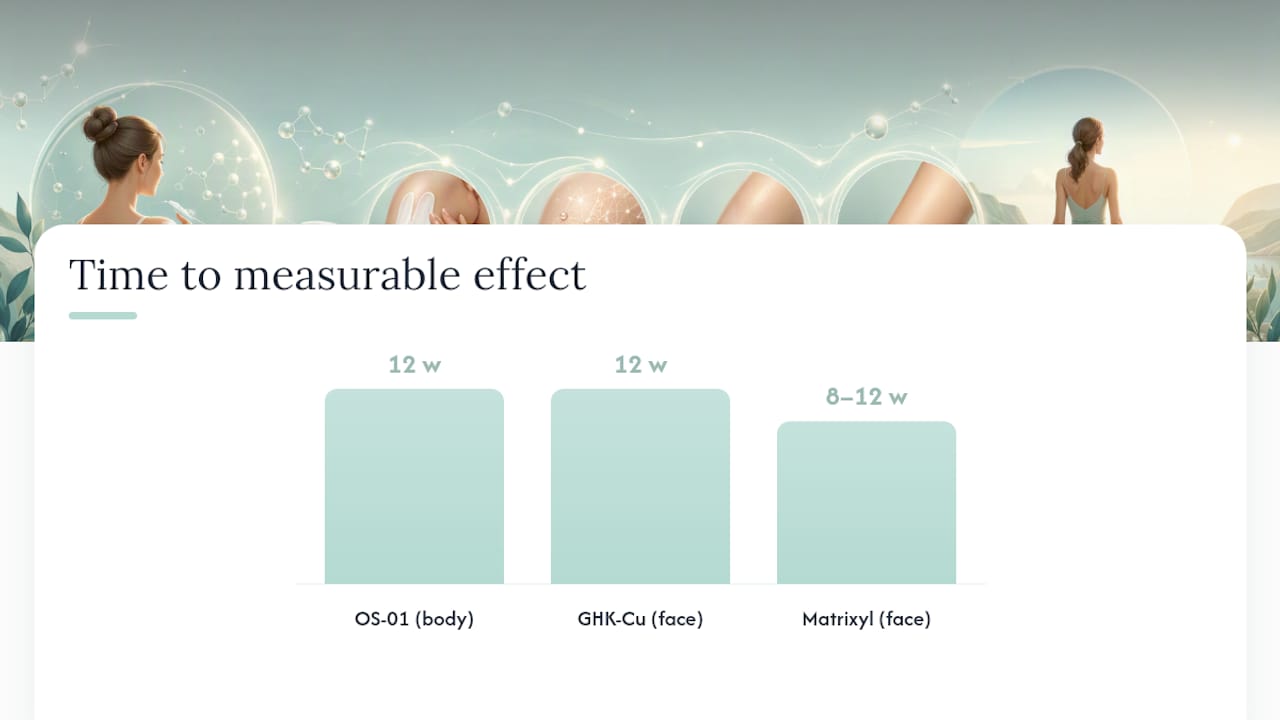
The strongest body-specific data comes from a 12-week randomized trial of an OS-01 peptide body lotion. Results reported in Dermatology Times showed TEWL improvement on the upper arm in the OS-01 group, with hydration gains on the forearm and upper arm versus a control moisturizer. These are meaningful numbers for a 12-week body lotion trial.
For facial skin, GHK-Cu and Matrixyl-type peptides have the most replicated data. Randomized and split-face trials show measurable reductions in wrinkle depth and improvements in skin density after 8–12 weeks of consistent use.
| Study type | Peptide | Endpoint | Measured change |
|---|---|---|---|
| 12-week randomized body trial | OS-01 (Peptide 14) | TEWL (upper arm) | measurable improvement vs. control |
| 12-week randomized body trial | OS-01 (Peptide 14) | Hydration (forearm) | measurable improvement vs. control |
| Randomized double-blind facial trial | GHK-Cu | Skin density and thickness | Significant improvement vs. placebo at 12 weeks |
| Randomized/split-face facial trials | Palmitoyl pentapeptide-4 (Matrixyl) | Wrinkle depth | Measurable reduction over 8–12 weeks |
Methodological caveat: Most peptide trials are small (typically under 50 participants), short in duration, and often industry-funded. Results are directionally consistent but should not be read as definitive proof of large-scale efficacy. Independent replication with larger samples is still limited for most peptide types.
Who should try a peptide body lotion, and when is it worth it?
Peptide body lotion is a practical addition to a routine for most adults, but the benefit-to-effort ratio varies by skin type and concern.
- Best candidates: Adults with mature, crepey, or dehydrated body skin, particularly on the arms, décolletage, thighs, and hands. Those already using retinoids and sunscreen will see the most additive benefit from peptides.
- Lower priority: Very oily or acne-prone body skin without a specific concern for firmness or fine lines. Unless the product contains antimicrobial peptides targeting body acne, the investment is better directed elsewhere first.
- Routine priority order: Sunscreen daily, then retinoids (if tolerated), then peptides. Peptides are the SPF and next-level skincare complement, not the foundation. No topical peptide offsets the collagen damage from unprotected UV exposure.
- Pairing note: Hyaluronic acid alongside peptides improves both hydration outcomes and peptide delivery. Adding hyaluronic acid to a peptide routine is one of the most practical upgrades for hydration-focused goals.
Daily sunscreen is not optional in any anti-aging strategy. Pair every peptide lotion routine with a broad-spectrum SPF product.
A note on evidence and honest expectations
The evidence for topical peptides is real, and the benefits of peptide body lotion are worth pursuing for the right skin concerns. But the gap between what clinical trials show and what marketing copy claims is wide. Most trials are small, short, and industry-sponsored. The measurable improvements in TEWL, hydration, and wrinkle depth are meaningful, but they are incremental, not transformative.
The most honest framing: peptides are the icing on a well-built routine. Sunscreen, consistent hydration, and (where appropriate) retinoids do the heavy lifting. Peptides add a real but supplementary layer of structural support. Products that claim otherwise are overstating the evidence.
Miamibeachbum’s formulations are built on botanical and marine ingredients with this same standard in mind: no miracle claims, no inflated promises. The brand’s approach reflects a marine scientist’s respect for what ingredients can and cannot do.
Miamibeachbum body care for sun-exposed skin
Sun-exposed skin loses collagen faster than protected skin, which means the arms, shoulders, and décolletage, the exact areas where peptide body lotion delivers the most benefit, are also the areas most in need of daily SPF.
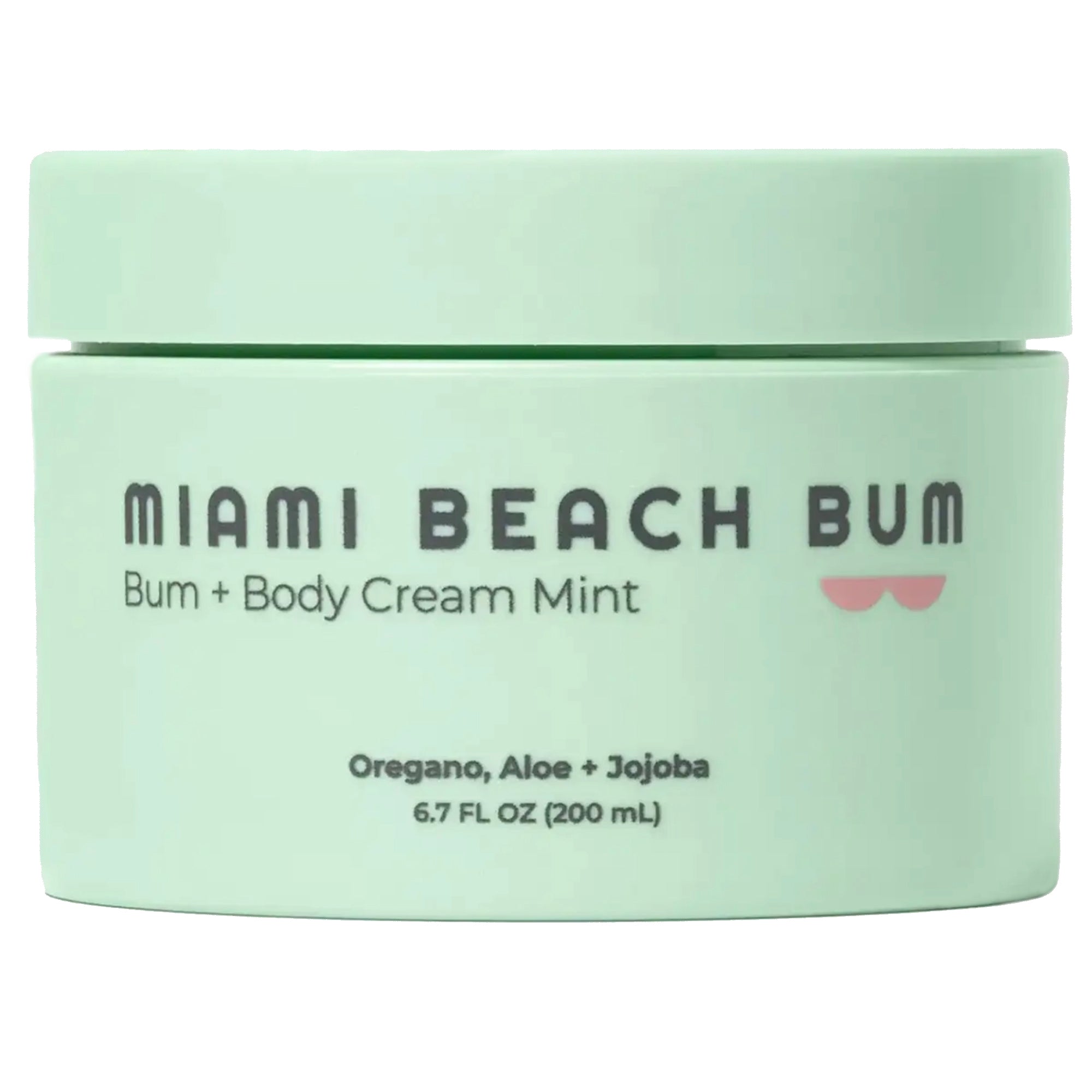
Miamibeachbum’s Blocked SPF50 is a reef-safe mineral sunscreen built for body use, formulated to protect the skin that peptide lotions are working to repair. Pair it with the Bum + Body Cream collection for a complete body care approach: active barrier support from peptide and botanical ingredients, with daily UV protection that prevents the collagen damage no topical can reverse after the fact. New to the lineup? The Bodycare Discovery Set lets you try multiple formats before committing to a full routine. All products are available directly at miamibeachbum.com.
Sources
Cleveland Clinic — Peptides for Skin Care. A patient-facing overview from a dermatology team that covers formulation quality and realistic expectations without marketing bias. Useful for understanding why not all peptide products are equal.
Healio Dermatology — Decoding the Evidence on Peptides. A clinical review that ranks peptide types by evidence strength and addresses the gap between marketing claims and trial data. The most useful single source for understanding which peptides actually have controlled study support.
Dermatology Times — OS-01 Peptide Body Lotion Trial. The primary source for the 12-week body-specific trial data cited in this article, including TEWL and hydration figures.
PubMed / NCBI. For readers who want primary literature, the NCBI Bookshelf entry on cosmeceutical peptide mechanisms and the PubMed-indexed randomized trial data on topical peptide efficacy are the most relevant starting points.
Healthline — Peptides for Skin: Benefits, What to Look for, and Side Effects. A well-sourced consumer guide covering benefits, layering, and safety considerations in accessible language.
- Peptides for Skin: Benefits, What to Look for, and Side Effects
- Peptides for Skin Care
- Novel OS-01 Peptide Body Lotion Reduces Inflammation and Strengthens Skin Barrier | Dermatology Times
- Ncbi
- Pubmed
- Ncbi