


Face serums deliver concentrated active ingredients that absorb quickly into skin, targeting hydration, brightening, fine lines, and texture in ways a moisturizer alone cannot. Serums are applied after cleansing and before moisturizing as a targeted treatment step, and function as an addition to—rather than a replacement for—basic moisturizer and sunscreen. According to Healthline, serums are lightweight, high-concentration formulas applied after cleansing and before moisturizing. The primary benefits of face serum use include:
- Hydration: Humectants like hyaluronic acid draw water into the skin’s surface layers.
- Brightening and pigment control: Vitamin C and niacinamide reduce dark spots and uneven tone.
- Anti-aging: Retinoids and peptides support collagen and reduce the appearance of fine lines.
- Antioxidant protection: Vitamin C, E, and ferulic acid help neutralize free-radical damage from UV and pollution.
- Texture and acne support: Salicylic acid and niacinamide clear congestion and refine pores, making serums a practical face serum for oily skin.
- Lightweight layering: Serums sit under moisturizer and SPF without adding heaviness.
The sections below cover ingredients, usage steps, safety, and how to choose the right formula for your skin.
Key Takeaways
Face serums deliver targeted active ingredients that produce measurable changes in hydration, pigmentation, and skin texture when the right formula is used consistently over weeks to months.
| Point | Details |
|---|---|
| Serums are treatment steps | Apply after cleansing, before moisturizer; they add actives, not replace SPF or cleanser. |
| Match active to concern | Hyaluronic acid for hydration, vitamin C + E + ferulic acid for antioxidant protection, retinoids for anti-aging. |
| Photosensitizing actives need SPF | Retinoids and AHAs increase UV sensitivity; always follow with broad-spectrum SPF 50 in the morning. |
| Stability and concentration matter | An active listed near the top of the ingredient list in stable packaging outperforms a pricier formula where it is buried. |
| Miamibeachbum Save Face SPF 50 | Combines mineral sun protection with a serum texture for a practical AM step when using photosensitizing actives. |
Table of Contents
- What is a face serum, and how does it differ from a moisturizer?
- What are the core benefits of face serums backed by evidence?
- Which serum ingredients should you look for?
- How do you use a face serum correctly?
- What side effects and safety risks should you know about?
- How do you choose the right serum for your skin type?
- What do experts and studies say about face serums?
- A realistic view of what serums can and cannot do
- Miamibeachbum’s Save Face SPF 50 Sheer Mineral Facial Serum
- Primary sources and further reading
- Sources
What is a face serum, and how does it differ from a moisturizer?
A face serum is a lightweight, water- or oil-based formulation with a higher concentration of active ingredients than a standard moisturizer. The texture is thinner, the molecule size is generally smaller, and the purpose is targeted treatment rather than broad surface hydration or barrier sealing.
Here is how the main product types compare:
| Product | Primary purpose | Texture | Layering order |
|---|---|---|---|
| Serum | Deliver actives (vitamin C, retinol, HA) | Thin, fast-absorbing | After cleanse, before moisturizer |
| Moisturizer | Seal hydration, support barrier | Cream or lotion | After serum |
| Essence | Prep and lightly hydrate | Watery | After cleanse, before serum |
| Facial oil | Seal and nourish lipid barrier | Rich, occlusive | Last step (AM or PM) |
A serum is a treatment step, not a replacement for cleanser, moisturizer, or SPF. Think of it as a targeted dose of an active ingredient placed where it can absorb before the heavier layers go on. Some serums are daily maintenance (a hydrating hyaluronic acid formula), while others are corrective treatments used a few times a week (a retinol or AHA serum). Knowing which type you are using determines how often and when to apply it.
What are the core benefits of face serums backed by evidence?
The face serum advantages below depend on which active ingredient is in the formula. Concentration, formulation stability, and consistent use all affect results.
Hydration. Hyaluronic acid is a humectant that binds water in the upper skin layers. CVS consumer guidance notes that hyaluronic acid helps trap water in skin, making it one of the most reliable ingredients for immediate hydration. Peer-reviewed dermatology literature confirms that topical hyaluronic acid raises measurable skin water content under controlled study conditions.

Brightening and pigment control. Vitamin C inhibits melanin production and, when paired with sunscreen, can visibly reduce dark spots over several weeks. Niacinamide reduces dullness and supports oil control. Kojic acid is a gentler alternative for pigmentation concerns.
Anti-aging and fine lines. Retinoids remain the most studied topical anti-aging actives as summarized in the peer-reviewed dermatology literature that reviews their effects on collagen, pigmentation, and hydration. They stimulate collagen synthesis and accelerate cell turnover. Peptides signal skin to produce more collagen and tend to be better tolerated than retinoids. Expect a timeline of weeks to months for visible change, not days.
Antioxidant and environmental protection. Harvard Medical School dermatology faculty recommend the vitamin C + vitamin E + ferulic acid combination for sun-related brown spots and collagen support. This trio works because each antioxidant stabilizes the others, extending their protective effect against UV-generated free radicals.
Key insight: Serums are concentrated treatment steps that can deliver extra anti-aging effects beyond what a moisturizer provides, but they are not a replacement for sunscreen or foundational skin care. Harvard dermatology faculty are clear on this point.
Texture, pores, and acne-prone skin. Salicylic acid (a BHA) penetrates oil-filled pores and reduces congestion. Niacinamide tightens the appearance of pores and controls sebum. Dermatologists note that lighter, water-based serums are often preferable for oily or acne-prone skin because they deliver potent actives without clogging pores. Ingredient selection matters more than price.
Which serum ingredients should you look for?
Serums fall into a few clear categories based on their primary goal. Some formulas combine multiple benefits, such as hydration plus brightening or exfoliation plus barrier repair, though product-specific claims vary by formulation and testing.
- Hydrating serums: Hyaluronic acid, glycerin, aloe vera. Best for all skin types, especially dry and dehydrated. Use AM and PM.
- Antioxidant/brightening serums: Vitamin C (L-ascorbic acid is the most studied form), vitamin E, ferulic acid, niacinamide. Use AM for daytime protection. Vitamin C is unstable in light and air; look for dark glass or airless packaging.
- Anti-aging serums: Retinol, retinaldehyde, peptides, ceramides. Retinoids are PM-only due to photosensitivity. Peptides can be used AM or PM.
- Exfoliating serums: AHAs (glycolic acid, lactic acid) and BHAs (salicylic acid). Use PM; always follow with SPF the next morning.
- Acne-control serums: Salicylic acid, niacinamide, zinc. Lightweight, non-comedogenic vehicles are key for oily skin.
- Barrier repair serums: Ceramides, niacinamide, panthenol. Good for sensitive or compromised skin.
| Ingredient | Primary benefit | Best use time | Notes |
|---|---|---|---|
| Vitamin C (L-ascorbic acid) | Brightening, antioxidant | AM | Unstable; use airless or dark packaging |
| Hyaluronic acid | Hydration | AM and PM | Works on all skin types |
| Retinol / retinoids | Anti-aging, cell turnover | PM only | Photosensitizing; start 2–3x per week |
| Niacinamide | Oil control, brightening, barrier | AM and PM | Pairs well with most actives |
| Peptides | Collagen support, anti-aging | AM and PM | Gentle; good for sensitive skin |
| Glycolic acid (AHA) | Exfoliation, texture | PM | Photosensitizing; requires SPF next day |
| Salicylic acid (BHA) | Pore clearing, acne | PM | Oil-soluble; suited for oily skin |
| Ceramides | Barrier repair | AM and PM | Pairs well with hyaluronic acid |
On labels, look for the active ingredient listed by its recognized name (not a trademarked blend name alone) and check that it appears near the top of the ingredient list, which signals a meaningful concentration. For hyaluronic acid specifically, molecular weight matters: low-molecular-weight HA penetrates more deeply, while high-molecular-weight HA sits on the surface and plumps.
How do you use a face serum correctly?
AM routine:
- Cleanse with a gentle face wash.
- Apply essence or toner if you use one.
- Apply 2–4 drops of serum to fingertips; press gently onto face and neck. Do not rub.
- Wait 30–60 seconds for absorption.
- Apply moisturizer to seal in the serum.
- Finish with SPF 50 mineral sunscreen as the final step.
PM routine: Follow the same order through moisturizer. If using a retinol or AHA serum, apply it at night only and skip vitamin C in the same session to reduce irritation risk.
Amount and application: Two to four drops cover the full face for most serums. Patting rather than rubbing reduces friction on skin and helps the formula absorb evenly. More product does not mean faster results.
Frequency: Hydrating serums can be used twice daily from day one. Retinoids and AHAs should start at two to three times per week and increase only if skin tolerates them well. Rushing frequency is the most common reason people experience irritation.
Layering rules: Apply thinner, water-based serums before thicker ones. Avoid using vitamin C and retinol in the same session. Avoid layering AHAs or BHAs with retinoids without a buffer step. Niacinamide is compatible with most actives and can be used alongside vitamin C, though some people prefer to alternate them. Common layering mistakes with SPF are worth reviewing before building a multi-step routine.
Pro Tip: Patch-test any new serum on the inner forearm for 24–48 hours before applying it to your face. Track your skin’s response for 2–4 weeks before adding a second active.
What side effects and safety risks should you know about?
Most serums are well tolerated, but some actives carry real risks if misused.
- Irritation and redness: Common with retinoids, AHAs, and high-concentration vitamin C. Reduce frequency first; do not push through persistent burning.
- Purging vs. allergic reaction: Purging (small breakouts in the first 2–4 weeks of retinoid use) is a known response to accelerated cell turnover. A spreading rash, hives, or swelling is an allergic reaction. Stop the product and consult a clinician.
- Photosensitivity: Retinoids and AHAs increase UV sensitivity. Use them at night and apply SPF every morning without exception. Pairing actives with SPF is not optional when these ingredients are in your routine.
- Mixing warnings: Vitamin C and retinol used together can cause irritation. Layering multiple acids in one session raises the risk of barrier damage. Space strong actives across different sessions or days.
- Pregnancy and breastfeeding: Retinoids (including retinol) are contraindicated during pregnancy. Consult a clinician before using any prescription-strength retinoid or high-dose active if pregnant or breastfeeding.
Safety checklist: Patch-test before first use. Introduce one new active at a time. If irritation appears, reduce frequency before stopping entirely. Never skip SPF when using photosensitizing actives.
Retailer and beauty guidance consistently reinforces patch-testing as the first step with any new serum, particularly for acids and retinoids.
How do you choose the right serum for your skin type?
Start with your primary concern, then match the active to it.
Decision framework:
- Identify your main concern: hydration, dark spots, fine lines, acne, or sensitivity.
- Pick the active ingredient with the strongest evidence for that concern.
- Check formulation stability: vitamin C needs airless or dark packaging; retinoids degrade in light.
- Match the vehicle to your skin type: water-based for oily or acne-prone skin; richer oil-based for dry or mature skin.
- Verify concentration cues: the active should appear in the first half of the ingredient list.
By skin type:
- Dry skin: Hyaluronic acid, ceramides, peptides. Avoid alcohol-heavy formulas.
- Oily or acne-prone skin: Niacinamide, salicylic acid, lightweight water-based formulas. Avoid heavy silicone bases that can trap debris.
- Combination skin: Niacinamide works well across zones. Use a hydrating serum overall and spot-treat oily areas with BHA.
- Sensitive skin: Peptides, ceramides, low-concentration niacinamide. Avoid high-dose AHAs and fragrance.
- Mature skin: Retinoids (start low), peptides, vitamin C + E + ferulic acid combination.
Red flags to avoid:
- No active ingredient named on the label, only a proprietary blend.
- Alcohol listed as a top-three ingredient in a formula marketed for dry or sensitive skin.
- “Clinically proven” claims with no study reference or active concentration stated.
- No expiration date or lot code on packaging.
Look for moisturizer ingredients that complement your serum choice, since the two products work together as a system.
What do experts and studies say about face serums?
The evidence for serum benefits is ingredient-specific. Not every product is clinically tested, and claims vary widely by brand.
- Retinoids have the most robust clinical backing for anti-aging. Peer-reviewed dermatology literature documents their effects on collagen synthesis, pigmentation, and cell turnover under controlled conditions.
- Vitamin C + E + ferulic acid is the combination Harvard Medical School faculty specifically recommend for sun-related brown spots and collagen support. Each antioxidant stabilizes the others.
- Hyaluronic acid has consistent controlled-study support for raising skin water content. It is one of the few ingredients where the mechanism and the measurable outcome align clearly.
- Niacinamide has solid evidence for oil control, barrier support, and mild brightening. It is also one of the most compatible actives for layering.
The cellular mechanisms behind how targeted actives influence skin appearance and recovery are explored further in this overview of cellular health and complexion.
One consistent caveat across dermatology sources: the benefit depends on the active, its stability in the formula, and whether the concentration is meaningful. A serum with vitamin C listed near the bottom of a 30-ingredient list delivers far less than one where L-ascorbic acid is the second or third ingredient.
| Ingredient | Evidence level | Key source |
|---|---|---|
| Retinoids | Strong (multiple controlled trials) | NCBI PMC review |
| Vitamin C + E + ferulic acid | Strong (Harvard-recommended combination) | Harvard Health |
| Hyaluronic acid | Strong (measurable hydration increase) | NCBI PMC review |
| Niacinamide | Moderate-strong (oil control, barrier) | CVS / Healthline |
| Peptides | Moderate (collagen signaling, good tolerability) | Healthline |
A realistic view of what serums can and cannot do
Serums are not a shortcut. The evidence is clear that the right active, in a stable formula, used consistently over weeks to months, produces real changes in hydration, pigmentation, and texture. The mistake most people make is expecting results in days or stacking too many actives at once.
Cost is not a reliable proxy for quality. A $15 niacinamide serum with a meaningful concentration outperforms a $90 serum where the active is buried at the bottom of the ingredient list. Packaging matters more than price for unstable actives like vitamin C. Stability and active selection are the variables that actually determine outcomes.
If over-the-counter serums are not producing results after a consistent 8–12 week trial, a board-certified dermatologist can prescribe higher-concentration retinoids or other prescription-strength actives that are not available in retail formulas. Patch-test every new product before committing to a full routine.
Miamibeachbum’s Save Face SPF 50 Sheer Mineral Facial Serum
When you are using actives that increase photosensitivity, SPF is not optional. The Save Face SPF 50 Sheer Mineral Facial Serum from Miamibeachbum combines broad-spectrum mineral sun protection with a lightweight serum texture, so your AM routine gets both steps in one product. It sits cleanly under makeup, pairs with the moisturizer step described above, and is formulated without ingredients that compromise reef safety.
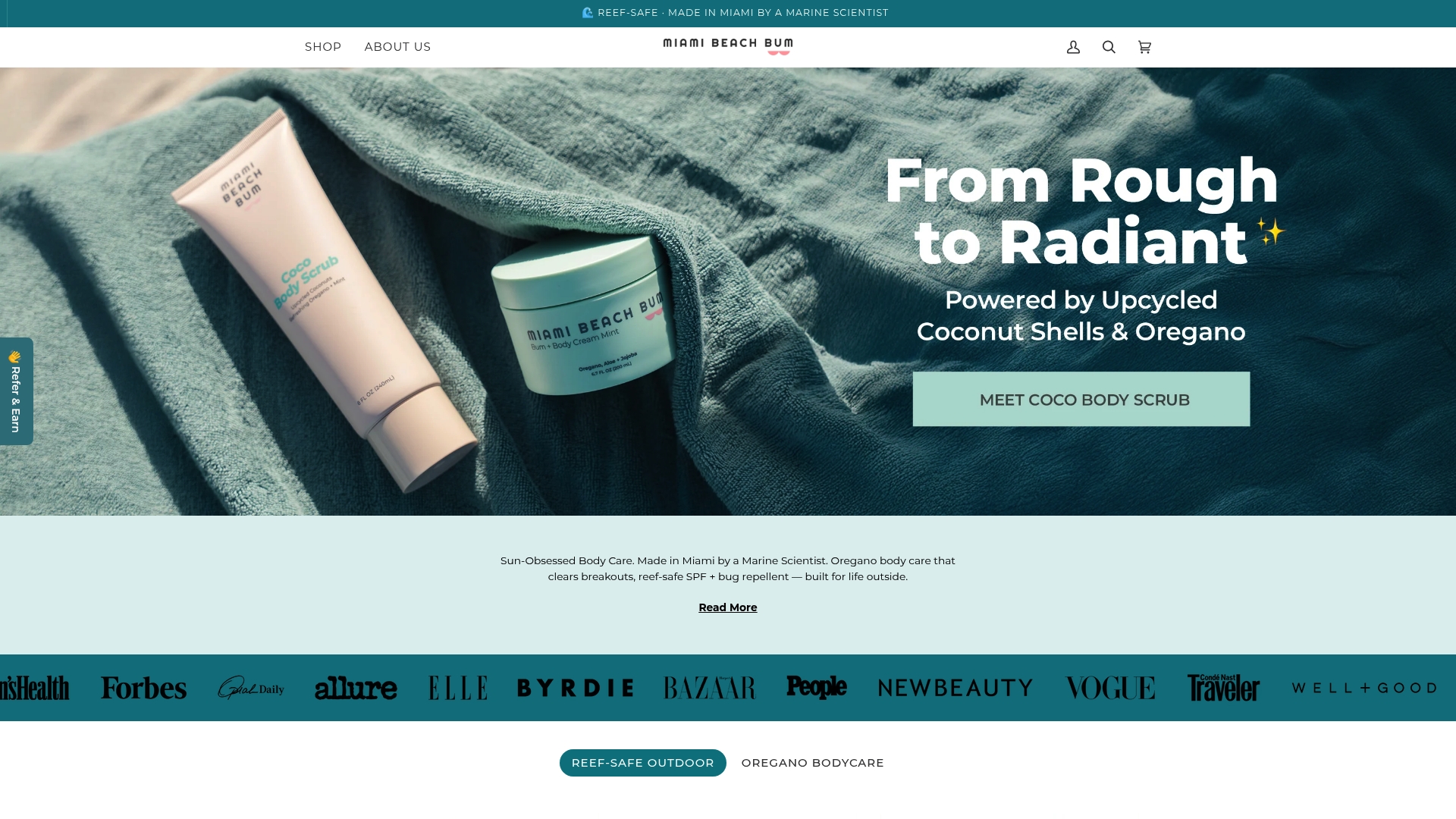
For readers building a full routine, the Skin Smoothie daily moisturizer pairs well as the hydrating layer before SPF. If body acne or razor burn is also a concern, the Bum + Body Cream collection addresses those concerns with the same clean-ingredient approach. Shop Save Face directly to add SPF to your serum routine without adding another product layer.
Primary sources and further reading
- Healthline: Benefits of Face Serum — Expert-reviewed consumer guide covering serum types, active ingredients, and application guidance.
- Harvard Health: Skin Serum — What It Can and Can’t Do — Dermatology faculty guidance on anti-aging evidence and the vitamin C + E + ferulic acid combination.
- NCBI PMC: Topical Actives Review — Peer-reviewed dermatology literature on mechanisms for retinoids, hyaluronic acid, vitamin C, and AHAs/BHAs.
- CVS: What Is a Face Serum? — Consumer-facing ingredient and timing guidance, including AM/PM recommendations.
- Nykaa Beauty Book: Benefits of Face Serum — Retailer guide on matching actives to skin concerns, patch-testing, and photosensitivity warnings.
- Tryrevivify: The Role of Cellular Health in Your Complexion — Partner science primer on cellular mechanisms behind complexion changes.
Sources
- Benefits of Face Serum: Expert Advice on What to Know
- Skin serum: What it can and can’t do - Harvard Health
- Ncbi
- What is a face serum? Why and how to use it
- Benefits Of Face Serum | Nykaa’s Beauty Book