


Treat fresh sunscreen residue with a surfactant like dish soap or liquid laundry detergent to break down the oils first. If the mark has turned orange or rust-colored, follow up with a rust-treatment step rather than reaching for chlorine bleach. Always check that the stain is fully gone before it goes anywhere near a dryer, since heat can set what’s left permanently.
TL;DR:
- Grease stains from sunscreen respond best to dish soap or laundry detergent applied directly to the spot, especially before heat sets the stain in the dryer.
- Rust-colored or orange stains are often caused by avobenzone reacting with minerals in hard water and are best treated with rust removers or lemon and salt paste, but chlorine bleach can worsen discoloration.
- Mineral sunscreen residues can be scraped off as chalky white films, while greasy chemical formulas require targeting the oil component first for effective removal.
- Avoid long water soaks or hot dryers after staining, as these can deepen the marks or promote chemical reactions that make stains permanent.
- Prevent stains by waiting 10 minutes after sunscreen application before dressing and choosing formulas with lower transfer potential.
Table of Contents
- How to Tell What Kind of Sunscreen Stain You’re Dealing With
- Step-by-Step Fixes for Grease, Chalky Residue, and Rust-Colored Stains
- Treating Sunscreen Stains by Fabric Type
- Common Mistakes That Turn a Stain Into a Permanent Mark
- Preventing Sunscreen Stains Before They Happen
- When to Hand the Stain Over to a Professional Cleaner
- Miami Beach Bum’s Take on Sunscreen Residue and Skin Care
- Products That Fit Into a Stain-Smart Beach Routine
- Where This Stain Advice Comes From
- A Quick Word From Miami Beach Bum
- Sources
- FAQ
How to Tell What Kind of Sunscreen Stain You’re Dealing With
Not every sunscreen mark responds to the same fix, so the first job is figuring out what you’re actually looking at. A chalky white film usually means a mineral sunscreen with zinc oxide or titanium dioxide, and that residue can often be scraped or brushed off before you treat what’s underneath. A darker, greasy patch that looks almost translucent against the fabric points to a chemical formula, which behaves more like a straightforward oil stain. Orange or rust colored marks, especially ones that show up after a wash rather than right away, usually mean avobenzone has reacted with minerals in the water.
Fabric matters just as much as the sunscreen type:
- Synthetic fibers like polyester and nylon tend to grab and hold oily stains more stubbornly than natural fibers.
- Cotton and linen usually respond better to a basic detergent pretreatment.
- Anything with a “dry clean only” label, delicate trim, or heavy embellishment is a better candidate for a professional than a DIY attempt.
Step-by-Step Fixes for Grease, Chalky Residue, and Rust-Colored Stains
Sunscreen stains are what laundry chemists call combination stains: part oil, part mineral or chemical residue. Tide’s own stain guidance treats them this way for a reason. Attack only the grease and ignore the discoloration, or vice versa, and the stain usually just fades instead of disappearing.
For fresh grease stains:
- Scrape off any excess sunscreen with a spoon or dull knife edge.
- Apply a few drops of liquid dish soap or liquid laundry detergent directly to the mark.
- Work it in gently with your fingers or a soft toothbrush. Don’t scrub hard enough to fray fibers.
- Let it sit for 10 to 15 minutes so the surfactant has time to break down the oil.
- Rinse from the back of the fabric so you’re pushing the stain out, not further in.
- Launder using the hottest water the care label allows, then repeat the whole process if any shadow remains.
For chalky mineral residue:
- Brush or gently scrape off the dried white film first.
- Pretreat the oily mark left behind with liquid detergent, the same way you would a grease stain.
- Skip heavy rubbing on dark fabrics. Mineral residue can grind into the weave and leave a faded patch.
- Launder on the warmest safe setting per the garment’s care label.
For orange or rust-colored stains:
- Deal with the grease component first, exactly as above. Skipping this step is the most common reason rust treatments fail.
- Once the oil is gone, treat the remaining orange mark with a fabric-safe rust stain remover, or try a lemon juice and salt paste on sturdy, washable fabrics.
- Test either method on an inconspicuous seam or hem first to make sure the color holds.
- Let the treatment sit, then rinse and air-dry, checking the stain’s progress before you launder again.
- Skip chlorine bleach entirely on suspected avobenzone stains, since it can actually darken the rust color instead of lifting it.
Pro Tip: Keep a small bottle of dish soap in your beach bag. Treating a fresh grease stain within the hour is far easier than trying to lift a set-in mark three days later.
Treating Sunscreen Stains by Fabric Type
The right removal method changes depending on what you’re wearing, and the wrong one can trade a stain for a bigger problem like faded color or a stretched-out seam.
- Dark clothing: Skip abrasive scrubbing, which can create a lighter patch that’s more obvious than the original stain. Stick to cold water rinses and a gentle detergent worked in with light pressure.
- Whites: Oxygen bleach is usually safe once the grease is out, but avoid chlorine bleach on any stain that already looks orange or rust tinged.
- Swimwear and technical fabrics: Use a mild detergent, skip the heat, and leave out fabric softener, which can coat synthetic fibers and trap odor. Check the brand’s own wash guidance before treating elastic bands or lined panels.
- Delicates: Spot-treat as lightly as possible. Silk, rayon, suede, and anything with beading or sequins is safer in the hands of a professional cleaner than under your kitchen faucet.
Common Mistakes That Turn a Stain Into a Permanent Mark
A surprising number of “ruined forever” sunscreen stains aren’t really the sunscreen’s fault. They’re the result of what happened after someone tried to treat them.
- Don’t tumble-dry a stained item until you can confirm, in good light, that the mark is completely gone. Heat sets oil and mineral residue into the fibers almost instantly.
- Don’t reach for chlorine bleach the moment you see an orange or rust colored stain. It’s one of the most common reactions, and it tends to make avobenzone discoloration worse, not better.
- Avoid long soaks when you suspect avobenzone is involved. Extended contact with water, especially hard water high in minerals, can intensify the reaction rather than wash it away.
- Test any DIY remedy, including lemon and salt, on a hidden seam before treating the visible stain.
The core lesson is really about sequencing. Grease first, discoloration second, dryer last.
Preventing Sunscreen Stains Before They Happen
Most sunscreen stains are avoidable with a couple of small habit changes, and they cost you nothing but a little patience.
- Wait about 10 minutes after applying sunscreen before you get dressed, which gives the product time to absorb into skin instead of transferring straight onto fabric.
- If staining keeps happening no matter what you try, a lower-transfer or mineral formula might cause fewer problems than a heavier chemical one.
- Wash your hands after application so you’re not leaving fingerprints on straps, collars, or waistbands.
- Watch out for gear that rubs against unscreened skin, like backpack straps or goggle bands, since friction spreads residue fast.
Pro Tip: If you’re heading straight into a swimsuit or gym clothes after applying sunscreen, pat, don’t rub, any excess with a paper towel first. It cuts down on transfer without wasting product.
When to Hand the Stain Over to a Professional Cleaner
Some fabrics and some stains just aren’t worth the DIY risk. Silk, suede, structured blazers, and anything with delicate trim or beading belongs with a professional cleaner rather than in your bathroom sink.
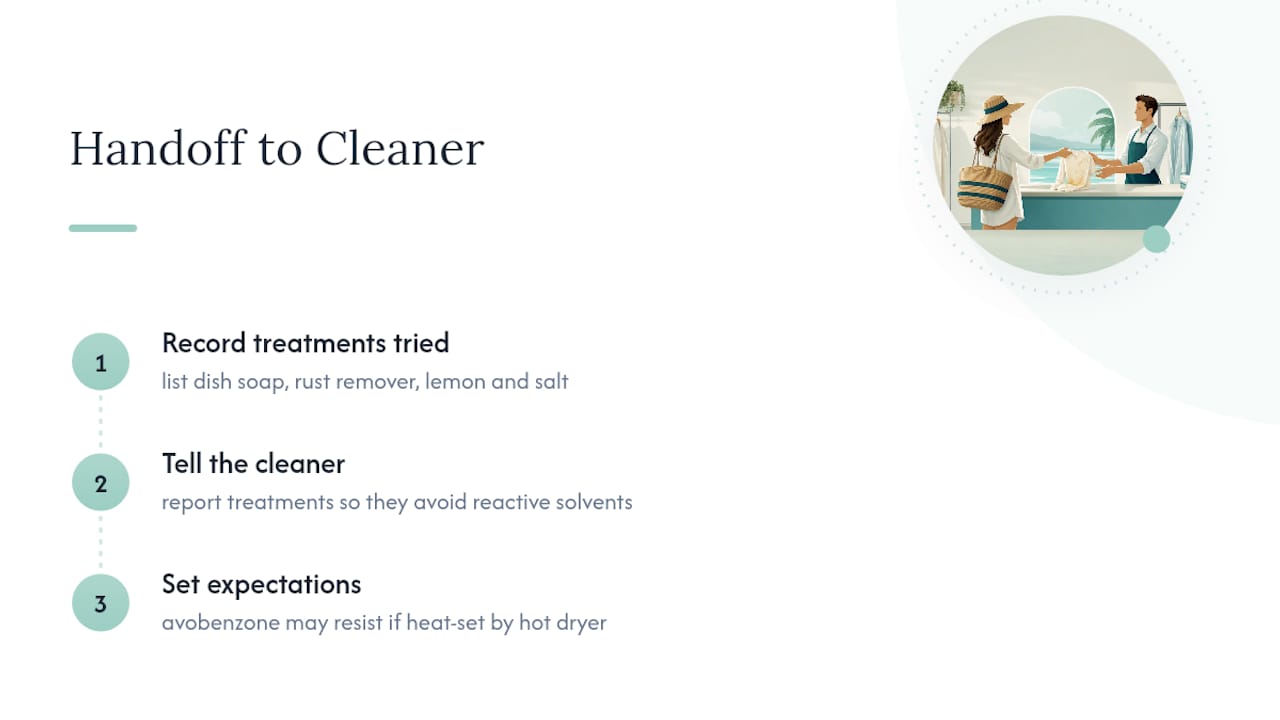
When you drop off the item, tell the cleaner exactly what you already tried, including any dish soap, rust remover, or lemon and salt treatment. That detail matters because it helps them avoid a solvent that reacts badly with what’s already on the fabric. Set your expectations honestly, too: some avobenzone stains resist full removal even under professional treatment, particularly if the garment went through a hot dryer before anyone caught the mark.
Miami Beach Bum’s Take on Sunscreen Residue and Skin Care
Getting sunscreen off your clothes is only half the routine. What’s left on your skin at the end of a beach day matters too, and that’s where a little post-sun care goes further than most people expect.
- A simple routine works: apply sunscreen, wait the 10 minutes, then rinse off leftover residue with a gentle cleanser once you’re done for the day.
- A reputable body care brand’s guide on removing sunscreen residue from skin breaks down a quick oil-cleanse method that works in under 90 seconds.
- If you’re still deciding which formula fits your routine, the comparison of chemical versus mineral sunscreen is worth a read before your next bottle purchase.
Some body care formulations lean on ingredients that are meant to be as kind to your skin as they are to the reef.
Products That Fit Into a Stain-Smart Beach Routine
Prevention starts before you even leave the house, and the right products can cut down on both skin irritation and fabric staining. Blocked SPF50 is a reef-safe mineral sunscreen worth considering if you’re tired of chasing orange stains out of your favorite cover-up. Because mineral formulas sit differently on skin than chemical ones, some people find they transfer less onto fabric once fully absorbed.
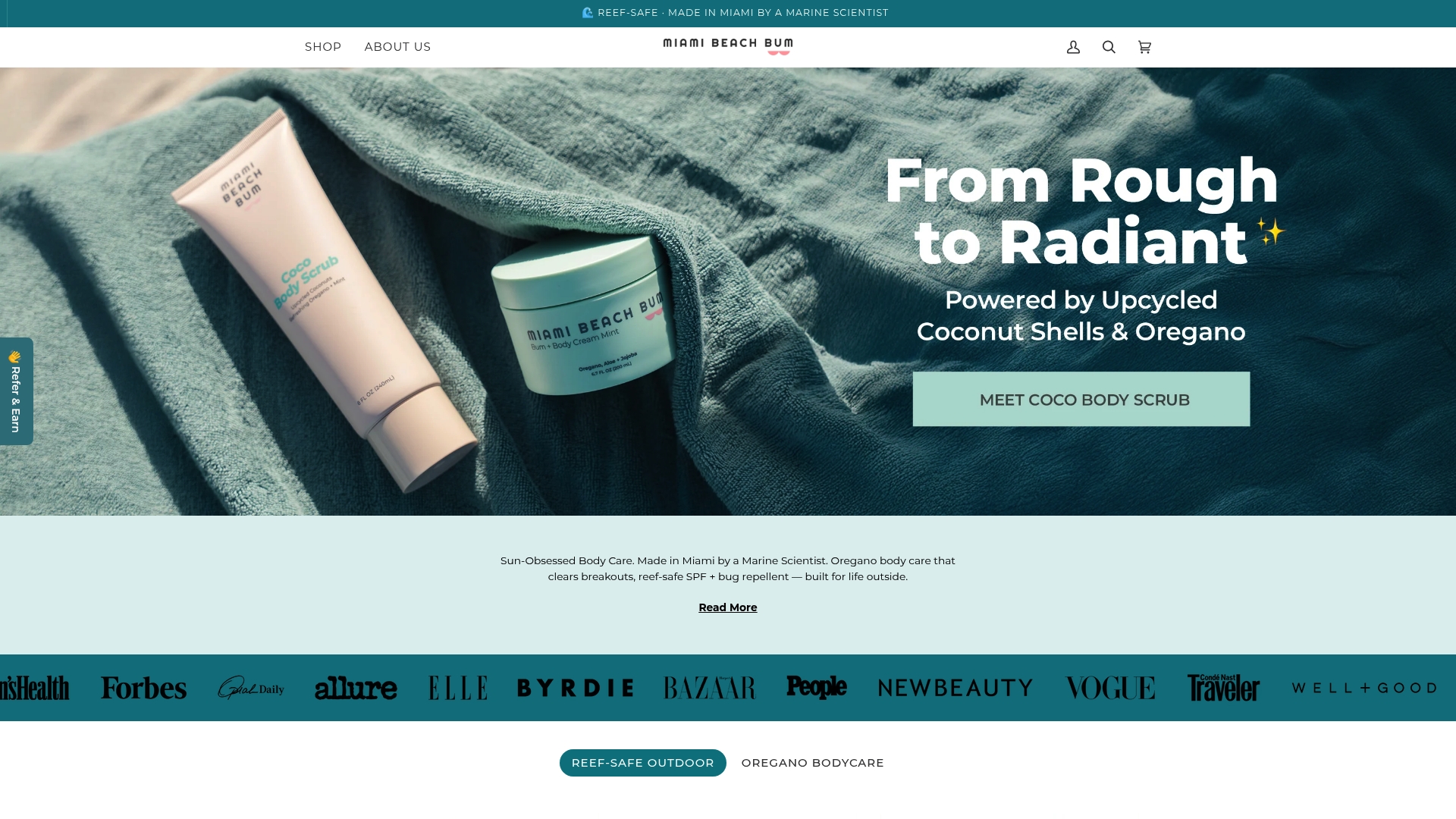
Once you’re off the sand, Bum + Body Cream helps clear away leftover residue and support skin that’s been sitting under sunscreen all day, while Coco Body Scrub offers a gentler way to lift buildup from skin around straps and cuffs where sunscreen tends to cake up. If your hair took a beating from salt, wind, and sunscreen drips, Hair Shield is a leave-in conditioner built for exactly that kind of day. Browse the full Bodycare line or the Outdoor collection to build out a routine that keeps both your skin and your closet in better shape after a beach day.
Where This Stain Advice Comes From
- American Cleaning Institute on pretreating and checking stains before drying.
- UCLA Health on the 10-minute wait after applying sunscreen.
- Better Homes & Gardens on avobenzone’s reaction with water minerals and bleach cautions.
A Quick Word From Miami Beach Bum
Most sunscreen stains aren’t a lost cause. They’re a sequencing problem: grease first, rust-colored discoloration second, dryer last.
— Ayssa
Sources
- How to apply sunscreen correctly — UCLA Health
- How to remove sunscreen stains — Tide
- How to get sunscreen stains out of fabric — Better Homes & Gardens
- Ask ACI: Bug Spray and Sunscreen on Clothes — American Cleaning Institute
FAQ
Is a Sunscreen Stain Permanent?
Not usually, as long as you treat it before it goes through a hot dryer. Grease-based marks respond well to a surfactant pretreatment, and even orange avobenzone stains often lift with a proper rust-treatment approach if you catch them before repeated hot washes set them further into the fabric.
How Do You Remove Old, Set-In Sunscreen Stains?
Start the same way you would with a fresh stain: work in a liquid detergent or dish soap to loosen any remaining oil. For older stains that have turned rust colored, a fabric-safe rust remover or a lemon and salt paste, tested on a hidden area first, tends to work better than repeated regular washing.
What Is the Best Stain Remover for Sunscreen?
A basic surfactant, like liquid dish soap or liquid laundry detergent, remains the most reliable first step for the greasy component of a sunscreen stain, according to laundry industry guidance. For orange or rust discoloration left behind after that, a dedicated rust stain remover formulated for laundry use is generally more effective than an all-purpose stain spray.
Should I Soak a Sunscreen-Stained Garment Overnight?
Avoid long soaks, especially if the stain looks orange or rust colored. Extended time in water, particularly hard water, can worsen an avobenzone reaction instead of loosening it.
Can I Prevent Sunscreen Stains in the First Place?
Waiting about 10 minutes after applying sunscreen before dressing cuts down on transfer significantly. Choosing a lower-transfer formula, like a mineral sunscreen, can also help if staining keeps happening no matter how careful you are.