


U.S. sunscreens are governed by OTC Monograph M020, the deemed final order created under the CARES Act, plus the 2011 testing and labeling rule at 21 CFR 201.327. In 2026, FDA added bemotrizinol as a new active ingredient and formally removed PABA and trolamine salicylate from the list of ingredients considered generally recognized as safe and effective. Check your bottle’s active ingredient list, SPF number, and lot code against current rules. Manufacturers should confirm their formulations still comply with the amended monograph.
TL;DR:
- Bemotrizinol was added as a GRASE active ingredient in 2026, with a permitted concentration of up to 6%, marking the first new FDA-approved sunscreen active in two decades.
- PABA and trolamine salicylate are no longer considered GRASE, and products containing these ingredients may face legal issues if marketed as safe.
- Consumers should verify lot numbers against FDA recall notices, as most sunscreen recalls are specific to individual manufacturing lots.
- Sunscreen labels must clearly display SPF, Broad Spectrum status, water resistance duration, active ingredients, and lot number for legal compliance and safe use.
- Formulators must maintain detailed records on formulation and distribution, especially when making formulation changes or adjusting delivery systems like sprays.
Table of Contents
- FDA Sunscreen Regulations Explained: M020, the CARES Act, and GRASE Status
- The 2026 Sunscreen Rule Changes You Need to Know
- SPF, Broad Spectrum, and Water Resistance: How Sunscreen Testing Actually Works
- How a New Sunscreen Ingredient Gets FDA Approval
- Consumer Checklist: How to Read a Sunscreen Label and Check for Recalls
- Manufacturer Compliance: Recordkeeping, Dosage Forms, and Recall Prevention
- Ayssa and Miami Beach Bum: Where Formulation Science Meets FDA Compliance
- The 2011 Rule’s Lasting Grip on Sunscreen Labels
- What 2026’s Sunscreen Changes Mean for What You Buy Next
- Choosing an FDA-Aware Sunscreen: What to Check on Blocked SPF50
- Where to Verify These FDA Sunscreen Rules Yourself
- Sources
- FAQ
FDA Sunscreen Regulations Explained: M020, the CARES Act, and GRASE Status
Before 2020, sunscreen regulation moved through a slow rulemaking process that hadn’t produced a final rule in decades. The CARES Act changed that by converting the existing tentative final monograph into a “deemed final order,” instantly giving legal force to a set of standards that had been sitting in regulatory limbo. That order became the backbone of what is now OTC Monograph M020, the rulebook FDA uses to decide which sunscreen ingredients and formulations can be sold without a separate new drug application.
A deemed final order isn’t the same thing as a proposed order, and mixing them up is one of the most common mistakes people make when researching this topic. A proposed order is a draft. It signals FDA’s intent but carries no binding weight until finalized. A final administrative order, by contrast, actually amends M020 and changes what’s legally marketable. The FDA Law Blog has flagged this confusion repeatedly since 2021, noting that industry stakeholders sometimes cite pending proposals as if they were settled law.
GRASE status (generally recognized as safe and effective) is the gatekeeper concept for the entire system. An ingredient doesn’t earn GRASE status just because it’s been used safely in Europe or Asia for years. FDA requires a specific evidentiary package tied to the U.S. regulatory framework:
- Clinical SPF testing that demonstrates the ingredient contributes measurable sun protection at the proposed concentration.
- Systemic exposure and toxicology data showing the ingredient doesn’t pose unreasonable risk when absorbed through skin.
- Final formulation testing, meaning the actual finished product, not just the raw active ingredient, has to perform as labeled.
This is where marketing language and regulatory reality diverge. A sunscreen can be labeled “reef-safe” or “clean” without any bearing on whether its actives, concentrations, and testing meet FDA’s GRASE requirements. Those are separate questions, and only one of them determines whether the product can legally stay on shelves.
The 2026 Sunscreen Rule Changes You Need to Know
FDA finalized two consequential orders in 2026, and together they reshape which active ingredients you’ll find in sunscreen formulas going forward.
The first is genuinely historic. On June 9, 2026, FDA issued administrative order OTC000039, adding bemotrizinol to the monograph. It’s the first new sunscreen active ingredient approved for the U.S. market in roughly two decades. The order permits bemotrizinol at concentrations up to 6%, and it specifies the dosage forms allowed, including spray formulations that use non-contact propellant systems designed to reduce inhalation risk. The Federal Register notice lays out the permitted combinations with other actives and the specific formulation conditions manufacturers must meet.
The second order moves in the opposite direction. In September 2026, FDA finalized order OTC000008-1, formally removing PABA and trolamine salicylate as GRASE sunscreen actives. Neither ingredient has been widely used in U.S. sunscreen formulas for years, but their removal closes off any lingering legal pathway for reintroducing them without new safety data.
Here’s what both orders mean in practice:
- Products currently on shelves containing PABA or trolamine salicylate are no longer considered GRASE, which puts continued marketing at legal risk.
- Manufacturers planning to use bemotrizinol need to confirm their dosage form and concentration match the permitted conditions in OTC000039, not just the general 6% ceiling.
- Consumers won’t see immediate shelf changes. Reformulation and distribution take time, and most existing inventory doesn’t contain either removed ingredient.
- Retailers and distributors should treat both orders as effective dates for compliance planning, not as instant recall triggers.
If you’re a formulator watching this space, the bemotrizinol order matters less for what it adds today and more for what it signals: FDA’s monograph process, after two decades of near-total stasis, is moving again.
SPF, Broad Spectrum, and Water Resistance: How Sunscreen Testing Actually Works
The 2011 labeling and effectiveness rule at 21 CFR 201.327 is the reason every sunscreen bottle you pick up follows the same basic format. It sets the testing methods that determine what a label can legally claim, and understanding those methods tells you a lot about what a product actually does versus what its marketing implies.
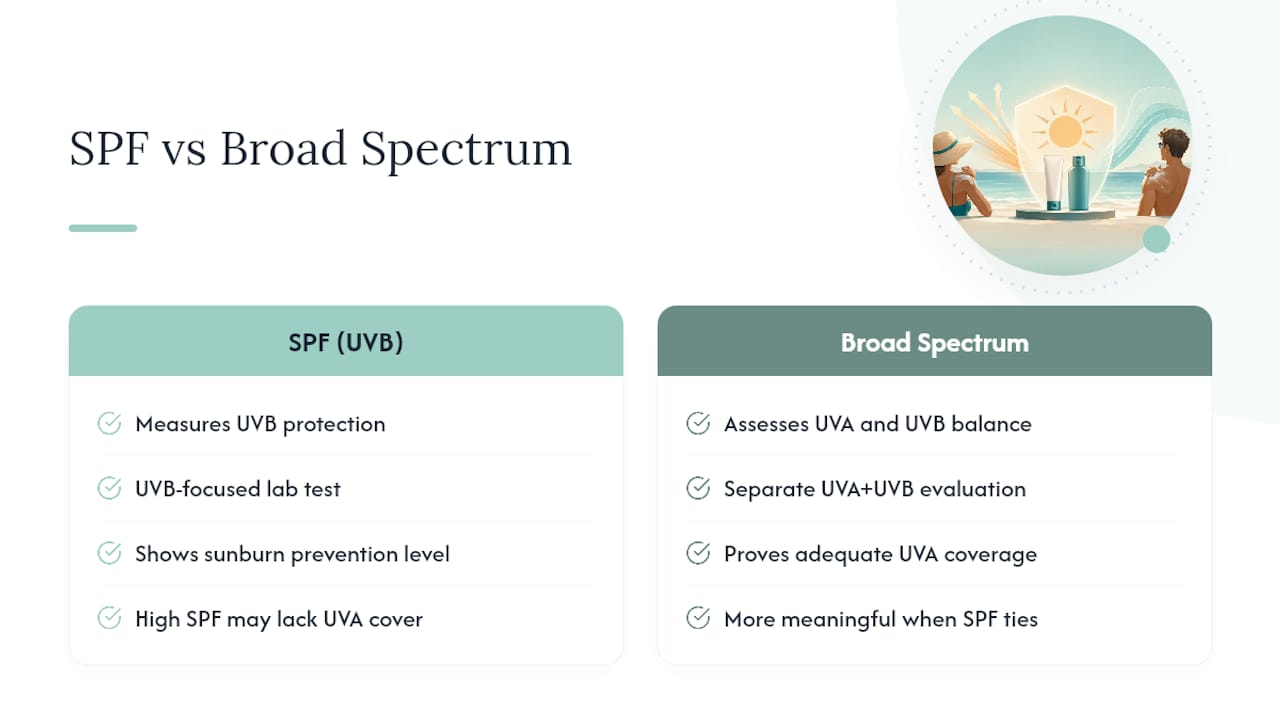
- SPF testing measures sunburn protection, not total UV protection. The in vivo SPF test under 201.327(i) exposes human subjects to UV light and measures how long it takes protected skin to redden compared to unprotected skin. SPF 30 doesn’t mean “double the protection” of SPF 15. It means a longer delay before burning under lab conditions that don’t map cleanly onto a beach day.
- Broad Spectrum requires a separate in vitro test. Under 201.327(j), products undergo lab testing that measures UVA protection specifically, since SPF alone only reflects UVB. A product only earns the “Broad Spectrum” label if it passes this test, and that label matters more than the SPF number alone.
- The cancer and aging claim depends on both tests passing together. A sunscreen can only state that it “helps prevent skin cancer and early skin aging” if it’s SPF 15 or higher and has passed the Broad Spectrum test. Miss either threshold, and that claim legally disappears from the label, regardless of how the product is marketed elsewhere.
- Water resistance claims are time-bound and tested, not assumed. Products can only claim 40 or 80 minutes of water resistance, and only after specific submersion testing. There’s no “waterproof” claim allowed under U.S. rules. If a bottle says waterproof, that’s a red flag worth noting.
- Label formatting follows fixed rules. The statement of identity, meaning the word “sunscreen” itself, has to appear in specific type, and directions/warnings must run as continuous text rather than being broken up by unrelated marketing copy.
Pro Tip: Compare the SPF number to the Broad Spectrum statement before you compare it to anything else. A high SPF with no Broad Spectrum claim leaves you exposed to UVA damage that contributes heavily to premature skin aging.
If you’re trying to decide between a mineral formula and a chemical one, know that the FDA testing rules apply equally to both. The ingredient type doesn’t determine compliance. The testing does.
How a New Sunscreen Ingredient Gets FDA Approval
Getting a new active ingredient added to the monograph is a multi-year undertaking, and the bemotrizinol order is a useful case study in what that process actually demands from sponsors.
FDA generally expects a data package built around a few core pillars:
- At least two adequate, well-controlled SPF clinical studies demonstrating the ingredient contributes meaningful sun protection at its proposed concentration.
- Systemic exposure and toxicology data addressing how much of the ingredient is absorbed through skin and whether that absorption raises safety concerns, an issue that’s driven ongoing scrutiny of ingredients like octocrylene.
- Final formulation testing, confirming the finished product, not an isolated raw ingredient, performs as claimed once combined with the full vehicle and any other actives.
Sponsors submit this evidence through an OTC Monograph Order Request, or OMOR. FDA reviews the request, and if the data supports it, the agency issues a proposed order that opens a public comment period. Interested parties, including manufacturers, dermatology groups, and consumer advocates, can weigh in before FDA finalizes anything. Only after that comment period closes does FDA issue the final administrative order that actually amends M020, the same mechanism used for both the bemotrizinol addition and the PABA removal.
Not every sunscreen ingredient or product qualifies for this pathway. Certain dosage forms or novel delivery systems may fall outside what the monograph covers entirely, in which case a sponsor has to pursue a New Drug Application instead. NDAs involve a more rigorous, product-specific review and typically apply when a formulation departs significantly from what the monograph anticipates, such as unusual delivery mechanisms or ingredient combinations with no established GRASE history.
Consumer Checklist: How to Read a Sunscreen Label and Check for Recalls
Reading a sunscreen label correctly takes about fifteen seconds once you know what to look for. Here’s what actually matters:
- Statement of identity. The word “sunscreen” should appear clearly, not buried under a cosmetic claim like “daily moisturizer with sun protection.”
- Active ingredients and concentrations. Listed by name and percentage, this tells you exactly what’s providing the protection.
- SPF value. A number, not a range or vague claim like “high protection.”
- Broad Spectrum statement, paired with SPF 15 or higher. This combination is what unlocks the cancer and aging prevention claim.
- Water-resistance duration. Only 40 or 80 minutes are legally permitted claims.
- Directions, warnings, and reapplication instructions.
- Lot number and expiration date, which matter far more than most consumers realize.
That last point deserves emphasis. FDA’s recall database has documented voluntary recalls tied to benzene contamination in aerosol sunscreens and separate recalls linked to microbial contamination in specific batches. Both types of recalls are almost always lot-specific, not brand-wide.
Statistic Callout: Past FDA recall notices for benzene contamination targeted specific manufacturing lots rather than entire product lines, which is exactly why checking your bottle’s lot number against an active recall notice matters more than checking the brand name alone.
If your product appears in an active recall, stop using it immediately and follow the disposal or return instructions in the notice. If you experience a skin reaction, rash, or other adverse event you suspect is linked to a sunscreen, report it to FDA’s MedWatch program and talk to a healthcare provider, particularly if symptoms persist or worsen. For a deeper walkthrough of what each label element means, a step-by-step ingredient decoder can help you compare formulas side by side.
Manufacturer Compliance: Recordkeeping, Dosage Forms, and Recall Prevention
Compliance under M020 isn’t a one-time formulation check. It’s an ongoing operational commitment, and the details trip up manufacturers more often than the headline rules do.
Recordkeeping sits at the center of that obligation. Manufacturers need to retain final formulation testing records and distribution documentation for as long as regulators may reasonably request them during an inspection or complaint investigation. A format and content of data submissions guide from FDA makes clear that a permitted active ingredient is necessary but never sufficient on its own. Dosage form, vehicle interaction, propellant behavior, and finished-product testing all factor into whether a specific SKU is actually marketable, not just its ingredient list.
Spray formulations carry their own layer of scrutiny. The bemotrizinol order specifically addresses non-contact propellant systems, and any formulation change involving propellant type, delivery mechanism, or spray pattern can trigger a fresh compliance review rather than being treated as a minor tweak. A closer look at spray sunscreen safety covers why propellant choice matters beyond just inhalation risk.
Quality control practices that reduce recall risk include:
- Routine microbial testing on finished batches, not just raw materials.
- Packaging integrity checks that catch seal failures before distribution.
- Lot-tracking systems precise enough to isolate a single manufacturing run if a contamination issue surfaces later.
Pro Tip: If you’re a formulator adding a new active or changing propellant systems, treat it as a full compliance review, not an amendment. The monograph doesn’t distinguish between “small” and “large” formulation changes. It only asks whether the finished product still meets the tested conditions.
Ayssa and Miami Beach Bum: Where Formulation Science Meets FDA Compliance
A marine scientist oversees ingredient selection in some sun care formulations, an approach that keeps compliance considerations tied directly to formulation decisions rather than treating them as an afterthought. Reef-safe claims should be considered alongside the active ingredient, concentration, and testing standards FDA actually enforces.
Some brands communicate commitments to vegan, cruelty-free formulations built from ethically sourced plant ingredients, reflecting a philosophy where sustainability and regulatory rigor are aligned rather than competing priorities.
The 2011 Rule’s Lasting Grip on Sunscreen Labels
Every sunscreen label you’ve read in the past decade traces back to the 2011 labeling and effectiveness rule, and it remains the framework the 2026 changes were layered onto rather than replaced. This rule didn’t just standardize testing. It eliminated vague, consumer-facing terms that had cluttered labels for years, most notably banning the word “waterproof” and any claim of “sweatproof” protection, since no sunscreen can honestly make either promise.
The rule also introduced the concept of a “Drug Facts” style panel adapted specifically for sunscreen, requiring the same continuous-text formatting used across other OTC drug categories. That consistency is deliberate. It means a consumer who’s learned to read a pain reliever label can transfer that same skill to a sunscreen bottle without relearning the format.
What’s easy to miss is how much SPF testing and Broad Spectrum testing operate as genuinely separate evaluations. A product doesn’t automatically pass one because it passed the other. Some formulas achieve a high SPF number through UVB-blocking actives alone, without adequate UVA coverage, which is precisely why the Broad Spectrum designation exists as its own checkbox rather than being folded into the SPF number itself. When you’re comparing two bottles with the same SPF, the Broad Spectrum statement, not the SPF figure, is usually the more meaningful differentiator.
What 2026’s Sunscreen Changes Mean for What You Buy Next
The bemotrizinol addition is a bigger deal for formulators than for the sunscreen you’ll grab at the drugstore next week. It expands what’s chemically possible in U.S. formulas for the first time in twenty years, but reformulation and shelf turnover take time. The PABA and trolamine salicylate removals matter more as a signal that the monograph process, long considered frozen, can still move.
My read: the accurate label, not the ingredient trend of the moment, is still the thing worth trusting. R&D teams should be investing in non-propellant spray systems and rigorous systemic exposure data now, ahead of the next wave of monograph amendments. For everyone else, checking the SPF number, the Broad Spectrum statement, and the lot code takes fifteen seconds and tells you more than any marketing claim on the front of the bottle.
— Ayssa
Choosing an FDA-Aware Sunscreen: What to Check on Blocked SPF50
Formulating for compliance means every claim on a Miamibeachbum label has to survive the same scrutiny this article just walked through, not just sound good on a shelf. That’s the standard behind Blocked SPF50, a mineral sunscreen built by a marine scientist with the label facts front and center rather than buried in fine print.
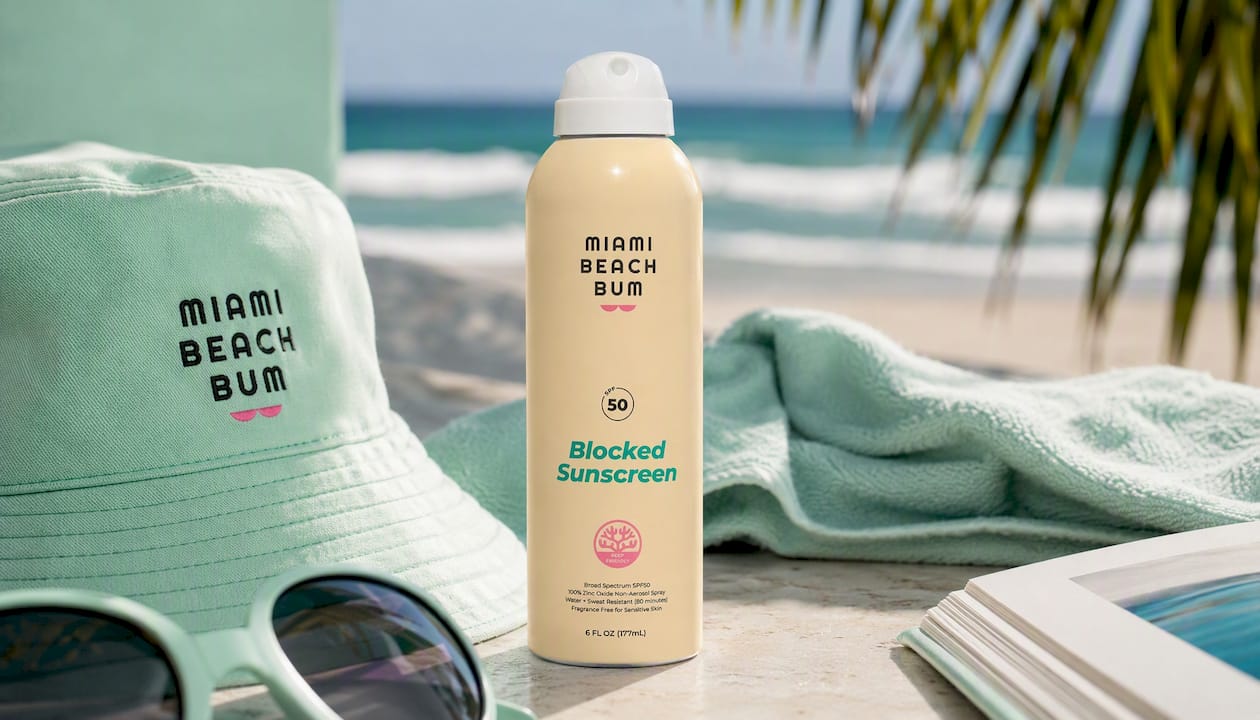
Before you buy any sunscreen, including this one, run it through the checklist from this article: SPF value, Broad Spectrum statement, water-resistance duration, active ingredients, and lot number. Some mineral sunscreens list their SPF value and Broad Spectrum status directly on the bottle, and may be formulated with reef-safe, vegan ingredients and no petroleum derivatives. If you’re building a full sun-care rotation, Miamibeachbum’s bodycare line and outdoor collection round out the routine for anyone spending real time outside. Check the label, compare it against what you now know about FDA testing standards, and pick up Blocked SPF50 for your next day at the beach.
Where to Verify These FDA Sunscreen Rules Yourself
For primary-source verification, consult FDA’s press announcement on bemotrizinol, the OTC sunscreen Q&A page, the Federal Register final orders (OTC000039 and OTC000008-1), 21 CFR Part 352, and FDA’s recall database.
Sources
- Amending Over-the-Counter Monograph M020: Sunscreen Drug Products for Over-the-Counter Human Use, and Related Information
- Labeling and Effectiveness Testing: Sunscreen Drug Products for Over-The-Counter Human Use — Small Entity Compliance Guide
FAQ
What Is the New FDA-Approved Sunscreen Ingredient?
Bemotrizinol is the newest FDA-permitted sunscreen active, added through a June 2026 final order at concentrations up to 6%. It’s the first new active ingredient approved for U.S. sunscreens in about two decades.
Which Sunscreen Ingredients Are FDA Approved?
Ingredients GRASE under OTC Monograph M020 include zinc oxide, titanium dioxide, avobenzone, octinoxate, octisalate, and now bemotrizinol, each with specific permitted concentrations. PABA and trolamine salicylate were removed from that list in 2026 and are no longer considered GRASE.
Which Sunscreen Ingredients Should I Avoid?
Avoid any sunscreen listing PABA or trolamine salicylate as active ingredients, since both lost GRASE status under a 2026 final order. Also skip any product claiming “waterproof,” a term FDA does not permit under current labeling rules.
How Do I Know if My Sunscreen Has Been Recalled?
Check your product’s lot number against FDA’s recall database, since most sunscreen recalls are tied to specific manufacturing lots rather than entire product lines. If your lot appears, stop using the product and follow the disposal instructions in the notice.
Does “Reef-Safe” Mean a Sunscreen Is FDA Compliant?
No. Marketing terms like “reef-safe” describe environmental positioning, not FDA compliance. Compliance depends on active ingredients, concentrations, and testing, so always check the label’s SPF and Broad Spectrum statement separately from any environmental claim.