


Yes. Independent lab testing has detected benzene in some sunscreen and after-sun products, mostly in spray formulas and specific lots, not entire brands. The FDA and Valisure’s screening confirm the contamination is real but inconsistent. Keep using sun protection, favor lotions and sticks over aerosols, and check your product’s lot number against current FDA recalls before your next reapplication.
TL;DR:
- Spray sunscreens have the highest benzene contamination risk, especially in specific batches, with some exceeding 2.0 parts per million, while lotions and sticks are cleaner options.
- The FDA recalls target specific manufacturing lots, and lot-to-lot variability means a product can test clean one time and contaminated another, requiring continuous lot checking.
- Benzene contamination mainly comes from inactive ingredients and propellants, with aerosols and pump sprays being more likely to carry benzene due to hydrocarbon propellants.
- Although benzene is a known carcinogen, actual exposure from contaminated sunscreens is typically far below cancer-risk benchmarks, especially compared to inhalation risks from urban pollution or smoking.
- Using lotion or cream sunscreens and checking lot numbers before purchase can significantly reduce benzene exposure compared to relying on aerosol sprays or marketing claims of natural or reef-safe products.
Table of Contents
- What Independent Testing and FDA Recalls Actually Found
- How Benzene Gets Into a Sunscreen Bottle
- How Worried Should You Actually Be?
- A Practical Checklist for Choosing and Using Sunscreen Safely
- Where to Learn More From Miamibeachbum
- The Gap Between Sunscreen Fear and Sunscreen Sense
- A Non-Aerosol Option Worth Considering
- Sources
- FAQ
What Independent Testing and FDA Recalls Actually Found
The scale of benzene contamination in sunscreen is smaller than headlines suggest, but it is not zero. Valisure’s screening of 661 sun care samples found detectable benzene in a substantial number of them, with some samples exceeding 2.0 parts per million. Contamination clustered heavily in spray sunscreens and after-sun sprays and gels, not in creams or sticks.
A separate 2023 study looked at 50 sunscreen products sold in the United States and found benzene in 80% of the samples, with an average concentration of 45.8 nanograms per gram. Researchers modeled exposure for children and adults and found a subset of products exceeded standard cancer-risk benchmarks. That does not mean most sunscreens pose measurable risk. It means testing found a real, uneven problem worth taking seriously.
Recalls back this up in a very specific way. The FDA’s Coppertone recall of specific spray SPF 50 lots in 2021, along with similar aerosol recalls from other brands, targeted individual manufacturing batches rather than entire product lines.
A few caveats matter here:
- Testing samples are a snapshot, not a guarantee for every bottle on every shelf.
- Detection limits vary by lab, so a “not detected” result from one screening doesn’t rule out contamination in a different batch.
- Lot-to-lot variability is real: the same UPC has tested clean in one batch and contaminated in another.
How Benzene Gets Into a Sunscreen Bottle
Benzene isn’t a listed sunscreen ingredient. It shows up as a contaminant, usually from something behind the scenes rather than the active UV filter on the label. The FDA has flagged inactive ingredients and propellants as the likely sources, not zinc oxide, avobenzone, or octinoxate.
Common contamination pathways include:
- Propellant hydrocarbons like isobutane, which can carry benzene as a manufacturing byproduct.
- Carbomers and other petroleum-derived thickeners used in gels and lotions.
- Fragrance components and certain preservatives that degrade over time.
- Supply-chain shifts, like a new propellant or carbomer supplier, that introduce inconsistent contamination between production runs.
Aerosols and pump sprays raise the stakes in two ways. They’re more likely to rely on hydrocarbon propellants, and they put airborne particles closer to your nose and mouth. The FDA has set a practical residual-solvent limit of roughly 2 parts per million for benzene in products where it can’t be entirely avoided, aiming to keep daily exposure near 20 micrograms.
Pro Tip: A product’s active-ingredient list won’t tell you anything about benzene risk. The contamination lives in the inactive ingredients and packaging, which most labels never break down in detail.
How Worried Should You Actually Be?
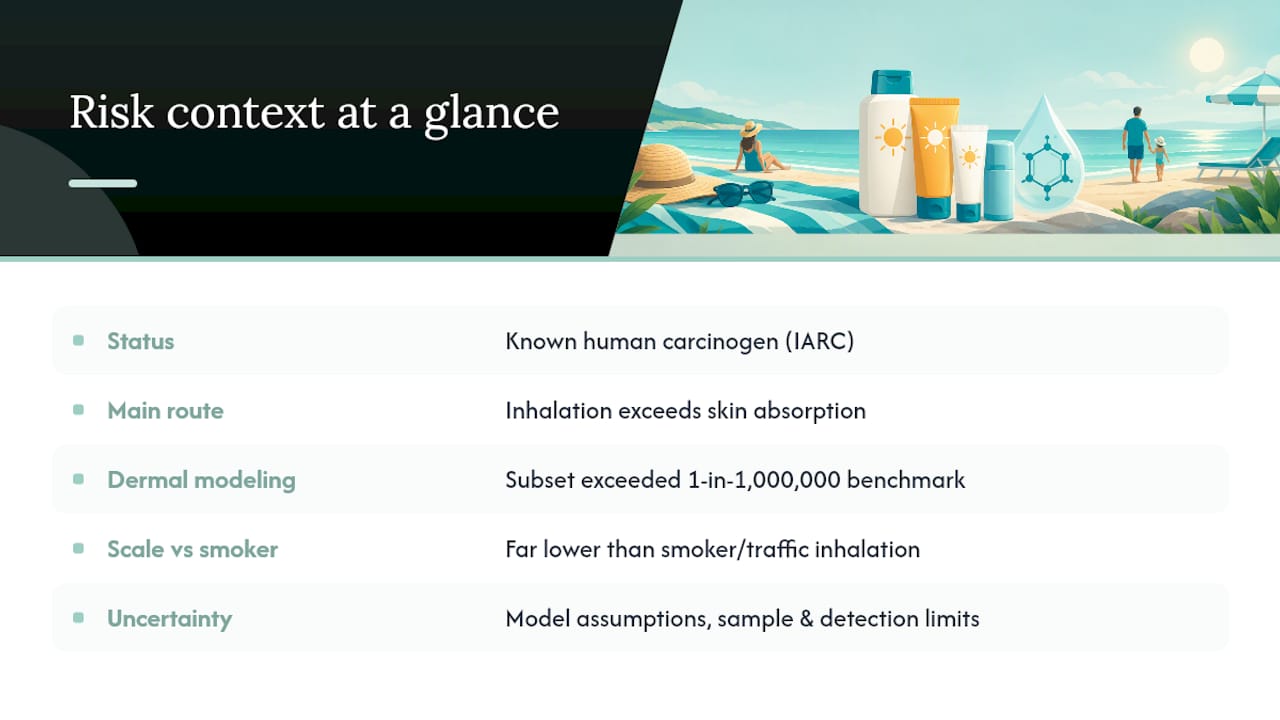
Benzene is classified as a known human carcinogen, in the same tier as tobacco smoke, by major toxicology bodies including IARC. It’s linked to blood-forming-system damage, including leukemia, and inhalation is the exposure route that matters most, more than absorption through skin.
The numbers in context: the 50-product study modeled dermal exposure and found a subset of sunscreens exceeded the standard 1-in-a-million cancer-risk benchmark researchers use to flag concern. Most products in that same study did not cross that line.
That distinction is easy to miss in a scary headline. Sunscreen-derived benzene exposure, even in the higher-detection products, sits far below what a regular smoker or someone in heavy urban traffic inhales daily. Dermal absorption happens, but a meaningful portion of benzene on skin evaporates before it’s absorbed. The bigger practical concern is inhaling aerosol mist directly, especially indoors or repeatedly over a season.
Modeling always carries uncertainty. Sample size, lab detection limits, and assumptions about how often someone reapplies all shift the final risk number. Treat these benchmarks as a useful warning sign, not a precise verdict on any single bottle in your bathroom.
A Practical Checklist for Choosing and Using Sunscreen Safely
You don’t need to give up sun protection to manage this. You need a short routine.
- Choose your format first. Lotions, creams, sticks, and pump bottles carry far less contamination risk than aerosol sprays, based on where testing found the highest benzene concentrations.
- Check the lot number before you use it, especially on sprays. Lot codes are usually printed on the bottom of the can or the crimped seal, and you can cross-reference them against current FDA recall listings.
- Don’t trust marketing language alone. “Natural” or “reef safe” claims say nothing about benzene contamination risk. Read the difference between chemical and mineral filters to understand what the active ingredients actually do.
- If a spray is your only option, spray into your hands and rub it on rather than spraying directly onto skin or your face. Use it outdoors, and keep kids at a distance during application.
- Check expiration and storage. Heat speeds up degradation in some formulas, and expired sunscreen may behave unpredictably.
- Talk to a doctor if you have specific exposure concerns, symptoms, or a family history of blood cancers, rather than trying to self-diagnose risk from a lab report.
Pro Tip: If you’re switching from a spray you’ve used for years, ease the transition by learning how to layer sunscreen with your existing lotion routine instead of abandoning your whole routine at once.
Where to Learn More From Miamibeachbum
Benzene contamination is one piece of a bigger sunscreen safety picture. Miamibeachbum has covered the related questions readers usually ask next:
- Spray sunscreen safety and safer application habits.
- Sunscreen chemicals absorbed into the bloodstream and what that means for daily use.
- Chemical versus mineral filters and why the format matters more than the filter type for contamination risk.
- Sunscreen expiration and shelf-life testing using a simple visual check.
Some sun care formulas are built around lotion and cream rather than aerosol propellants, a format choice that lines up directly with the checklist above.
The Gap Between Sunscreen Fear and Sunscreen Sense
Most coverage of benzene in sunscreen swings between two extremes: panic that all sunscreen is contaminated, or dismissal that it’s a non-issue blown up by lawyers chasing lawsuits. Neither holds up against the actual testing. The PMC screening data and the 50-product study both point to something narrower and more useful: format and manufacturing batch matter far more than brand reputation or price point.
The conventional advice, “just check if your sunscreen is on a recall list,” is technically correct but incomplete. Recall lists only catch what’s already been flagged. Lot variability means a clean test on one batch says nothing about the next one off the same production line. That’s not a reason to panic. It’s a reason to build format preference and lot checking into your routine permanently, not just after a scary news cycle.
Skipping sunscreen entirely because of benzene risk trades a modeled, uncertain long-term risk for a well-documented, immediate one: skin cancer from UV exposure. That trade makes no sense. Keep protecting your skin. Just get pickier about the bottle you’re reaching for.
— Ayssa
A Non-Aerosol Option Worth Considering
If you’re moving away from spray sunscreen, some lotion and cream formats are built without propellant hydrocarbons, avoiding the contamination pathway behind most spray-related benzene findings.
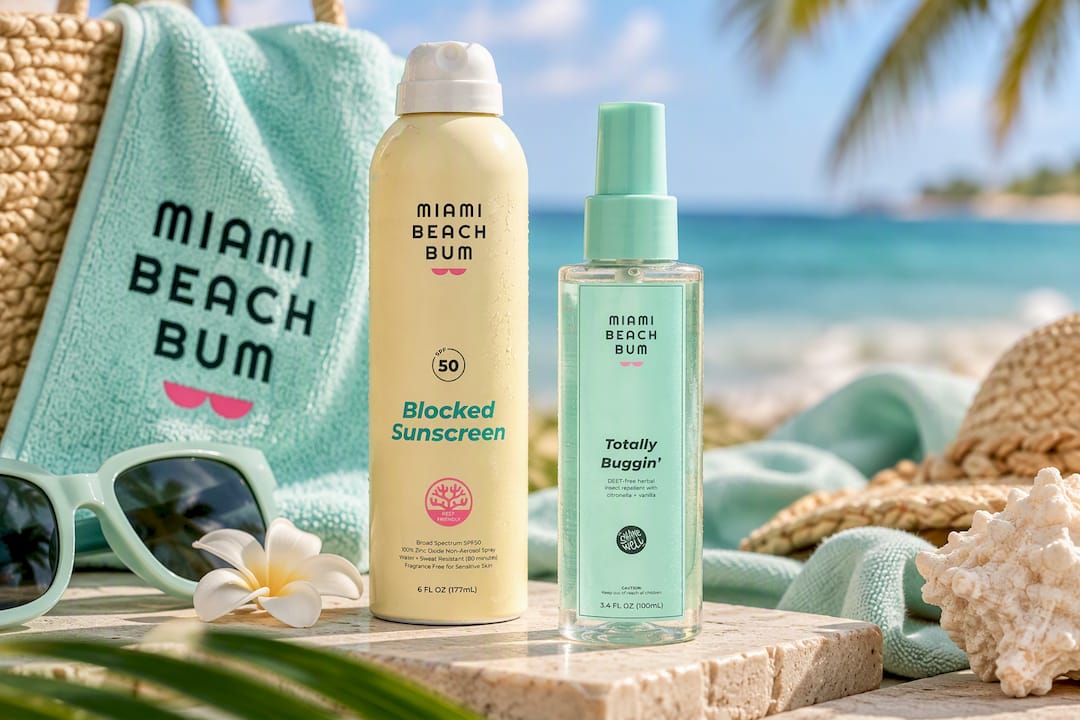
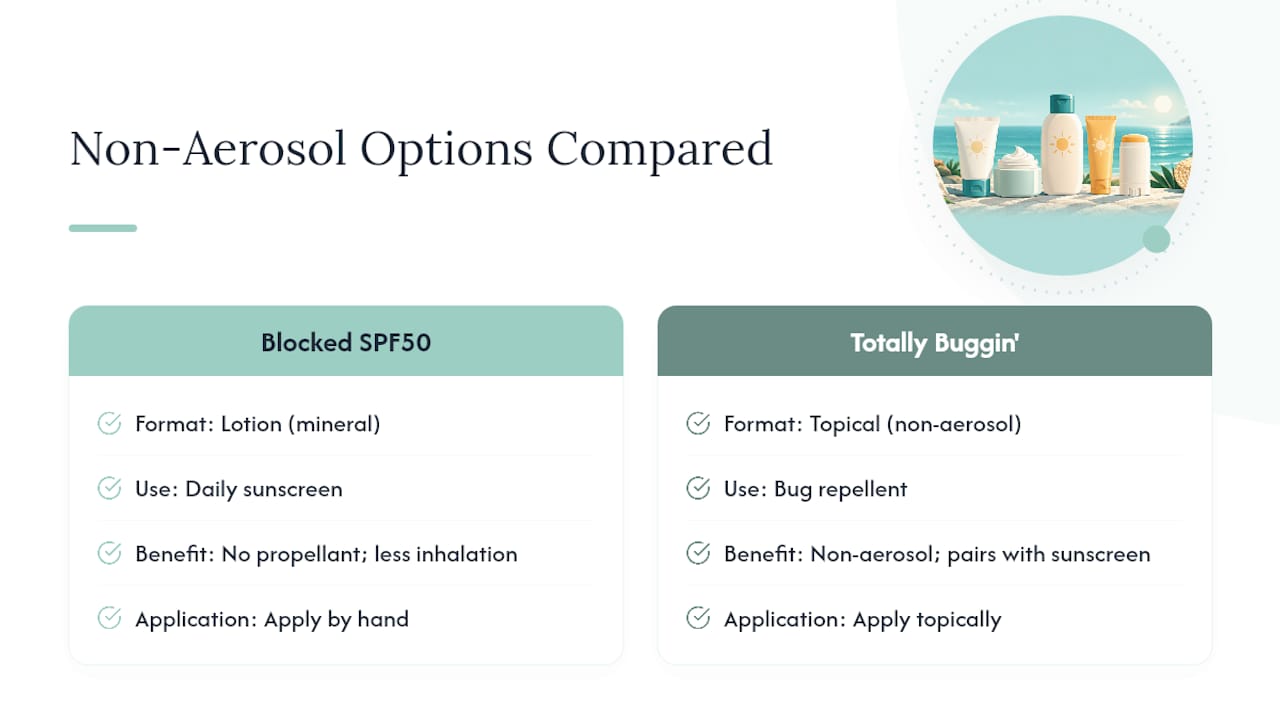
Blocked SPF50 is a lotion-based mineral sunscreen designed for daily wear, applied by hand rather than sprayed, which sidesteps the inhalation and propellant concerns tied to aerosol sun care. For time outdoors, Totally Buggin’ offers a topical, non-aerosol bug repellent that pairs naturally with a sun care routine without adding another spray can to your bag. Both fit the same principle this article walks through: choose the format first, then the formula.
Browse the full Bodycare collection for more non-aerosol options, or check the Outdoor collection if you’re building out a beach or trail kit for the season. Start with Blocked SPF50 for your next reapplication and see how a lotion format feels compared to your old spray.
This article is general information, not a substitute for advice from a qualified doctor. Consult a qualified healthcare professional about your own circumstances before acting on anything here.
Sources
- Independent Sun Care Product Screening for Benzene Contamination - PMC
- Occurrence of and Dermal Exposure to Benzene, Toluene and Styrene in Sunscreen Products Marketed in the United States - PubMed
- Coppertone® Issues Voluntary Nationwide Recall of Specific Lots Due to the Presence of Benzene | FDA
FAQ
What sunscreen has no benzene?
No public list guarantees zero benzene across every lot, since contamination happens at the manufacturing batch level rather than the brand level. Lotion, cream, and stick formats without aerosol propellants carry the lowest documented risk based on Valisure’s screening of 661 samples.
What products contain the most benzene?
Aerosol sunscreen sprays and after-sun spray or gel products showed the highest concentrations in independent testing, with 72 of 661 tested samples exceeding 2.0 parts per million. Cream, lotion, and stick formats tested cleaner overall.
What are the three bad ingredients in sunscreen?
There’s no single agreed-upon “three worst ingredients” list, since concerns vary between contamination risks like benzene and absorption concerns tied to certain chemical filters. Benzene itself isn’t an added ingredient. It’s a contaminant that can come from propellants, carbomers, or fragrance components during manufacturing.
Is benzene bad for skin?
Benzene is classified as a human carcinogen and is linked to blood-forming-system damage, including leukemia, with inhalation as the main exposure concern rather than skin contact alone. The risk from an occasional contaminated sunscreen application is far lower than the well-documented risk of skipping sun protection altogether.
What is Miamibeachbum’s SPF50 lotion?
Blocked SPF50 is a lotion-based mineral sunscreen from Miamibeachbum, applied by hand rather than sprayed, avoiding the propellant-related contamination pathway seen in aerosol testing. Current pricing is listed on the product page.