


“Marine collagen for skin” in topical body care almost always refers to marine botanical extracts, primarily seaweed compounds, not ingestible fish collagen peptides. The verdict: brown, red, and green algae extracts genuinely support hydration and calm irritation when a formula pairs them with proven humectants and a real mineral SPF. Before you buy anything, check the active list for non-nano zinc oxide or titanium dioxide, and confirm it skips oxybenzone, octinoxate, and octocrylene.
TL;DR:
- Choose sunscreens with non-nano zinc oxide or titanium dioxide, and avoid oxybenzone, octinoxate, and octocrylene due to environmental risks.
- Look for algae extracts listed near the top of ingredients and paired with humectants like hyaluronic acid for effective hydration benefits.
- Expect marine botanical extracts to support skin hydration and antioxidant activity, but be cautious of overhyped anti-aging claims lacking human trial evidence.
- Marine-derived topical ingredients can cause sensitivities in those with shellfish or iodine allergies, but overall allergic reactions are uncommon.
- Pair marine botanicals with sun protection, reapply SPF after swimming, and choose water-resistant formulas to minimize impact on marine environments.
Table of Contents
- Which Seaweed Ingredients Show Up in Marine Botanical Skincare?
- What Does the Research Actually Show?
- How Do You Pick a Reef-Safe Product With Marine Botanicals?
- How Should You Layer Marine Botanical Products for Body and Hair?
- Is Marine Collagen the Same as Bovine or Porcine Collagen?
- Do Marine Botanicals Work Differently When Applied to Skin vs. Absorbed Internally?
- What Do Clinical Studies Say About Marine Botanicals and Visible Skin Aging?
- What Forms and Amounts of Marine Botanical Actives Show Up in Body Care?
- Can Marine-Derived Ingredients Cause Allergies or Skin Sensitivities?
- How Does Marine Botanical Efficacy Compare to Other Topical Actives?
- Why Marine Botanicals Deserve a Permanent Spot in Sun-Exposed Routines
- Which Products Actually Deliver on This Checklist?
- Sources
Which Seaweed Ingredients Show Up in Marine Botanical Skincare?
Brown seaweed (think Laminaria species, also called kelp) is the workhorse of marine skincare. It’s rich in fucoidans and laminarin, two polysaccharides that pull water into the skin and help reinforce the barrier that keeps it there. Red algae, like Chondrus crispus (Irish moss), bring carrageenan to the table, a thickener and water-binder that also shows up as a stabilizer in body milks and shampoos. Green algae contribute ulvan and a family of antioxidant compounds, while several red and brown species produce phlorotannins and mycosporine-like amino acids (MAAs), naturally occurring UV-absorbing molecules that act as photoprotection adjuncts rather than standalone sunscreens.
Each compound does a specific job, and reading a label gets a lot easier once you know what to look for:
- Fucoidans and laminarin (brown algae): draw and hold moisture, support barrier repair
- Carrageenan (red algae): thickens formulas and locks in hydration on skin and hair
- Ulvan (green algae): antioxidant support, often paired with vitamin C or E
- Phlorotannins: anti-inflammatory and antioxidant, especially useful after sun exposure
- MAAs: naturally UV-absorbing, though never a substitute for SPF
- Algal peptides: support the skin’s own protein network alongside topical hydration
Marine botanicals rarely work alone in a good formula. Brands frequently pair seaweed polysaccharides with hyaluronic acid because the two humectants bind water at different molecular weights, which extends how long skin stays plump after a shower or a swim. If you see “algae extract,” a specific species name, or terms like fucoidan, carrageenan, or laminarin near the top of an ingredient list, the formula is likely leaning on the botanical for real function, not just a marketing footnote.
What Does the Research Actually Show?
Human and in-vivo research gives brown and red algae extracts real, if measured, credit for skin hydration. Studies on Laminaria japonica polysaccharides show they help maintain skin moisture levels over time, and Chondrus crispus extracts function as effective water-binding agents in topical formulations. That’s not a lab curiosity. It’s the same mechanism cosmetic chemists rely on when they formulate a body lotion meant to outlast a beach day.
One randomized trial testing microalgae-based topical formulations found measurable gains in hydration and barrier function compared to placebo over a 12-week application period, with the stratum corneum showing improved moisture retention and brightness.
Red macroalgae extracts also perform well on the antioxidant side. Formulated body milks, oils, and shampoos built around Chondrus crispus deliver antioxidant activity and physicochemical stability comparable to versions using synthetic standards, according to a review of red macroalgae in personal care. Broader reviews of macroalgae and microalgae compounds report moisturizing, antioxidant, and anti-inflammatory effects across preclinical and limited clinical work, with some photoprotective potential layered on top.
The honest caveat: not every claim on a bottle rests on equally strong evidence. Extraction method, species selection, and final concentration all shape whether a polysaccharide actually performs in a finished product. A green-extracted, low molecular weight polysaccharide behaves differently than a crude extract of the same seaweed. Some anti-aging and photoprotective claims are still preliminary, built on cell-culture or animal data rather than large human trials. Marine botanicals earn their place in a routine through solid, repeatable hydration and antioxidant support, not through overreaching skin-transformation promises.
How Do You Pick a Reef-Safe Product With Marine Botanicals?
Start with the actives, not the marketing copy. “Reef-safe” carries no regulated legal definition in the United States, so the label itself proves nothing. What matters is what’s actually in the bottle.
- Check the active filters first. Non-nano zinc oxide or titanium dioxide should be the only UV actives in a sunscreen. Federal guidance flags oxybenzone and octinoxate as documented risks to coral, and octocrylene belongs on that same avoid list.
- Look for “non-nano” wording specifically. Particle size affects how much filter marine organisms can absorb, so a mineral sunscreen that doesn’t disclose particle size is worth skipping.
- Confirm the botanical’s placement on the ingredient list. An algae extract buried at the very bottom is likely there for show; one listed in the first half of the ingredient panel is doing real formulation work.
- Scan for complementary humectants. Hyaluronic acid or glycerin alongside a seaweed extract signals a formula built for actual hydration, not just a green-sounding buzzword.
- Avoid aerosol sprays for water use. Loose spray particles land directly in sand and surf; lotions and sticks stay on skin longer and shed less into the water.
- Prioritize water resistance on any SPF headed into the ocean. Formulation choices, leave-on versus rinse-off, water resistance ratings, directly affect how much UV filter ends up in the water instead of on your skin.
Pro Tip: Search a brand’s product FAQ for the phrase “non-nano” before you buy. If a sunscreen brand can’t or won’t confirm particle size in writing, treat that as a red flag, not an oversight.
Formulation quality matters just as much as the sustainable skincare packaging brands that help deliver these actives responsibly. Minimal fragrance load, marine-safe preservatives, and a short, purposeful ingredient list are all signs a brand formulated with reef impact in mind rather than bolting “ocean-friendly” onto a generic recipe. For a deeper walk through decoding a sunscreen panel line by line, this ingredient decoder guide breaks down exactly what each listing means.
How Should You Layer Marine Botanical Products for Body and Hair?
Order matters more than most people assume. On skin, cleanse first, then apply a hydrating marine botanical lotion while skin is still slightly damp, since polysaccharides bind water more effectively when there’s moisture already present to lock in. Give it a minute or two to absorb before layering on mineral SPF if you’re heading outside; sunscreen needs to sit on top, not underneath, to form its protective film.
Hair works a little differently. A leave-in conditioner built with marine biopolymers can form a protective film on the hair shaft that reduces frizz and shields strands from sun and salt damage, so leaving it in during beach exposure does more work than rinsing it out.
- Reapply body SPF after swimming or heavy sweating, ideally on land rather than in the water.
- Skip spray-on formulas near the shoreline; walk up to dry sand to apply instead.
- Choose water-resistant mineral SPF specifically when you know you’ll be swimming.
- Store marine botanical formulas away from direct heat, since natural extracts can separate or lose potency faster than synthetic-only formulas.
- If a lotion looks visibly separated in the bottle, shake it well. Some settling is normal for extract-heavy formulas.
Rinsing sunscreen residue off properly before a shower or hair wash also protects both your skin and the next product you layer on. This guide to removing sunscreen residue covers the quick oil-cleanse method that works well for mineral formulas.
Is Marine Collagen the Same as Bovine or Porcine Collagen?
Not remotely, and this is where a lot of confusion starts. Bovine collagen comes from cowhide and connective tissue. Porcine collagen comes from pig skin. Both are structural proteins extracted for use in ingestible supplements or wound-care products. In topical body care, though, “marine collagen” almost never refers to an animal-derived collagen protein at all. It refers to marine botanical extracts, primarily seaweed-derived polysaccharides and peptides, that support the skin’s own moisture and protein environment rather than supplying collagen itself.
That distinction matters for anyone reading ingredient lists. A body lotion marketed with “marine collagen” language is far more likely to contain kelp extract, algae peptides, or a polysaccharide blend than any actual collagen protein sourced from fish skin or scales. The functional goal overlaps: both aim to support hydration and skin resilience. But the mechanism differs completely. Animal-derived collagens are structural proteins meant to be broken down and potentially absorbed. Marine botanical extracts work from the outside, binding water at the skin’s surface and reinforcing the barrier that already exists.
This is a useful thing to know before comparing products, because two bottles can use nearly identical marketing language while relying on entirely different active chemistry underneath. Reading past the marine collagen label straight to the actual ingredient list is the only reliable way to know what you’re getting.
Do Marine Botanicals Work Differently When Applied to Skin vs. Absorbed Internally?
Topical marine botanicals work at the surface. Seaweed polysaccharides like fucoidan and carrageenan sit on and within the outer skin layers, binding water molecules and slowing transepidermal water loss, the process by which skin loses moisture to the air. That’s a mechanical and hydrating effect you can measure within hours of application, and it’s the basis for most of the hydration research on algal skincare compounds.
Ingested marine-derived compounds, by contrast, would need to survive digestion, enter the bloodstream, and reach skin tissue to have any direct effect there, a much longer and less certain path. This article focuses exclusively on the topical route because that’s where the strongest, most direct evidence for marine botanical skin benefits currently sits.
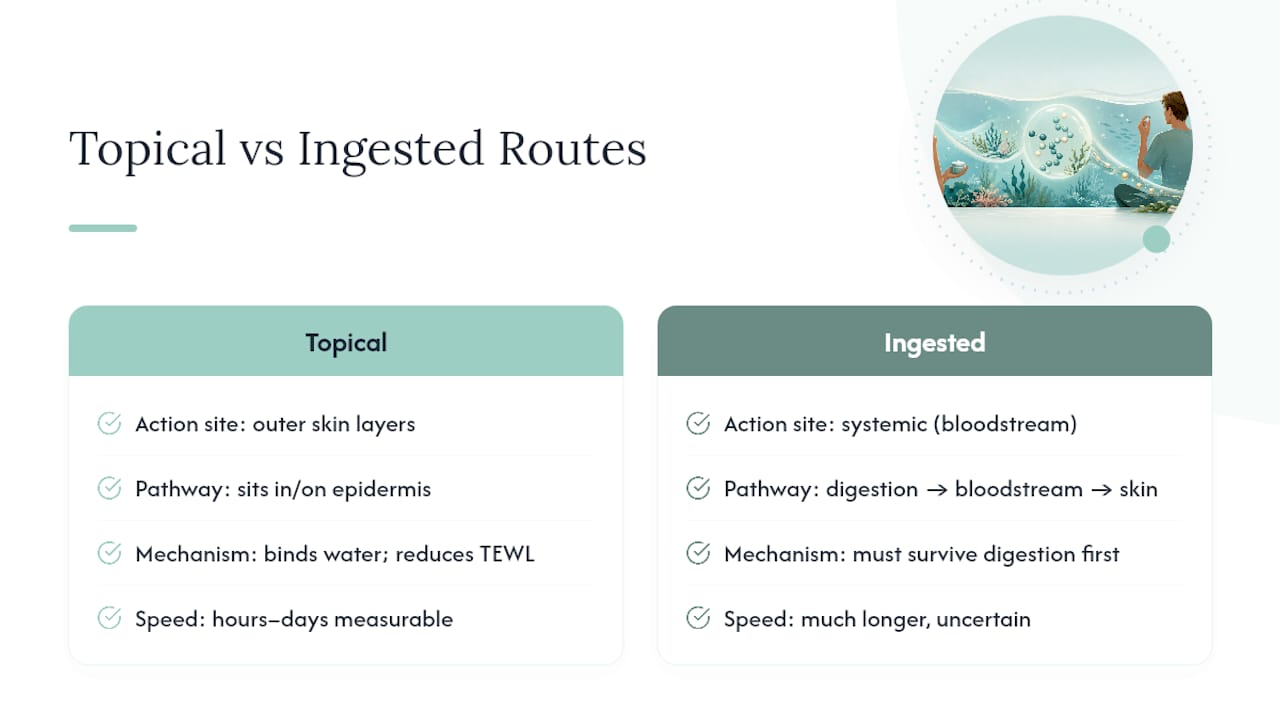
The practical upshot for a body care routine: topical marine botanicals deliver a fast, localized hydration and antioxidant boost you can feel within a day or two of consistent use. They’re doing surface-level, barrier-support work, not rebuilding skin structure from the inside. That’s a meaningful, useful function on its own, especially for skin that’s dealing with sun and salt exposure regularly. Pairing a marine botanical lotion with genuine sun protection also addresses a bigger long-term concern, since UV exposure is one of the primary drivers of collagen breakdown in skin over time.
What Do Clinical Studies Say About Marine Botanicals and Visible Skin Aging?
Clinical evidence for marine botanicals leans hardest toward hydration and barrier support, with photoprotective and anti-aging claims sitting on thinner ground. The strongest data point comes from a randomized, controlled 12-week trial of topical microalgae formulations, which showed measurable improvements in skin hydration, barrier characteristics, and stratum corneum brightness compared to placebo. That’s a real, human, double-blind result, not a cell-culture extrapolation.
Antioxidant performance is well documented too. Red macroalgae extracts formulated into body milks and oils showed antioxidant activity on par with some synthetic antioxidant standards, while remaining stable and cosmetically acceptable in finished products. Antioxidant activity matters for skin because it helps neutralize the oxidative stress that sun and environmental exposure generate, one contributor to the visible signs of aging over time.
Where the evidence gets thinner is anti-wrinkle and elasticity claims specifically. Several reviews note supportive cellular and preclinical data for anti-aging effects, but far fewer large-scale human trials measure wrinkle depth or elasticity directly against marine botanical actives. The honest read: marine botanicals have solid backing for hydration and antioxidant support, and reasonable but still-developing backing for anything framed as an anti-wrinkle treatment. Treat elasticity and wrinkle-reduction marketing claims with a healthy amount of skepticism until larger trials catch up to the hydration research.
What Forms and Amounts of Marine Botanical Actives Show Up in Body Care?
Unlike an ingestible supplement, there’s no standard “dosage” for topical marine botanicals, concentration depends entirely on the formulator’s choices and the finished product’s intended use. What you’ll actually encounter on shelves are a few consistent forms: algae extract folded into lotions and creams, standalone marine polysaccharide serums, and leave-in conditioners built around film-forming seaweed biopolymers for hair.
Concentration and extraction method drive real differences in performance. Lower molecular weight polysaccharides tend to penetrate the outer skin layers more readily and often show stronger moisture retention than crude, high molecular weight extracts of the same species. Extraction method, whether a brand uses a green solvent-free process or a more aggressive chemical extraction, also affects how much active bioactivity survives into the final formula. None of this is disclosed on a standard label, so the practical move is to trust brands that publish some detail about sourcing or formulation philosophy rather than a vague “seaweed extract” listed with no further context.
For most people, one consistent application, body lotion in the morning, leave-in conditioner after a beach rinse, matters more than chasing a specific concentration number. Marine botanicals build their hydration benefit cumulatively with regular use rather than delivering a single dramatic dose response the way a supplement capsule might.
Can Marine-Derived Ingredients Cause Allergies or Skin Sensitivities?
Marine-derived topical ingredients can trigger reactions in people with existing shellfish or iodine sensitivities, since some algae and seaweed extracts contain trace iodine and share biochemical similarities with other marine organisms. True allergic reactions to seaweed extracts specifically are uncommon, but they’re not impossible, and anyone with a known shellfish or marine allergy should patch-test a new product on a small area of skin before applying it broadly.
Fragrance and preservative systems added to marine botanical formulas cause far more irritation in practice than the algae extracts themselves. A body lotion built around kelp or Irish moss extract but loaded with synthetic fragrance is more likely to cause redness or stinging from the fragrance than from the marine ingredient doing the actual hydrating work. That’s a useful distinction if you’ve reacted to a “natural” product before and assumed the seaweed was the problem.
The safest approach for sensitive skin: apply a small amount to the inner forearm and wait 24 hours before using a new marine botanical product on your face or body more broadly. If irritation shows up, check the full ingredient list for fragrance, essential oils, or preservatives before ruling out the marine actives specifically. Products with shorter, more transparent ingredient lists make this troubleshooting process considerably easier.
How Does Marine Botanical Efficacy Compare to Other Topical Actives?
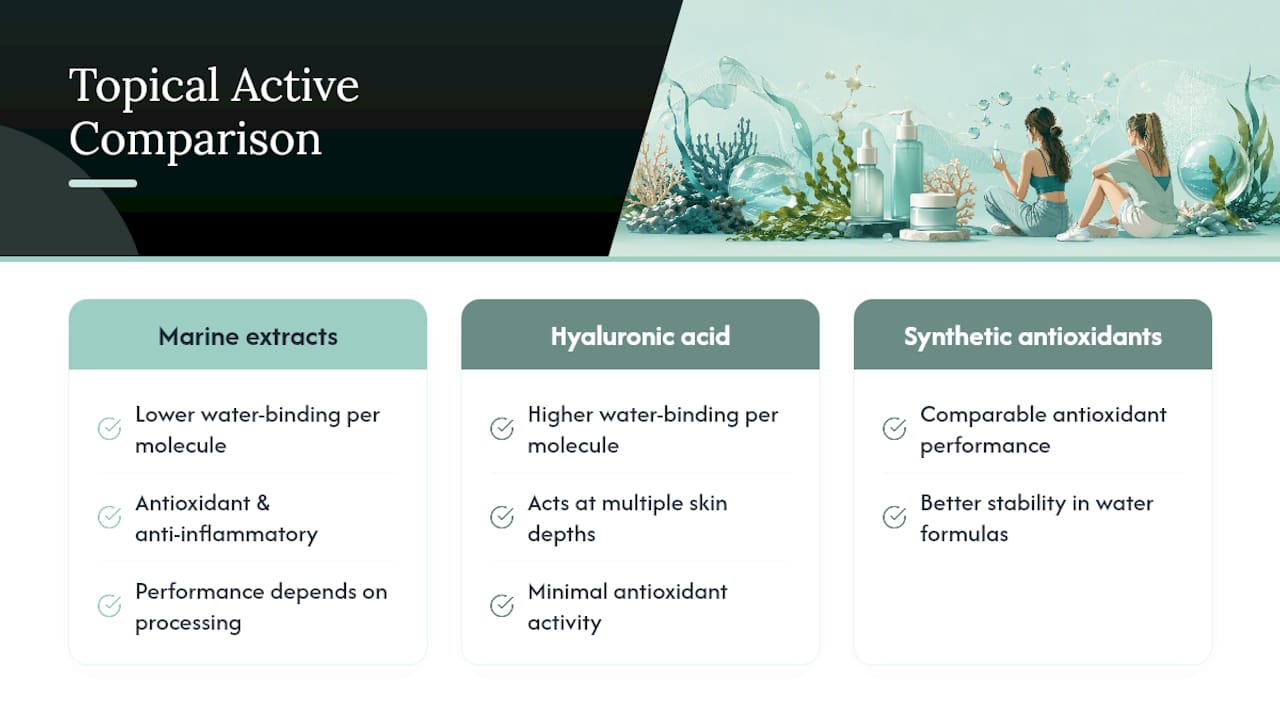
Marine botanical extracts hold their own against more familiar humectants and antioxidants, but they’re rarely the single most powerful active in a formula, they’re most effective as part of a combination. Hyaluronic acid, for comparison, binds significantly more water per molecule than most seaweed polysaccharides and works at multiple depths in the skin depending on molecular weight. Marine polysaccharides like fucoidan and carrageenan bind less water molecule-for-molecule but bring antioxidant and anti-inflammatory properties that pure hyaluronic acid doesn’t offer on its own.
That complementary relationship is exactly why well-formulated marine botanical body lotions pair seaweed extracts with hyaluronic acid rather than relying on either ingredient alone. The two work at different mechanisms and depths, which is a stronger approach than choosing one active and assuming it covers every hydration need.
Compared to synthetic antioxidants like some lab-derived vitamin C derivatives, red macroalgae extracts have shown comparable antioxidant performance in finished formulations, while offering better formulation stability in some water-based products. Bioavailability, meaning how readily an ingredient’s active compounds actually penetrate and function in skin, depends heavily on extraction method and molecular weight rather than simply which marine species was used. A well-processed, lower molecular weight seaweed extract will consistently outperform a poorly processed extract from a supposedly more “premium” species. Source matters less than formulation quality.
Why Marine Botanicals Deserve a Permanent Spot in Sun-Exposed Routines
Marine scientists have spent decades studying how seaweed survives brutal UV exposure, tidal stress, and salt, and that same resilience chemistry is exactly what makes these extracts useful in body care built for beach life. Miamibeachbum leans on that background deliberately: formulas pair marine botanicals with hyaluronic acid for layered hydration and use non-nano mineral actives for sun protection, rather than chasing trend ingredients that sound good but don’t hold up under real sun and saltwater exposure.
The goal isn’t to replace proven skincare chemistry with algae for algae’s sake. It’s to combine what marine botanicals genuinely do well, hydration, antioxidant support, film-forming protection, with the sun care fundamentals that actually prevent damage. Readers who want the deeper ingredient science behind that approach can dig into the brand’s ocean-safe skincare resources for more.
— Ayssa
Which Products Actually Deliver on This Checklist?
If you’ve read this far, you already know what to look for: non-nano mineral actives, real humectants, and marine botanicals that pull real weight in the formula, not just the label copy. Some brands build their core lineups around exactly that brief, so checking ingredient decoders may be less necessary.
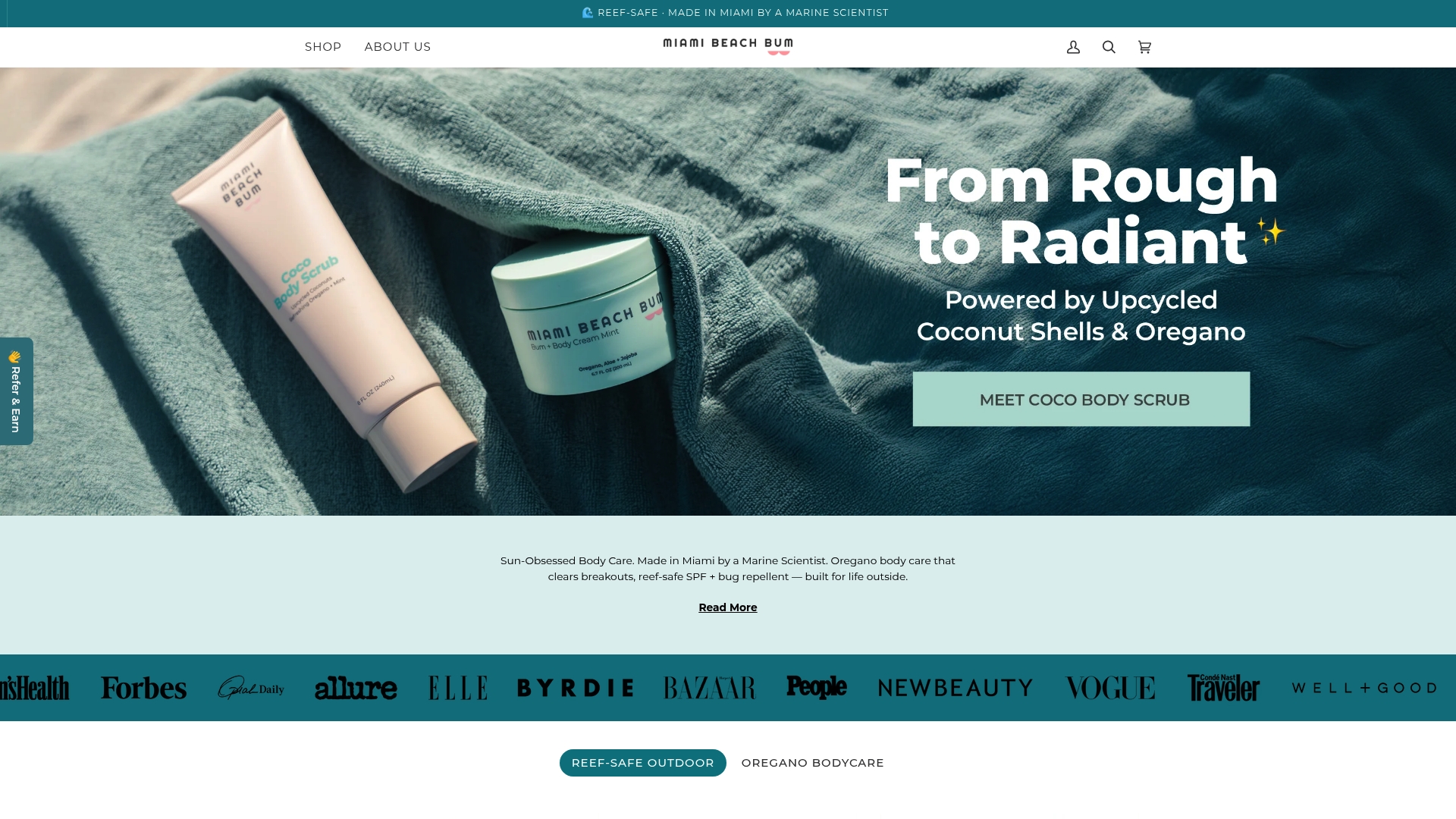
- Blocked SPF50 uses non-nano mineral filters with no oxybenzone, octinoxate, or octocrylene, making it the daily body sunscreen to reach for before any beach day or long walk outside.
- Hair Shield is the leave-in conditioner built with marine botanicals to form that protective film on hair strands, ideal for salt and sun exposure without a mid-day rinse.
- Totally Buggin’ rounds out a beach bag with a botanical repellent, a useful companion product for anyone spending evening hours outside where SPF alone won’t cover every need.
For sensitive or acne-prone areas, Save Face SPF 50 offers the same mineral, reef-conscious formulation in a sheer facial serum. Start with the product that matches your most immediate need, sun, hair, or bug protection, and build the routine from there.
Sources
- Potential Use of Seaweed Bioactive Compounds in Skincare—A Review
- Environmental risks of cosmetic UV filters and implications for reef protection