


Yes, peptides meaningfully support skin recovery, but as a safe, evidence-backed adjunct rather than a standalone fix. A March 2026 meta-analysis of 19 randomized controlled trials covering 1,341 participants found consistent improvements in hydration and brightness, plus a modest, statistically significant drop in fine lines (pooled MD=0.27, p=0.04). Cleveland Clinic frames peptides as “icing, not the cake,” useful for calming inflammation and nudging collagen production, but not a replacement for sunscreen or retinoids.
Here’s the quick version before we get into mechanisms and routines:
- Reliable wins: hydration and skin brightness show up across most trials, oral and topical alike.
- Mixed evidence: effects on elasticity and skin density are inconsistent, largely because high-quality topical trials remain scarce.
- Realistic timeline: expect gradual change over 4 to 12 weeks, not overnight results.
Key Takeaways
Peptides reliably improve skin hydration and brightness, with modest wrinkle reduction, but they work best as a science-backed adjunct to sun protection and proven actives, not a replacement for them.
| Point | Details |
|---|---|
| Evidence supports modest gains | A 19-RCT meta-analysis of 1,341 participants found real hydration and brightness improvements, with a modest wrinkle reduction (MD=0.27, p=0.04). |
| Mechanisms are well mapped | Peptides work through TGF-β/Smad, PI3K/AKT, MAPK/ERK, and Wnt pathways to stimulate collagen and support wound healing. |
| Timeline requires patience | Expect visible hydration and brightness changes in 4 to 12 weeks, not days. |
| Sun protection stays primary | Clinical guidance treats peptides as an adjunct, not a substitute for daily sunscreen and evidence-backed skin protection checklist. |
| Miamibeachbum offers routine-ready options | Bum + Body Cream, Coco Body Scrub, Blocked SPF50, and Hair Shield give a reef-safe, peptide-compatible way to build a body-care routine around recovery and sun protection. |
Table of Contents
- The Role of Peptides in Skin Recovery Starts With What They Actually Are
- How Peptides Work at the Cellular Level
- Signal, Carrier, and Enzyme-Inhibitor Peptides Explained
- What the Clinical Trials Actually Show
- Where Peptides Fit Into Each Stage of Skin Repair
- Building a Peptide Routine That Actually Works
- Are Peptides Safe? What to Watch For
- Choosing a Peptide Product That’s Actually Worth It
- Three Sample Routines Built Around Peptides
- Bring Peptide-Friendly Body Care Into Your Routine
- Frequently Asked Questions
- Sources
The Role of Peptides in Skin Recovery Starts With What They Actually Are
Peptides are short chains of amino acids, usually two to fifty units long, strung together by peptide bonds. Proteins are the same building blocks stretched into much longer, folded structures. That size difference matters. A peptide is small enough to slip past some of skin’s barrier defenses and act like a message rather than a building material.
In skincare, that messenger role is the whole point. Signal peptides tell fibroblasts to make more collagen. Carrier peptides ferry trace minerals like copper to where repair is happening. Enzyme-inhibitor peptides interfere with the enzymes that break collagen down. None of them are patching a wound directly, the way a bandage would. They’re nudging your skin’s own machinery to work a little harder or a little smarter.
Picture skin in three layers: the epidermis on top, the dermis underneath holding collagen and elastin, and the hypodermis below that. Most peptide activity that matters for visible recovery happens at the dermal-epidermal junction and inside the dermis, where fibroblasts live and collagen gets synthesized. Peptides applied topically need a formulation that helps them reach that depth, which is why the fine print on a label carries more weight here than in most skincare categories.
Pro Tip: When you see “palmitoyl” in front of a peptide name (like Palmitoyl Tripeptide-1), that’s a fatty acid tag added to help the molecule slip through the skin barrier and stay stable in the jar. Peptides without that tag often need a more sophisticated delivery system to work at all.
A 2026 meta-analysis and clinical guidance from Cleveland Clinic both treat peptides as legitimate, if modest, tools. Miamibeachbum builds that same evidence-respecting posture into its own body-care formulations rather than promising overnight transformation.
How Peptides Work at the Cellular Level
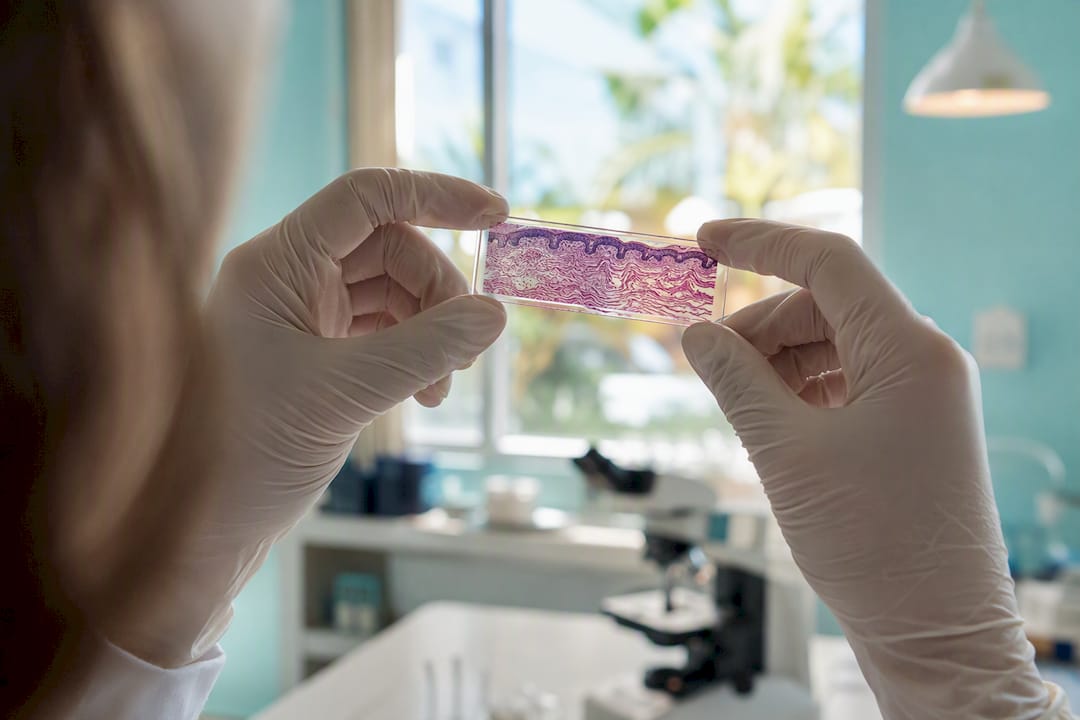
Peptides act as signaling molecules and cofactors that flip on several repair pathways at once: TGF-β/Smad, PI3K/AKT, MAPK/ERK, and Wnt. They also influence macrophage autophagy and a protein called Twist1 that drives keratinocyte migration during wound closure. None of that happens instantly, and none of it happens in isolation. These pathways overlap and reinforce each other, which is part of why peptides show broad, mild effects rather than one dramatic result.
The mechanisms break down into a few functional categories:
- Collagen stimulation: peptides activate the TGF-β/Smad pathway, prompting fibroblasts to ramp up procollagen synthesis.
- Anti-inflammatory signaling: certain peptides dampen pro-inflammatory cytokine release, which shortens the inflammatory phase of healing.
- Antioxidant support: some peptide classes help neutralize oxidative stress that would otherwise degrade existing collagen.
- MMP modulation: enzyme-inhibitor peptides slow matrix metalloproteinases, the enzymes responsible for breaking down collagen over time.
- Proliferation signals: peptides encourage keratinocytes and fibroblasts to divide and migrate, speeding re-epithelialization.
One of the clearer research examples is PEP5, an AAQPR peptide derived from fermented wheat peptone. In fibroblast studies, PEP5 activated Smad2/3 signaling, directly triggering collagen production, and in clinical testing it improved hydration and reduced fine wrinkles compared with placebo. That’s a useful case study because it connects a specific molecular event (Smad2/3 activation) to a specific visible outcome (measurable wrinkle reduction), rather than leaving the mechanism as pure theory.
Broader mechanistic reviews back up the same pattern: peptides working through TGF-β/Smad, PI3K/AKT, MAPK/ERK, and Wnt to support both collagen synthesis and wound-healing cell migration. Here’s a way to think about the chain of events: TGF-β activation increases procollagen output, procollagen matures into structural collagen fibers over several weeks, and that added collagen density is what eventually reads as firmer, more resilient skin. Each step takes time, which is exactly why peptide skincare rewards patience over urgency.
Signal, Carrier, and Enzyme-Inhibitor Peptides Explained
Not all peptides do the same job, and reading a label without understanding the categories is like buying paint without knowing if it’s primer or topcoat. Cosmetic peptides generally fall into five working classes.
- Signal peptides tell skin cells to produce more collagen and elastin. Palmitoyl Tripeptide-1 (Pal-KTTKS) is the classic example, popularized after early research linked it to visible firming.
- Carrier peptides deliver trace minerals, most notably copper, to support wound healing and enzyme activity. GHK-Cu is the best-documented example in this class.
- Neurotransmitter-inhibitor peptides temporarily limit the muscle contractions that deepen expression lines. Acetyl Hexapeptide-8 is the most recognized name here, often marketed as a topical alternative to injectables.
- Enzyme-inhibitor peptides block the matrix metalloproteinases that break down existing collagen, effectively slowing degradation rather than building new tissue.
- Palmitoylated peptides aren’t a separate function so much as a delivery upgrade. Attaching a palmitoyl group (a fatty acid) to almost any peptide improves how well it penetrates skin and how stable it stays in a formula.
Expectations differ by class. Signal and carrier peptides tend to show benefits over 8 to 12 weeks of consistent use, since they work by building or repairing tissue gradually. Neurotransmitter-inhibitor peptides can show smoothing effects a little faster, though the results are subtler than injectable treatments and don’t last as long once you stop using them. Copper peptides like GHK-Cu show up most often in body-care and post-procedure contexts because of their documented role in wound healing and ECM remodeling, not just cosmetic anti-aging.
Practical formulation tip: when a label lists a peptide fragment like AAQPR, Pal-KTTKS, or GHK-Cu, that specificity is a good sign. Vague terms like “peptide complex” with no named ingredient usually mean the formulator isn’t willing to disclose concentration or sourcing, which limits how much stock you should put in the claim.
What the Clinical Trials Actually Show
The strongest evidence-first summary comes from that 19-RCT meta-analysis spanning 1,341 participants: peptides significantly improved hydration and brightness, with a modest but real reduction in fine lines and wrinkles (pooled MD=0.27, p=0.04). That’s not a dramatic effect size, but it clears the bar for statistical significance across a reasonably large pooled sample, which carries more weight than any single small trial.
A related 2026 systematic review and meta-analysis in Frontiers in Medicine adds an important nuance: oral polypeptides drove many of the observed benefits, particularly for hydration, while topical trials were fewer in number and more heterogeneous in design. Subgroup analysis in that review favored oral tripeptides specifically for hydration outcomes, suggesting the gut-to-skin route may be doing more work than commonly assumed in over-the-counter marketing.
The PEP5 (AAQPR) research offers a narrower but useful data point. In translational studies, this specific peptide increased collagen via Smad2/3 signaling in fibroblasts and produced measurable clinical improvements in hydration and fine wrinkles versus placebo, with no notable tolerability concerns reported.
Where the evidence gets thinner:
- Study heterogeneity: trials use different peptide types, doses, and measurement endpoints, making it hard to compare results directly across studies.
- Short durations: most trials run a matter of weeks to a few months, which tells you little about whether benefits compound or plateau over a year or more.
- Few high-quality topical trials: the Frontiers review notes that topical peptide research lags behind oral studies in both volume and rigor.
- Weaker data on density and elasticity: hydration and brightness show up reliably; deeper structural changes like skin density and elasticity show inconsistent results across the pooled trials.
What does this mean if you’re deciding whether to try a peptide product? The evidence supports a reasonable expectation of improved hydration and visible brightness, with a smaller, real chance of modest wrinkle reduction over time. It does not support marketing claims of dramatic firming or density restoration based on current data. Peptides are, by the numbers, a safe bet with modest upside, not a guaranteed transformation.
Where Peptides Fit Into Each Stage of Skin Repair
Skin recovery isn’t one event. It moves through overlapping phases: inflammation resolution, re-epithelialization (the skin resurfacing itself), collagen deposition, and long-term extracellular matrix (ECM) remodeling. Peptides play a different role at each stage.
Early on, during inflammation resolution, certain peptides help dial down cytokine activity so the healing process doesn’t stall in an inflamed state. As skin moves into re-epithelialization, peptides that support keratinocyte migration (tied to that Twist1 pathway mentioned earlier) help new surface cells close gaps faster. Collagen deposition is where signal peptides do their most documented work, activating fibroblasts through TGF-β/Smad signaling. And in the long game of ECM remodeling, enzyme-inhibitor peptides help preserve what’s already been built by slowing collagen breakdown.
That staged view translates into a few practical use-cases:
- Post-procedure or post-sun recovery: carrier peptides like GHK-Cu and copper-based formulas may support the skin’s own repair response after microneedling, sun exposure, or minor irritation.
- Daily anti-aging maintenance: signal peptides in a serum or cream are best used consistently over months, not as a rescue treatment.
- Adjunct to sun protection: peptides support repair, but they don’t prevent new damage. Pairing peptide use with daily mineral sunscreen protects the progress you’re making.
Timelines matter here. Topical peptide routines generally need 4 to 12 weeks before changes in hydration or texture become noticeable, and longer for anything related to fine lines. Oral peptide regimens sometimes show hydration improvements sooner, based on trial data, though that route involves different mechanisms and isn’t a direct substitute for topical care.
For body-care applications specifically, this is where peptide-friendly formulas like Miamibeachbum’s Bum + Body Cream slot in, alongside sun protection from Blocked SPF50, pre-treatment exfoliation with Coco Body Scrub, and even scalp-adjacent skin care through Hair Shield. None of these replace medical treatment for wounds or procedures. They’re daily-use tools built around the same repair logic the clinical research describes.
Building a Peptide Routine That Actually Works
Layer peptides between cleansing and sun protection: cleanser, then peptide serum, then moisturizer, then sunscreen in the morning; cleanser, then peptide serum, then a heavier moisturizer at night, with caution around pairing peptides directly with strong retinoids or acids in the same application.
- Choose the right product form. Serums penetrate faster and layer more easily under other products; creams work better for drier skin or body application where richer occlusion helps.
- Check concentration cues where listed. Not all brands disclose exact percentages, but named peptides higher up the ingredient list generally indicate a more meaningful concentration.
- Patch test first. Apply a small amount to your inner forearm for 24 to 48 hours before introducing a new peptide product to your face or body.
- Pair with hyaluronic acid for hydration. The two work through different mechanisms (peptides signal repair, hyaluronic acid holds water in the skin) and complement each other well.
- Always finish with sunscreen in the morning. Peptide-driven collagen gains erode quickly under unprotected UV exposure.
A few pairing notes worth remembering:
- Good combinations: peptides with hyaluronic acid, peptides with niacinamide, peptides with mineral sunscreen.
- Use caution combining with: strong retinoids or exfoliating acids applied in the same session, since the added surface irritation can interfere with peptide absorption and comfort. Many routines separate these by using peptides in the morning and reserving retinoids for evenings, or alternating nights.
- Oral vs. topical peptides: oral polypeptide supplements work through digestion and systemic pathways, and trial data suggests they can meaningfully affect hydration. Topical peptides act locally at the skin’s surface and dermis. They aren’t interchangeable, and evidence for each follows a different research trail.
If you’re already using a prescription topical, like a dermatologist-prescribed retinoid or an acne treatment, check with that clinician before adding a peptide product, since interactions vary by formulation and skin condition.
Are Peptides Safe? What to Watch For
Peptides are generally well tolerated in clinical trials, with minimal adverse events reported across the pooled studies. That said, topical irritation and, less commonly, allergic contact dermatitis are possible, especially in formulations layering multiple active ingredients.
Common reactions to watch for: mild redness, temporary tingling, or slight dryness at the application site, usually resolving within a few days of consistent use. Signs of a true allergic response look different: persistent redness, swelling, itching that worsens rather than fades, or hives. If you notice any of those, stop using the product and patch test any replacement before reapplying broadly.
Seek medical care if you notice:
- A rash that spreads or worsens over 48 to 72 hours instead of improving.
- Any systemic symptoms like swelling of the face, difficulty breathing, or dizziness (rare, but treat as urgent).
- Persistent irritation that doesn’t resolve after stopping the product for a week.
People who are pregnant, nursing, or immunocompromised should talk with a clinician before starting a new peptide regimen, since most clinical trials don’t specifically study those populations.
One overlooked safety angle: peptides can be chemically unstable. Poor formulation or improper storage, think heat exposure or prolonged sun on a bottle left on a windowsill, can degrade the peptide before it ever reaches your skin. A well-formulated product with opaque, airless packaging protects the active ingredient far better than a clear jar on an open shelf.
Choosing a Peptide Product That’s Actually Worth It
A smart peptide purchase starts with reading past the front label. Look for these signals before you buy:
- Named peptides on the ingredient list, not just “peptide complex.” Specific INCI names like Palmitoyl Tripeptide-1 or Copper Tripeptide-1 tell you exactly what you’re getting.
- Referenced research or clinical data, even if it’s the brand’s own testing, gives you something concrete to evaluate instead of a marketing claim alone.
- Formulation transparency, including where the peptide sits in the ingredient list (higher usually means more concentrated).
- Stability-conscious packaging, like airless pumps or opaque tubes, which protect peptides from light and air degradation.
A few formulation flags are worth understanding at a glance. Palmitoylation (that “Pal” prefix) signals improved skin penetration. Copper complexes, like GHK-Cu, imply a carrier-peptide function tied to wound healing rather than pure collagen signaling. Shortcodes like KTTKS reference the specific amino acid sequence, which researchers use to track a peptide’s documented effects across studies.
Red flags to skip: vague “proprietary peptide complex” claims with no ingredient breakdown, dramatic before-and-after photos with no timeline disclosed, and promises of results within days rather than weeks.
For body-care specifically, look at how a formula balances peptides with barrier-supporting ingredients. Miamibeachbum’s Bum + Body Cream pairs peptide-friendly formulation with soothing botanicals aimed at recovery from razor burn and body breakouts. Coco Body Scrub works well as a pre-treatment exfoliant, clearing dead skin so peptide-based creams absorb more evenly afterward. And because sun protection remains the foundational layer beneath any peptide routine, Blocked SPF50 belongs in the daily lineup regardless of which peptide product you choose.
Three Sample Routines Built Around Peptides
Hydration-first routine (AM/PM): Morning: gentle cleanser, hydrating peptide serum, hyaluronic acid layer, moisturizer, mineral sunscreen. Evening: cleanser, peptide serum, richer moisturizer. Expect noticeable plumpness and reduced tightness within 4 weeks; reassess brightness at 8 weeks.
- Cleanse.
- Apply peptide serum while skin is still slightly damp for better absorption.
- Layer hyaluronic acid.
- Seal with moisturizer.
- Finish with SPF in the morning only.
Anti-aging maintenance routine (AM/PM): Morning: cleanser, signal-peptide serum, moisturizer, SPF. Evening: cleanser, enzyme-inhibitor peptide product, night cream. This routine rewards consistency over 8 to 12 weeks before assessing fine-line changes.
Post-procedure gentle recovery routine (AM/PM): Morning: fragrance-free cleanser, carrier-peptide (copper) product, barrier-repair moisturizer, mineral SPF. Evening: same cleanser, copper-peptide product, occlusive moisturizer. Reassess at 4 weeks, since post-procedure skin often shows faster visible change as it’s actively healing.
Across all three, check in at the 4-week mark for early hydration and comfort signals, and at 8 to 12 weeks for anything related to fine lines or texture. Miamibeachbum’s body-care lineup, particularly Bum + Body Cream and Blocked SPF50, can slot into the hydration-first or post-procedure routines without overstating what any single product will do.
Peptides, Sun Protection, and the Miamibeachbum Approach to Recovery
Peptides support skin recovery, but sun protection has to come first. UV exposure breaks down collagen faster than peptides can help rebuild it, which is why Miamibeachbum treats SPF integration as the foundation any peptide routine sits on top of, not an afterthought.
A few products complement peptide use directly in a reef-safe, sun-first routine:
- Bum + Body Cream for daily body-care recovery, especially after shaving or breakouts.
- Coco Body Scrub to clear dead skin before applying peptide-based creams.
- Blocked SPF50 as the non-negotiable morning step that protects whatever repair peptides are supporting underneath.
- Hair Shield for scalp-adjacent skin that also deals with sun and salt exposure at the beach.
Pro Tip: If your skin feels rough or tight after a day in the sun, apply a peptide-friendly body cream while skin is still slightly damp from a rinse. It helps the formula absorb before it has a chance to evaporate, and it’s a small habit that makes a real difference on post-sun days.
Store any peptide product away from direct heat and sunlight, and don’t expect miracle results. Consistent, moderate improvement is the realistic goal.
A Sustainable Way to Think About Peptides Long-Term
Peptides are the icing, not the cake. That’s not a dismissal, it’s a useful way to set expectations before you invest in a routine full of active ingredients.
The practical move: pick one peptide product, use it consistently for 8 to 12 weeks, and track hydration and brightness before layering in anything else. Adding five new actives at once makes it impossible to know what’s actually working. Peptides reward patience and a controlled routine far more than they reward stacking.
Stay optimistic about the modest, real benefits the research supports, and stay skeptical of anything promising overnight change. Monitor how your skin tolerates a new product for at least a few weeks before deciding it’s working or not.
Bring Peptide-Friendly Body Care Into Your Routine
If you’ve been managing body breakouts, razor burn, or rough post-sun skin with whatever’s on the drugstore shelf, Miamibeachbum offers a more considered alternative built around reef-safe, marine-informed ingredients rather than generic fillers.
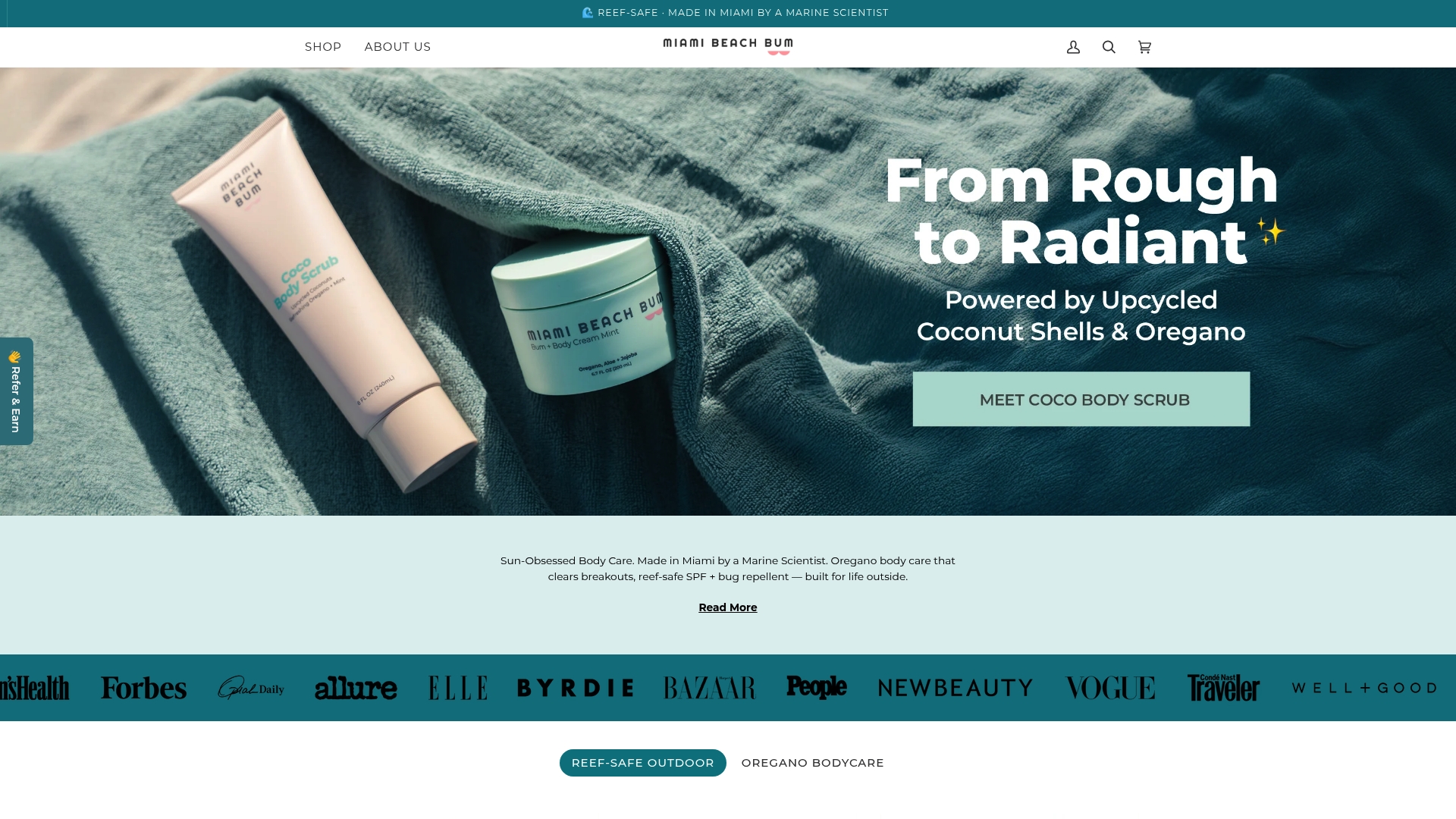
Bum + Body Cream is formulated to support skin recovery from razor burn and body acne, the kind of everyday irritation that benefits from the same calming, repair-supporting approach peptides bring to facial skincare. Pair it with Blocked SPF50 each morning, since no repair ingredient works well if it’s undone by unprotected sun exposure. This is a brand-specific option, not a universal medical recommendation, and individual results vary based on skin type and consistency of use. If you’re managing a specific skin condition or persistent irritation, check with a dermatologist before adding new actives to your routine. Ready to start? Browse the Bum + Body Cream collection and pick the formula that matches where your skin needs the most support right now.
Frequently Asked Questions
What is the role of peptides in skin recovery? Peptides act as signaling molecules that prompt fibroblasts to produce more collagen, calm inflammation, and support keratinocyte migration during wound healing. Clinical research links this to measurable improvements in hydration and brightness, with smaller but real reductions in fine lines.
How do peptides aid skin healing compared to just moisturizing? Moisturizers primarily hold water in the skin barrier. Peptides go further by signaling cellular repair processes, like triggering TGF-β/Smad activation that increases collagen synthesis, rather than just trapping existing hydration.
Are collagen peptides for skin the same as topical peptide serums? No. Oral collagen or polypeptide supplements work through digestion and show up in trials as effective for hydration, while topical peptide serums act locally at the skin’s surface and dermis. Both have separate evidence bases and aren’t interchangeable.
How long does peptide therapy for skin take to show results? Most topical routines need 4 to 12 weeks of consistent use before hydration and brightness improvements become noticeable. Fine-line changes typically take longer, and oral peptide regimens sometimes show hydration benefits sooner based on trial data.
Can peptides replace retinoids or vitamin C in a routine? No. Clinical guidance from Cleveland Clinic describes peptides as an adjunct, useful alongside proven actives like retinoids, vitamin C, and hyaluronic acid rather than a replacement for any of them.
Is peptide skincare safe for sensitive skin? Peptides are generally well tolerated in clinical trials, with topical irritation being the most common mild reaction. Patch testing before full application is a smart step, especially for anyone with a history of sensitive or reactive skin.
Sources
- PubMed: (meta-analysis) Peptide randomized controlled trials — 19 RCTs, 1,341 participants
- Frontiers in Medicine: Systematic review and meta-analysis of oral and topical peptides (2026)
- RSC Biomaterials Science: An AAQPR peptide (PEP5) promotes dermal and epidermal regeneration (2025)
- Cleveland Clinic: Peptides for skin care (editorial/patient education)