


Yes, you can bring aerosol sunscreen on a plane. Here is what you need to know before you pack:
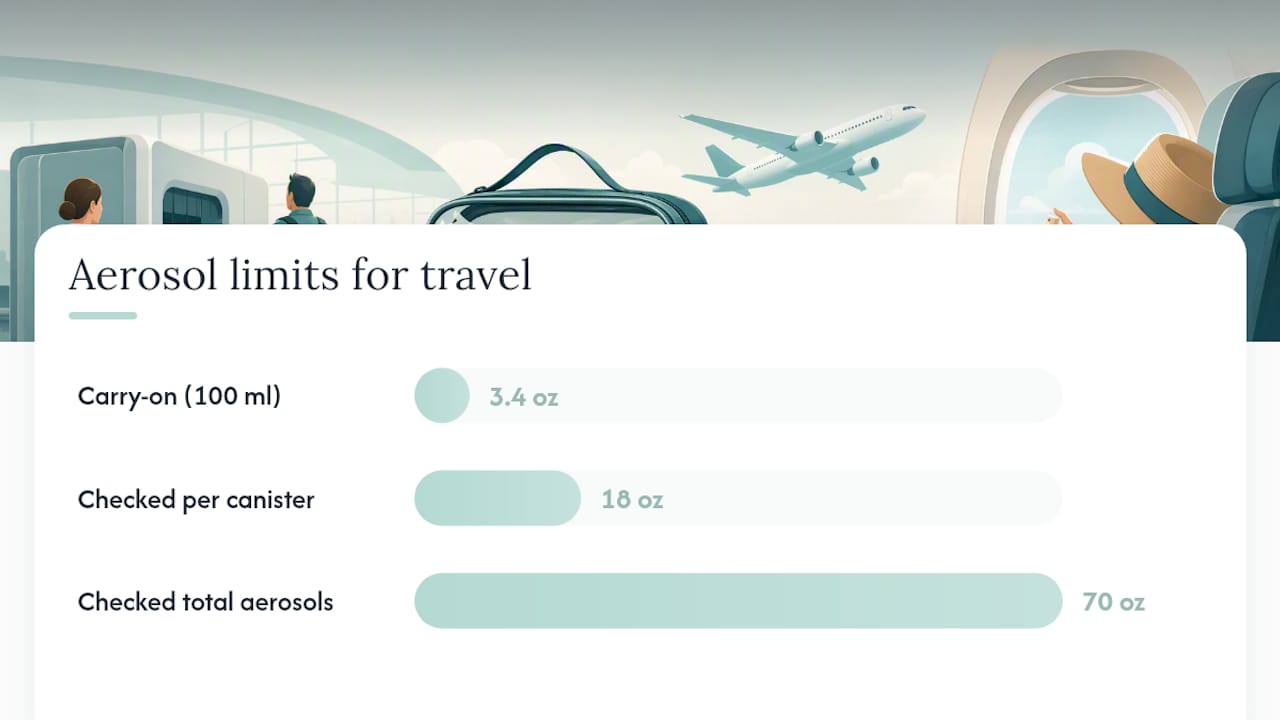
- Carry-on bags: Aerosol and spray sunscreen containers must be 3.4 oz (100 ml) or less and fit inside one quart-sized, clear, resealable bag alongside your other liquids.
- Checked bags: Larger aerosol containers are allowed, but each canister cannot exceed 0.5 kg (18 oz / 500 ml), and your total aerosol toiletries cannot exceed 2 kg (70 oz / 2 L) per person.
- TSA officer discretion: A TSA officer at the checkpoint has final say. Even a compliant item can be flagged if it looks suspicious or is improperly packed.
Key takeaways
Aerosol sunscreen is allowed on U.S. flights in both carry-on and checked bags, subject to TSA’s 3.4 oz carry-on limit and FAA’s 18 oz per-container and 70 oz aggregate limits for checked luggage.
| Point | Details |
|---|---|
| Carry-on limit | Aerosol/spray sunscreen must be 3.4 oz (100 ml) or less and fit in one quart-sized clear bag. |
| Solid sticks are exempt | Solid sunscreen sticks are not classified as liquids and skip the 3.4 oz carry-on limit. |
| Checked-bag FAA limits | No single canister over 18 oz; total aerosol toiletries per person capped at 70 oz. |
| Reef-safe destinations | Hawaii and similar destinations restrict oxybenzone and octinoxate; mineral formulas avoid the issue. |
| Miamibeachbum option | Save Face SPF 50 and Bodyguard SPF 30 are reef-safe mineral formulas suited for travel. |
Table of Contents
- Can you bring aerosol sunscreen on a plane in your carry-on?
- FAA and airline limits for aerosols in checked baggage
- Practical packing tips to avoid confiscation or leaks
- Hawaii reef-safe rules and what they mean for travelers
- A traveler’s cheat sheet for sunscreen on flights
- Travel-ready sunscreen from Miamibeachbum
- Sources
Can you bring aerosol sunscreen on a plane in your carry-on?
The TSA 3-1-1 rule covers all liquids, aerosols, gels, and creams in carry-on bags. Spray sunscreen falls squarely under this rule, treated the same as lotion or gel sunscreen.
The three rules, stated plainly:
- Each container must be 3.4 oz (100 ml) or less.
- All containers must fit in one quart-sized, clear, resealable bag.
- Each passenger gets one bag.
A standard 6 oz spray sunscreen does not qualify for carry-on. Transfer it to a travel-sized bottle, or pack the full canister in checked luggage.
Solid sunscreen sticks are a different story. TSA does not classify solid sticks as liquids, so they are not subject to the 3.4 oz limit. You can carry a full-size solid sunscreen stick in your carry-on without putting it in your quart bag. This is one of the most overlooked exemptions in sunscreen travel rules.
TSA on sunscreen: “Sunscreen is allowed in carry-on bags and checked bags. Aerosol sunscreen is also allowed in carry-on bags, but must follow the 3-1-1 liquids rule.” — TSA Sunscreen page
If a TSA officer pulls your quart bag at the checkpoint, stay calm. Items over 3.4 oz will be confiscated. You can ask to check the bag instead if you have time before your flight, but there is no guarantee the officer will hold the item for you.
FAA and airline limits for aerosols in checked baggage
The FAA sets the quantity limits for aerosols in checked bags. These apply to toiletry aerosols, including sunscreen sprays. Flammable aerosols that are not medicinal or toiletry products are forbidden in both carry-on and checked baggage. Spray paint and cooking spray are common examples of what is not allowed. Sunscreen, deodorant, and hairspray qualify as toiletry aerosols and are permitted.
| Limit | Amount |
|---|---|
| Per-container maximum | 0.5 kg / 18 oz / 500 ml |
| Aggregate per passenger | 2 kg / 70 oz / 2 L |
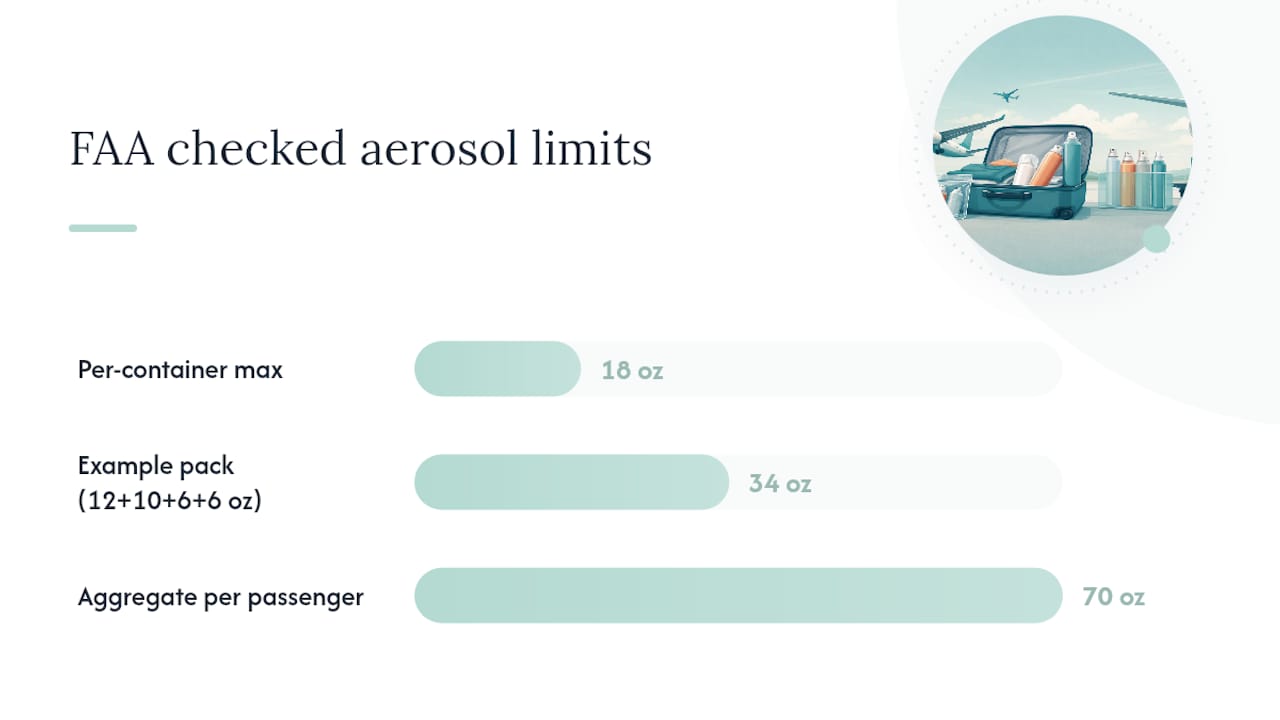
The aggregate limit catches frequent travelers off guard. If you pack aerosol sunscreen, dry shampoo, deodorant, and hairspray in the same checked bag, those quantities add up fast. A 12 oz sunscreen, a 10 oz dry shampoo, and two 6 oz deodorants already total 34 oz, well under the 70 oz ceiling, but worth tracking when you add more items.
The FAA also notes that toiletry aerosols should have protective caps to prevent accidental discharge. This is not optional guidance. Airlines can refuse to load a bag if a canister is found without a cap.
Pro Tip: Check your specific airline’s carry-on and checked baggage policy before flying. Some carriers add restrictions beyond the FAA baseline, particularly on international routes.
Practical packing tips to avoid confiscation or leaks
Follow these steps the night before you fly.
For carry-on bags:
- Check every aerosol or spray sunscreen container. If it exceeds 3.4 oz, set it aside for checked luggage or decant it into a labeled travel bottle.
- Place all compliant containers in one quart-sized, clear, resealable bag. One bag per person, no exceptions.
- Keep the quart bag near the top of your carry-on for easy removal at the security bin.
- If you need more than 3.4 oz of sunscreen at your destination, buy it after clearing security at an airport shop or at your destination.
For checked bags:
- Confirm the cap is firmly attached to every aerosol canister. Tape the cap in place or add a layer of tape under it to prevent accidental discharge.
- Place each canister in a sealed plastic bag as a secondary barrier against leaks.
- Pack canisters upright when possible.
- Add up the total ounces of all aerosol toiletries to confirm you are under the 70 oz aggregate limit.
Pro Tip: Decanting into small, labeled travel bottles is the fastest way to stay compliant. For practical guidance on moving spray products into travel containers without waste, this decanting guide covers the method clearly.
If TSA confiscates an item at the checkpoint, you have two options: ask the officer if you can check the bag at the gate (only works if you have time), or surrender the item. TSA does not issue receipts for confiscated toiletries.
Spray sunscreens will not explode under normal cabin pressure conditions, but they are regulated because of flammability risk, not pressure risk. That distinction matters when you are deciding whether to pack a canister in checked luggage versus carry-on.
Hawaii reef-safe rules and what they mean for travelers
TSA and FAA rules govern how you transport sunscreen. What you can legally use or purchase at your destination is a separate question governed by local law.
Hawaii restricts the sale of sunscreens containing oxybenzone and octinoxate due to documented harm to coral reefs. Research published in PubMed Central links certain chemical UV filters to coral bleaching and environmental damage. Several other destinations, including parts of the U.S. Virgin Islands and Bonaire, have similar restrictions.
What this means for travelers:
- You can legally fly to Hawaii with a chemical sunscreen in your bag. The restriction covers sale and use, not transport.
- Using a restricted sunscreen at a reef-protected beach may violate local ordinance.
- Mineral sunscreens using zinc oxide or titanium dioxide as active ingredients are generally accepted under reef-safe standards.
- Check the specific rules for your destination before you travel. Laws vary by jurisdiction and are updated periodically.
Practical note: Packing a reef-safe mineral sunscreen before you leave avoids the need to find compliant options at your destination, where availability may be limited and prices higher. For a breakdown of mineral versus chemical formulas, this comparison covers the key differences clearly.
This section covers travel-use advisories, not aviation regulations. TSA will not stop you at the checkpoint for carrying a chemical sunscreen.
A traveler’s cheat sheet for sunscreen on flights
Most confiscations at security happen because travelers forget the 3.4 oz rule applies to aerosols, not just liquids. The second most common mistake is forgetting to add up aggregate aerosol weight for checked bags.
Three rules to memorize:
- Carry-on: 3.4 oz (100 ml) max per container, quart bag, one bag per person. Solid sticks are exempt.
- Checked bag: Max 18 oz per canister, max 70 oz total aerosol toiletries. Caps required.
- When in doubt: Decant, buy after security, or choose a solid stick or travel-sized mineral formula.
International airports do not follow TSA rules. If you are connecting through a non-U.S. airport or departing from one, verify the local security authority’s liquid limits. Many countries use 100 ml as the carry-on limit, which matches the TSA standard, but enforcement and bag requirements differ. Travel guides confirm that checking airline-specific policies before international travel is the safest approach.
Travel-ready sunscreen from Miamibeachbum
Packing sunscreen for a flight is easier when the formula is already sized for carry-on and built for reef-safe destinations.
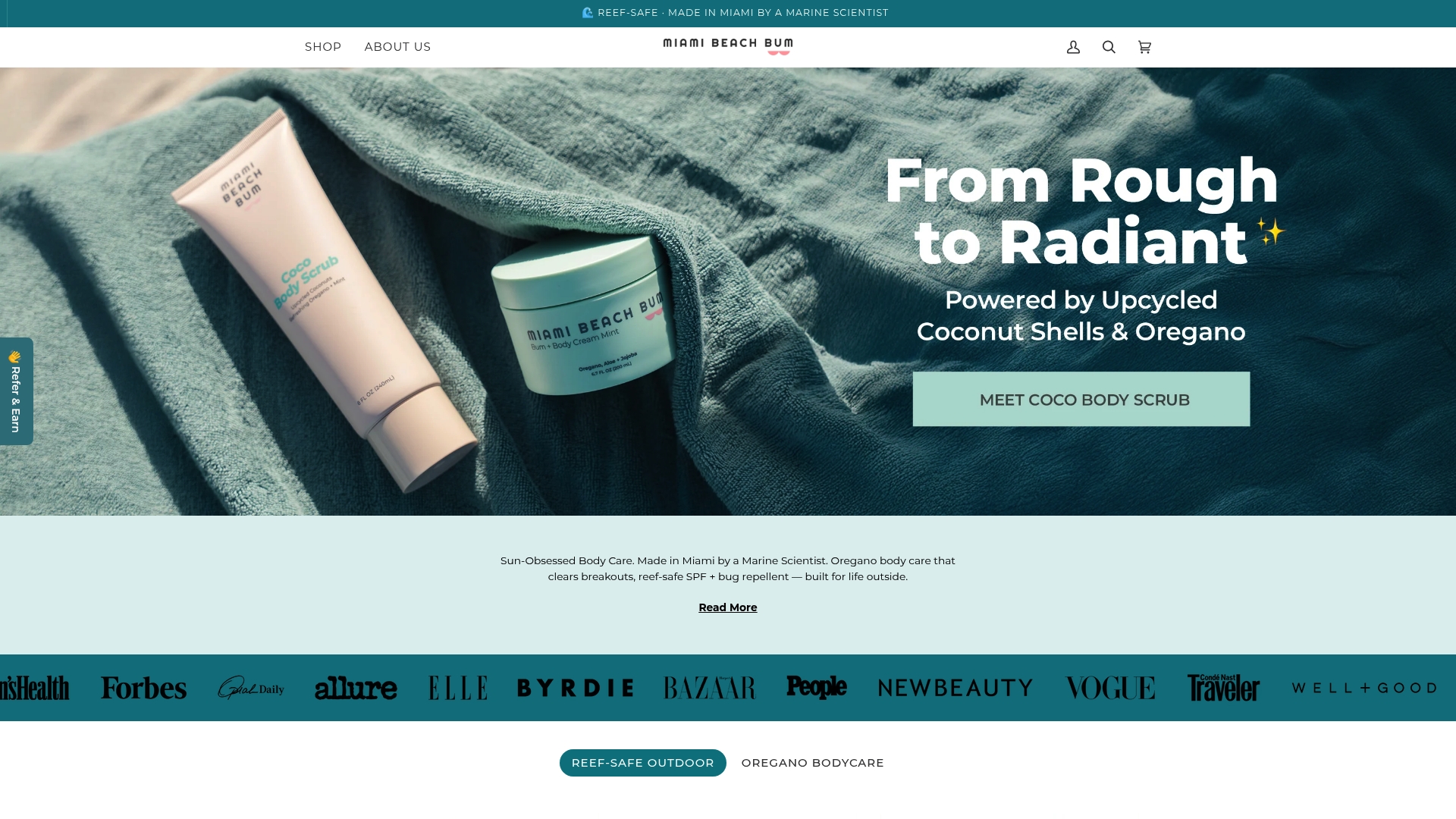
Miamibeachbum’s Save Face SPF 50 Sheer Mineral Facial Serum uses zinc oxide as its active ingredient, making it compliant with Hawaii’s reef-safe standards and light enough to wear daily. The Bodyguard SPF 30 covers body protection with a mineral formula that travels well. Both are formulated without oxybenzone or octinoxate. If you want to try a range of formats before committing to a full size, the Bodycare Discovery Set is a practical starting point for building a travel-ready routine.
Sources
Use these sources to verify current rules before you fly. Regulations can change, and official pages are updated more frequently than travel blogs.
- Sunscreen | Transportation Security Administration - TSA
- PackSafe - Aerosols | Federal Aviation Administration
- Traveling With Sunscreen: Essential Packing Tips And TSA Regulations For Stress-Free Vacations