


Tanning trends keep returning because bronzed skin is repeatedly rewarded by culture, media, and social signaling, even when health warnings are clear. The Skin Cancer Foundation notes that consumer demand for bronzed skin persists despite decades of UV risk data, and a national survey by the Orlando Health Cancer Institute found that 32% of Americans agree a tan makes people look better and healthier, a belief directly linked to riskier sun behavior. The cycle is not random. Each new generation encounters the same cultural signals, nostalgia loops, and influencer content before it encounters the consequences.
Stat: 32% of Americans believe a tan makes people look healthier, according to an Orlando Health Cancer Institute survey conducted by Ipsos.
What this means for you right now:
- A self-tanner or gradual bronzing lotion delivers the look without UV damage.
- SPF 30 or higher, reapplied every two hours, is the single most effective daily habit.
- Self-tanners do not provide sun protection; you still need sunscreen on top.
- If you notice a new or changing spot on your skin, see a board-certified dermatologist.
Key Takeaways
Tanning trends keep returning because bronzed skin is culturally rewarded by media, nostalgia, and social signaling faster than health consequences accumulate in any single generation.
| Point | Details |
|---|---|
| Cultural cycle, not a new fad | Tanning has resurged repeatedly since the 1920s, driven each time by media, fashion, and social reward. |
| 32% believe a tan looks healthier | An Orlando Health Cancer Institute survey found nearly a third of Americans hold this belief, driving riskier sun behavior. |
| No safe tan exists | The American Cancer Society, AAD, and Skin Cancer Foundation all state any UV tan is skin damage, not a health signal. |
| Self-tanners need sunscreen too | DHA-based self-tanners provide color without UV risk but offer zero SPF protection on their own. |
| Miamibeachbum for daily protection | Reef-safe mineral SPF and body care products give you sun protection and post-sun care without compromising the look. |
This article is general information, not a substitute for advice from a qualified doctor. Consult a qualified healthcare professional about your own circumstances before acting on anything here.
Table of Contents
- How tanning ideals changed across the 20th and 21st centuries
- Why tanning has come back so strongly right now
- Why people find a tan attractive: the psychology behind the look
- Common tanning myths that keep the trend alive
- What the medical evidence says about tanning risks
- How to get a bronzed look with much less risk
- Who is tanning now, and what makes Gen Z different
- The practical advice worth acting on now
- The part of this trend that most people miss
- Miamibeachbum makes safer sun care straightforward
- Sources
How tanning ideals changed across the 20th and 21st centuries
The tanning trend resurgence you see today is not the first. It is at least the fourth or fifth time bronzed skin has cycled back into fashion since the early 1900s.
Before the 1920s, pale skin was the dominant beauty ideal in the United States and Western Europe. A tan marked outdoor labor, not leisure. That flipped fast. Historical research published in PMC documents a sharp rise in pro-tanning content in U.S. fashion magazines in 1928 and 1929, showing that media-driven shifts in beauty norms can happen within a single season. Coco Chanel’s widely reported 1923 tan after a Mediterranean cruise is the cultural shorthand for this moment, though the shift was already underway in print.
By the postwar era, tanned skin had become a leisure-class signal. Coppertone launched its iconic advertising in the 1950s, and Hollywood amplified the look through stars like Brigitte Bardot and later Farrah Fawcett. Suntan lotion became a mass-market product category.
The 1970s and 1980s pushed it further. Tanning beds arrived in the U.S. in the late 1970s, and by the 1980s, indoor tanning salons were a mainstream business. The self-tanner category emerged in parallel, offering color without UV exposure, though early formulas were notoriously orange.
The 1990s brought the first major cultural pullback. Pale, heroin-chic aesthetics dominated fashion runways, and early skin cancer awareness campaigns gained traction. Then the early 2000s reversed it again: reality television, celebrity beach paparazzi culture, and the rise of spray-tan booths made bronzed skin aspirational for a new generation.
The pandemic years created a brief interruption, followed by a sharp rebound. Social media, particularly TikTok, accelerated the next wave faster than any previous cycle.
| Era | Dominant look | Primary driver |
|---|---|---|
| Pre-1920s | Pale | Class signaling (outdoor labor = low status) |
| 1920s–1930s | Bronzed emerging | Fashion media, leisure travel, Chanel effect |
| 1950s–1970s | Deeply tanned | Hollywood, Coppertone, postwar leisure culture |
| 1980s–1990s | Peak tanning, then retreat | Tanning salons, then heroin-chic backlash |
| 2000s | Spray tan, self-tanner boom | Reality TV, celebrity culture, safer alternatives |
| 2020s | Resurgence via social media | TikTok, Y2K nostalgia, influencer economics |
Pro Tip: Recognizing this repeating pattern helps you predict the next cycle before it peaks. When Y2K fashion trends resurface, tanning aesthetics typically follow within one to two seasons. That lead time is enough to stock up on self-tanners and SPF before demand spikes.
Why tanning has come back so strongly right now
The current tanning trend resurgence is faster and louder than previous cycles because the amplification tools are more powerful. Social media platforms do not just reflect beauty trends; they manufacture demand for them in real time.
The primary modern drivers:
- TikTok and Instagram content loops. A single viral tanning video can generate millions of views and drive measurable spikes in salon bookings and self-tanner sales within days. The platform’s algorithm rewards engagement, and tanning content, especially before-and-after transformations, generates high engagement.
- Creator economics. Beauty influencers earn revenue through affiliate links and brand deals tied to tanning products. That financial incentive shapes what content gets made and how risk is framed.
- Y2K nostalgia. The early-2000s aesthetic revival brought back low-rise jeans, butterfly clips, and the deeply bronzed look associated with that era. Nostalgia is a powerful emotional driver because it feels like reclaiming something rather than chasing something new.
- Celebrity visibility. High-profile appearances at film festivals, award shows, and beach destinations keep the bronzed look in circulation as aspirational.
- Countercultural and anti-expert sentiment. Some online tanning content explicitly frames UV exposure as a reclaimed personal choice against “overly cautious” public health messaging. This framing is particularly effective with younger audiences who distrust institutional authority.
Stat: An AAD survey found that a majority of Gen Z adults hold at least one tanning myth as true, which helps explain why each new cohort is susceptible to the same trend cycle.
Online tanning content increasingly frames UV exposure as controllable, using UV-index timing and challenge-based formats that reduce perceived risk. That framing is not supported by the medical evidence, but it is effective at driving participation.
Why people find a tan attractive: the psychology behind the look
The appeal of a tan is not superficial or irrational. It maps onto real psychological and social mechanisms, which is exactly why the look keeps getting rewarded.
The core drivers are status, perceived health, leisure signaling, and identity. Each one operates slightly differently, but they reinforce each other.
Status and wealth signaling
For most of the 20th century, a tan meant you had time and money to spend outdoors. Vacations, beach clubs, and leisure travel were not available to everyone. The look communicated access. That association is still active, even though the original economic logic has largely reversed (outdoor workers now tan more than office workers). The ASPS notes that aesthetics and nostalgia together drive tanning rebounds, with the status association persisting across generations.
The health-cue disconnect
A tan reads visually as a sign of health: outdoor activity, vitality, warmth. The AAD points out that people often interpret a tan as wellness even though it is biological injury. The skin darkens as a defense response to UV damage, not as a sign of thriving. That gap between appearance and reality is one of the most persistent drivers of the trend.
Leisure and identity
A tan also signals that you have been somewhere, done something, lived outdoors. For younger women especially, it functions as a visible marker of a summer well spent. Swimwear color choices and perceived tan contrast even influence how a look reads on social media, a dynamic that bikini color and skin tone research explores in practical terms.
Rebellion
Some of the current resurgence is explicitly anti-establishment. When public health messaging feels prescriptive, rejecting it becomes a form of identity expression. Tanning content that frames UV exposure as a personal freedom choice taps directly into this.
Common tanning myths that keep the trend alive
Misinformation is a structural part of why tanning trends keep returning. The same myths circulate in each cycle, and each new cohort encounters them without the context to evaluate them.
- Myth: A base tan protects you from sunburn. The American Cancer Society states clearly there is no safe tan. A base tan offers minimal SPF equivalent protection and does not prevent skin cancer or photoaging. Any tan is evidence of UV damage.
- Myth: Self-tanner gives you sun protection. It does not. The ACS is explicit: self-tanning products change skin color through a chemical reaction with dead skin cells but provide no UV protection. You need sunscreen on top, every time.
- Myth: Occasional tanning is harmless. UV damage accumulates. There is no threshold below which UV exposure is risk-free. The AAD survey data shows widespread public confusion on this point.
- Myth: Sunscreen is toxic or harmful. This claim circulates heavily on social media. The evidence does not support it. For a detailed breakdown of where this myth comes from and why it does not hold up, the Miamibeachbum sunscreen myths guide covers the most common claims and the facts behind them.
- Myth: Tanning beds are safer than the sun. They are not. Tanning beds emit UV radiation and carry the same skin cancer and aging risks as outdoor UV exposure.
Pro Tip: When you see a tanning creator online, check whether the content discloses a brand deal with a tanning product company. Monetized content has a structural incentive to minimize risk and maximize appeal. That does not make every creator dishonest, but it is worth knowing before you take health advice from a how-to video.
What the medical evidence says about tanning risks
Medical organizations are consistent on this point: there is no safe level of UV tanning. The American Cancer Society, the American Academy of Dermatology, and the Skin Cancer Foundation all state that any tan represents UV-induced skin damage.
Stat: The American Cancer Society’s melanoma statistics document ongoing increases in melanoma incidence in the United States, making tanning behavior a direct public-health concern, not just a personal aesthetic choice.
The risks break into two categories: long-term cancer risk and visible photoaging. UV exposure damages DNA in skin cells. Most of the time, the body repairs that damage. When it does not, the result can be melanoma or other skin cancers. Photoaging, the premature wrinkling, pigmentation, and loss of elasticity caused by UV exposure, is cumulative and largely irreversible.
| Risk | Mechanism | Protective measure |
|---|---|---|
| Melanoma | UV-induced DNA mutation in melanocytes | Broad-spectrum SPF 30+, shade, UPF clothing |
| Squamous/basal cell carcinoma | Cumulative UV damage to skin cells | Daily SPF, avoid peak UV hours (10 AM–4 PM) |
| Photoaging | Collagen breakdown from UV exposure | SPF 30+ daily, antioxidant skincare |
| Sunburn | Acute UV damage | SPF reapplication every two hours, shade |
Practical clinical guidance from the AAD and Skin Cancer Foundation:
- Use broad-spectrum SPF 30 or higher every day, not just at the beach.
- Reapply every two hours when outdoors, and immediately after swimming or sweating.
- Seek shade during peak UV hours (10 AM to 4 PM).
- Wear UPF-rated clothing for extended outdoor exposure. UPF swimwear is a practical option for beach days that combines style with real UV protection.
- Avoid tanning beds entirely.
- See a board-certified dermatologist annually for a skin check, and immediately for any new or changing spot.
How to get a bronzed look with much less risk
Self-tanning and topical bronzers deliver color without UV damage. They come with application caveats, but none of those caveats involve skin cancer or photoaging.
How to use a self-tanner or get a spray tan:
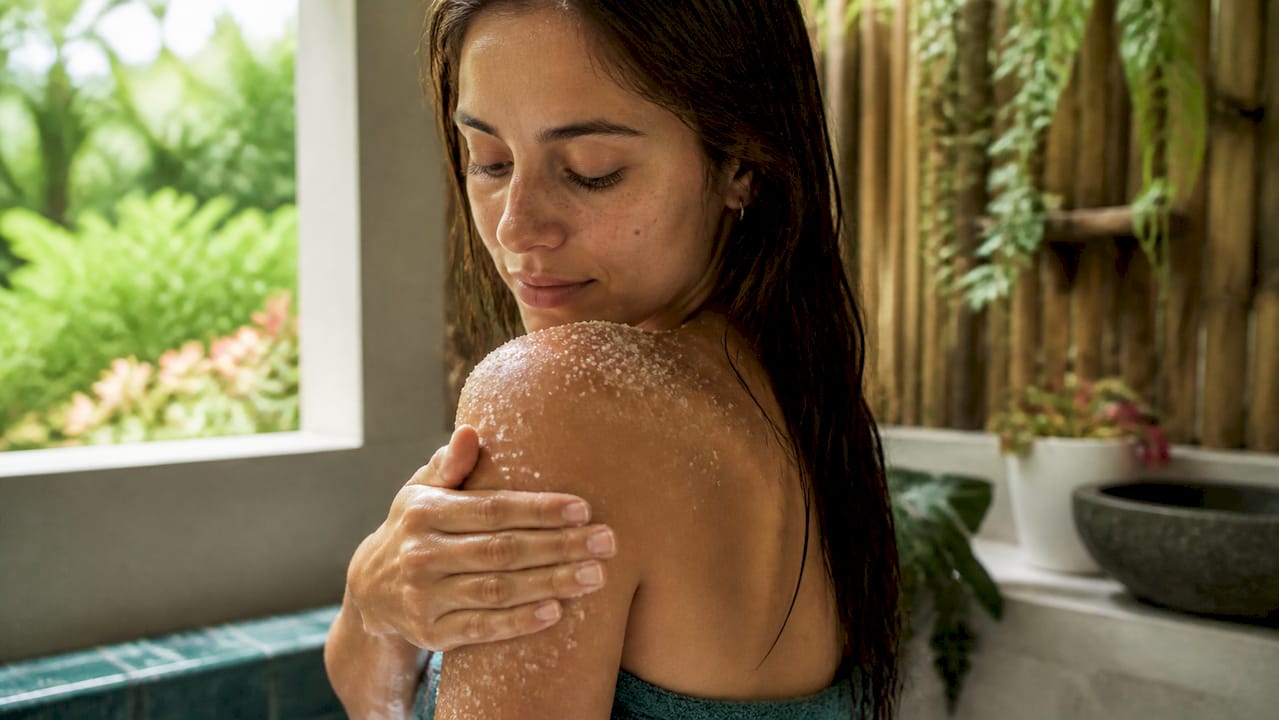
- Exfoliate thoroughly 24 hours before application. Dry, flaky skin creates patchy results.
- Shave or wax at least 24 hours before, not after, to avoid irritation.
- Moisturize dry areas (knees, elbows, ankles) lightly before applying, so the formula does not over-absorb.
- Apply in circular motions, working from the feet upward, blending carefully at joints.
- Wash your hands immediately after application, or use a mitt.
- Allow full drying time (typically 8–10 hours) before contact with water or clothing.
- Moisturize daily to extend the color and prevent uneven fading.
- For spray tan booths, follow the technician’s prep instructions and wear loose, dark clothing afterward.
The main alternative categories and what to know about each:
- DHA self-tanners. Dihydroxyacetone reacts with amino acids in dead skin cells to produce color. Results last 5–7 days. No UV risk. No SPF protection.
- Gradual tanners. Lower DHA concentration in a daily moisturizer. Builds color slowly, easier to control. Good for first-time users.
- Spray tan booths. Professional application, even coverage, fast results. Fades within a week. Still requires sunscreen on top.
- Bronzing makeup and body shimmer. Immediate color, washes off. Zero commitment, zero risk. Good for events.
- Sun-protective clothing. UPF-rated garments block UV physically. UV protection clothing has improved significantly in style and comfort, making it a realistic daily option.
For product-category comparisons of reef-safe bronzing options, the Miamibeachbum tan water comparison guide covers formulas and application differences in detail. And if you want to know how to work SPF into a beauty routine without disrupting your look, the SPF in your daily makeup routine guide is a practical starting point.
Skipping exfoliation is the single most common reason for patchy, uneven color. The skin prep guide from Miamibeachbum walks through the full pre-application routine.*
Who is tanning now, and what makes Gen Z different
Young women and social-media-native cohorts are driving the current resurgence. The demographic pattern is consistent with previous cycles: each new generation encounters tanning aesthetics before it encounters the health consequences.
The AAD survey on Gen Z tanning knowledge found that many Gen Z adults are unfamiliar with sunburn and tanning risks, and that a substantial share accepts at least one tanning myth as true. Behavior-change research cited by the Skin Cancer Foundation shows that people often only adopt sun protection after a personal experience with skin cancer or a close case in their circle. Each new cohort effectively resets tanning behavior until a consequence is experienced.
Contributing demographic factors:
- Peer influence and social comparison on image-heavy platforms.
- Aesthetic priorities that weight immediate appearance over long-term skin health.
- Lower perceived long-term risk among younger adults (consequences feel distant).
- Social signaling: a tan communicates activity, travel, and a certain lifestyle.
- Algorithmic amplification that surfaces tanning content to users who have engaged with beauty or fashion content.
It is also worth noting that darker skin tones are not exempt from UV risk. Melanin provides some natural protection, but it does not eliminate skin cancer risk, and photoaging affects all skin tones.
The practical advice worth acting on now
Tanning trends keep returning because the cultural rewards are real and the health consequences are delayed. That gap is the core problem. The look is immediately visible; the damage accumulates over years.
Act on these now:
- Stop intentional UV tanning, including tanning beds. No tan from UV exposure is safe.
- Try a self-tanner or gradual bronzing lotion for color without UV damage.
- Use SPF 30 or higher every day, not just when you plan to be outdoors.
- See a board-certified dermatologist for an annual skin check, and sooner if you notice any new or changing spots.
For personal risk assessment, the American Academy of Dermatology and the Skin Cancer Foundation both offer resources to help you understand your individual risk profile and find a dermatologist.
The part of this trend that most people miss
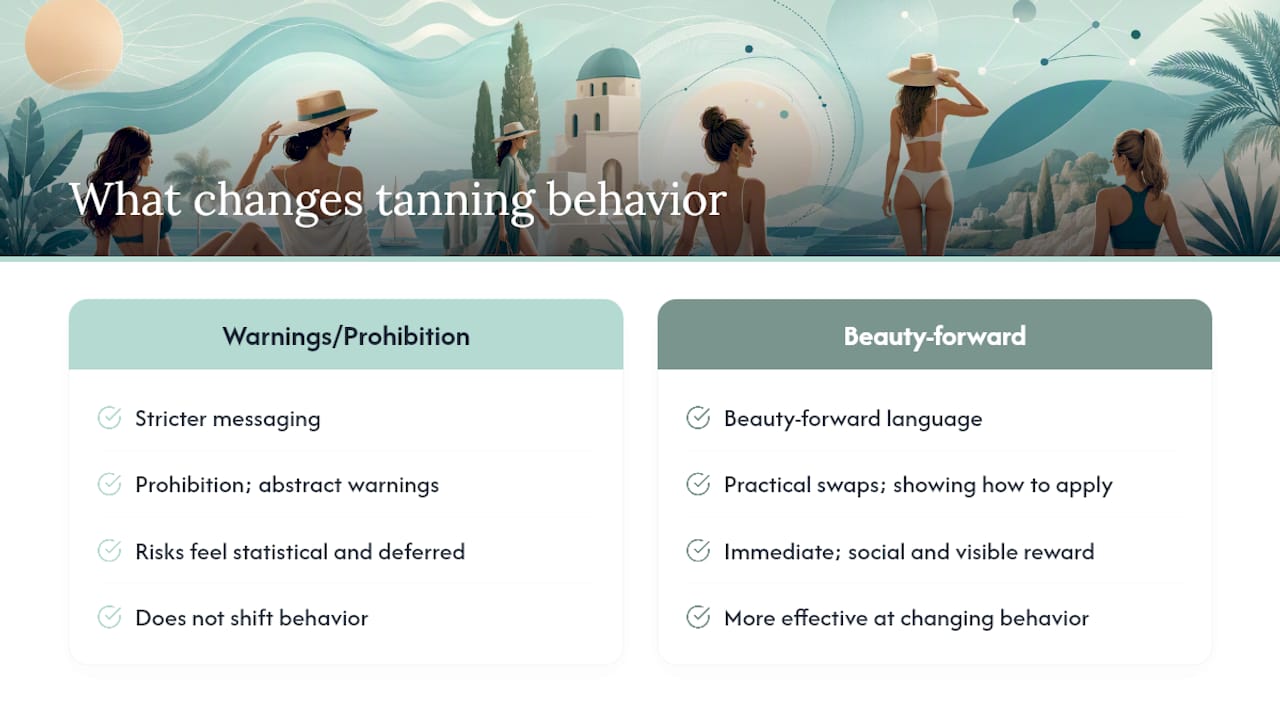
The most underappreciated dynamic in the tanning cycle is not the nostalgia or the influencer economics. It is the reset mechanism. Each new cohort of young women encounters tanning aesthetics at roughly the same life stage, before the cumulative UV damage is visible on their own skin. The warnings exist, but they describe consequences that feel abstract at 19 or 22. The tan is immediate. The reward is social and visible. The risk is statistical and deferred.
What actually shifts behavior is not stricter messaging. The Skin Cancer Foundation’s own harm-reduction framing points to this: beauty-forward language and practical swaps work better than prohibition. Telling someone a self-tanner looks just as good, and showing them how to apply it without patchiness, is more effective than telling them tanning is dangerous. The danger is real, but the approach matters.
The other thing worth saying plainly: the “no safe tan” message from the AAD and ACS is not overcaution. It is accurate. A tan is the skin’s injury response to UV radiation. The fact that it looks attractive does not change the biology. Knowing that does not mean you have to give up color entirely. It means you choose how you get it.
Miamibeachbum makes safer sun care straightforward
Miamibeachbum is built around one idea: you can love the beach and still protect your skin. The brand’s reef-safe mineral sunscreen sprays and body care products are formulated with botanical and marine ingredients, designed for people who spend real time outdoors and want daily protection that does not feel like a compromise.
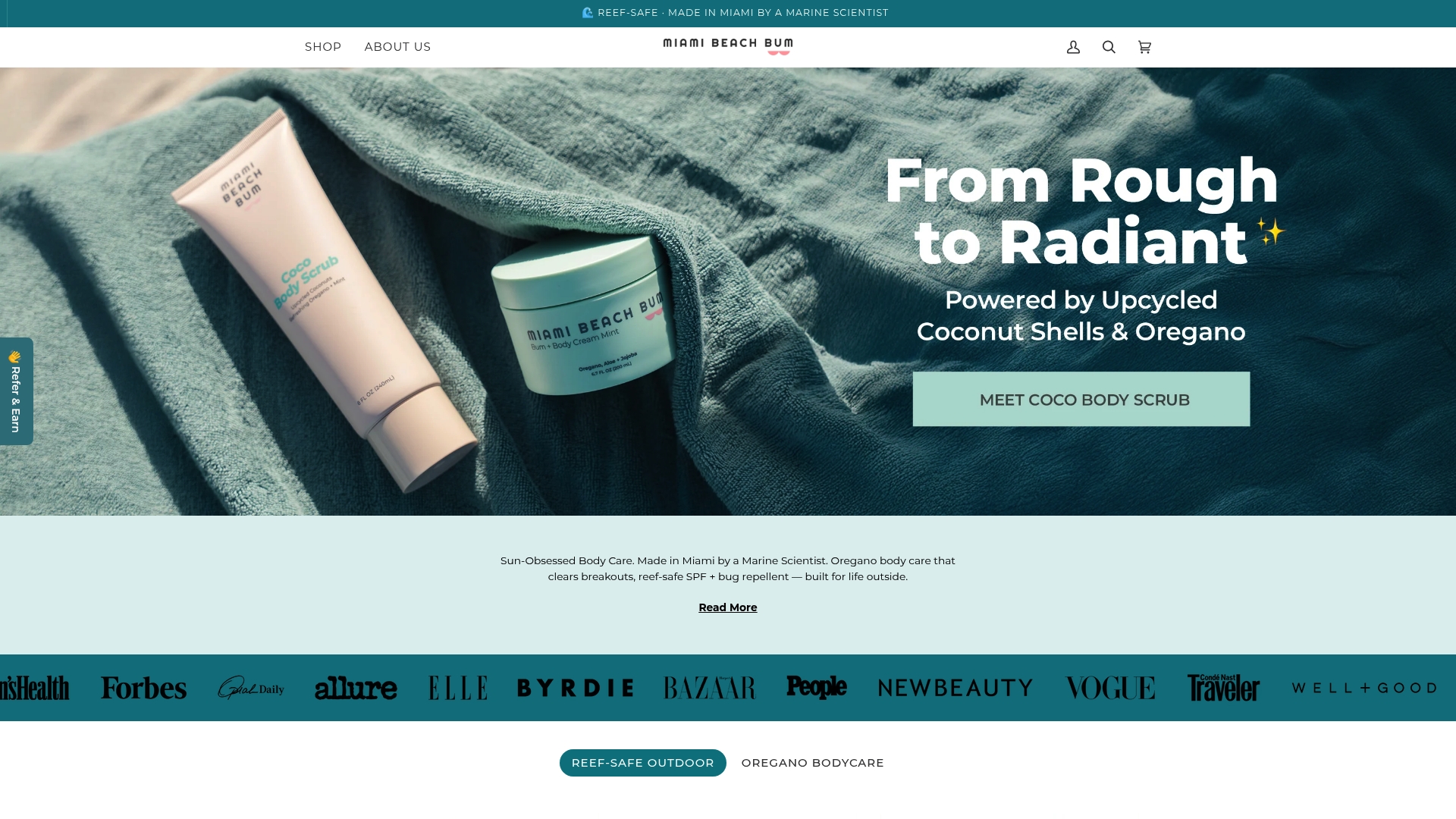
For daily SPF, the Save Face SPF 50 Sheer Mineral Facial Serum is a lightweight, mineral-based option that works under makeup and does not leave a white cast. For body care and post-sun maintenance, the Bum + Body collection covers everything from body creams to gradual tan support. If you want to try the range before committing, the Bodycare Discovery Set is a lower-friction starting point. Every product is reef-safe and made without the ingredients that give sunscreen a bad reputation.
Sources
- Survey finds young adults more likely to believe myths about sun protection and skin cancer prevention
- Is Getting a Base Tan Safe? | American Cancer Society
- Why do we still tan? | Skin Cancer Foundation
- American Academy of Dermatology survey shows Generation Z adults are unfamiliar with sunburn and tanning risks
- Historical study on tanning attitudes in U.S. fashion magazines (PMC)