


Reapply the leave-in after every swim and try to keep direct exposure light between 10 AM and 2 PM, when the sun does the most damage.
TL;DR:
- Reapplying a reef-safe leave-in conditioner after each swim helps maintain a protective barrier against salt, chlorine, and UV rays throughout the day.
- Protecting hair with a wetting routine and layered styling before going to the beach significantly reduces damage from salt, sand, wind, and sun exposure.
- Rinsing hair with fresh water regularly during the day prevents salt and chlorine buildup that can cause ongoing abrasiveness and weakening.
- Post-beach care should include thorough rinsing, two-step shampooing, and deep conditioning to undo damage and prevent breakage from dehydration and UV exposure.
- Consistent daily protection, including pre-swim treatment, protective styles, and reapplication, buffers cumulative damage over an entire beach season.
Table of Contents
- How Sun, Salt, Sand, and Wind Damage Hair
- What to Do Before You Hit the Water or the Sand
- What to Do During Your Beach Day
- How to Repair Hair After the Beach
- Protective Styles and Accessories Worth Packing
- Where a Reef-Safe Leave-In Fits the Routine
- Diet and Hydration Tips for Beach-Day Hair Health
- One Habit Worth Keeping All Summer
- How Hair Shield Fits Into Your Beach Bag
- Sources
How Sun, Salt, Sand, and Wind Damage Hair
Hair takes a four-front attack at the beach, and each front works differently. UV rays break down the proteins that give hair its strength and cause the pigment that gives it color to fade. Sunburn on an exposed scalp part is a real risk, not just a skin concern.
- UV exposure: weakens the protein structure and fades color, worst between 10 AM and 2 PM
- Saltwater: pulls moisture out of the strand while leaving behind crystals that scrape at the surface as hair moves
- Sand and wind: create friction that lifts and roughens the outer cuticle layer, leading to tangles and frizz
- Chlorine: strips natural oils and can shift color, especially on hair that’s already been treated or lightened
Saltwater’s damage comes down to what stylists call the sponge effect: dry hair absorbs whatever liquid it touches first. Rinsing with fresh water before you swim reduces how much salt or chlorine the hair actually soaks up, because the strand is already saturated with something milder. The Cleveland Clinic notes that peak sun intensity runs roughly 10 AM to 2 PM, which is exactly when most of a beach day’s damage gets done.
What to Do Before You Hit the Water or the Sand
The best beach hair days are won before you ever step on the sand. Handle these five steps in the 15 to 30 minutes before you leave the house or the moment you arrive:
- Wet hair completely with fresh water. This triggers the sponge effect, so strands soak up less salt or chlorine later.
- Apply a leave-in conditioner to mid-lengths and ends. Fine hair needs a thin layer; curly and color-treated hair usually needs more, focused on the driest sections.
- Layer a lightweight oil or serum over the leave-in. The leave-in restores moisture, while the oil or silicone-like sealant helps repel salt for a few hours.
- Add a UV-protective spray if you have one. Look for products listing UV filters or antioxidant ingredients on the label, not just “beach spray” on the front.
- Put hair into a protective style. A loose braid or low bun secured with a silk scrunchie beats a tight elastic, which creates a stress point where breakage starts.
Pro Tip: Toss a small bottle of fresh water and a travel-size leave-in in your beach bag. You’ll use both more than you think, and reapplying beats trying to repair damage after the fact.
What to Do During Your Beach Day
Protection isn’t a one-and-done step; it needs upkeep while you’re actually out there. Rinse with fresh or bottled water between swims whenever you can, since salt left to dry on the strand keeps abrading it hour after hour.
- Reapply your leave-in or oil after each rinse. Salt strips the barrier you put on that morning, so round two matters.
- Wear a hat, scarf, or sit in shade during the 10 AM to 2 PM window, and shift your part occasionally to protect the same strip of scalp from repeated exposure.
- Keep hair in its protective style as long as possible. Fewer loose strands means less whipping in the wind and less tangling.
- Never comb dry, salt-crusted hair. The crystals make strands rigid, and a comb dragged through that state tears at the cuticle. Detangle only after a rinse.
- If you’re in a chlorinated pool, a swim cap plus a prompt rinse afterward cuts down on both dryness and any color shift.
Pro Tip: If the only water around is the ocean itself, a quick dunk and finger-comb still beats letting salt sit and dry in direct sun for hours.
How to Repair Hair After the Beach
Aftercare is where most of the day’s damage either gets undone or gets locked in, so treat it as a sequence, not an afterthought.
- Rinse with fresh water as soon as you reasonably can, ideally at the beach’s outdoor shower before the salt has a chance to dry and crystallize on the drive home.
- Shampoo in two rounds if you were in the water a lot. The first pass lifts salt, sand, and sunscreen residue; the second treats the scalp and strand normally.
- Save clarifying shampoo for heavy buildup only, and always follow it with a deep conditioner or mask, since clarifying formulas strip oil along with the grime.
- Apply a leave-in or lightweight treatment to damp hair, then detangle with a wide-tooth comb starting at the ends and working upward.
- Skip the heat tools for a day. Hair that’s already dehydrated from sun and salt doesn’t need a flat iron added to the mix; a weekly deep treatment during peak swim season does more good.
Trichologists and stylists generally agree that beach-related damage builds up over a season rather than a single afternoon, which is the real argument for running this sequence every time, not just after the worst sun exposure.
Protective Styles and Accessories Worth Packing
Style choice does as much work as any product. A loose braid keeps strands from rubbing against each other and against a towel or beach chair; a low bun tucks ends away from wind entirely; a twisted updo splits the difference, offering coverage without the tightness of a braid pulled too close to the scalp.
- Wide-brim hat: blocks UV from both hair and scalp during peak hours
- UV scarf or bandana: doubles as sun cover and a way to tame flyaways in wind
- Silk scrunchie: secures a style without the tension and breakage of a rubber elastic
- Swim cap: worth packing specifically for chlorinated pools, less necessary for open water
The most common mistake is reaching for a tight elastic because it’s convenient, then layering heavy product on top before heading into direct sun, which can trap heat against the scalp. Swap the elastic for a scrunchie and keep pre-sun product light instead of thick.
Where a Reef-Safe Leave-In Fits the Routine
A leave-in conditioner made with marine and botanical ingredients slots directly into the pre-swim and reapplication steps outlined above, giving you one product instead of three. This lineup includes reef-safe leave-in conditioners paired with complementary sun care products and hair repair plans, along with education on properly removing sunscreen residue before it builds up on the scalp.
A few pumps worked through damp mid-lengths and ends before you swim, then reapplied the same way after each rinse, is enough to keep the barrier active through most of a beach day.
A full author bio for Ayssa will be added at publication.
Diet and Hydration Tips for Beach-Day Hair Health
Hair health starts inside the body, and a day of sun and salt pulls moisture out faster than usual. Drinking water before, during, and after beach time supports the same hydration that a leave-in is trying to protect from the outside. Aim to sip consistently through the day rather than downing a bottle only once you feel thirsty, since thirst usually shows up after mild dehydration has already started.
Protein matters just as much as water. Hair is built largely from keratin, and diets low in protein show up as weaker, more breakage-prone strands over time. Beach trips that stretch across a whole vacation are a good excuse to lean into fish, eggs, and legumes at meals, since amino acids feed the same structure that UV rays and salt are working to break down.
Omega-3 fatty acids, found in fish like salmon and in walnuts, support scalp health and can help offset some of the dryness that comes from repeated sun and saltwater exposure. Biotin and vitamin E, common in nuts and leafy greens, get cited often for hair resilience, though neither replaces the fundamentals of water intake and physical protection.
Alcohol and excess caffeine both work against hydration, so a beach day heavy on frozen drinks in direct sun is a rougher combination for hair than most people realize. Balancing those with extra water isn’t complicated, but it’s the piece people skip most.
One Habit Worth Keeping All Summer
The routine that actually works is boring: pre-soak, seal with a leave-in, cover with a hat or braid, rinse and condition after. Treat it as a ritual you repeat every beach day, not a rescue plan for after the damage shows up. Some sun-kissed texture is part of the trade-off of a good beach day, and that’s fine. What you’re guarding against is the cumulative breakage that shows up months later, not a little extra wave by 4 PM.
— Ayssa
How Hair Shield Fits Into Your Beach Bag
Most beach hair damage comes down to a gap in timing: people protect their hair once in the morning and forget it needs reinforcement by noon. Hair Shield, Miamibeachbum’s reef-safe leave-in conditioner, is built to close that gap without adding another five-step process to your bag.
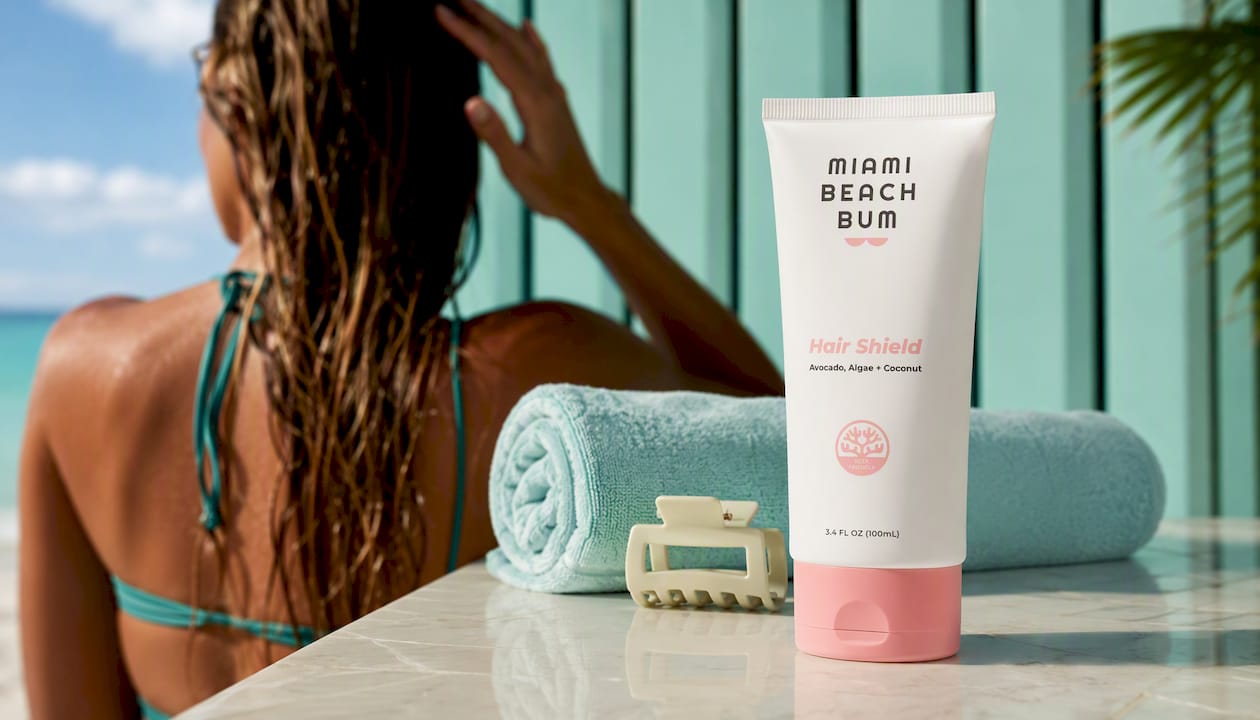
Work a few pumps through damp mid-lengths and ends before you get in the water, focusing on the driest inch or two near the ends. After each swim or rinse, reapply the same way, since salt breaks down whatever barrier was there before. It’s marine and botanical based, so it’s built for exactly the saltwater exposure this routine is designed around, not a general-purpose conditioner pressed into beach duty. Add it to your bag alongside your hat and scrunchie, and check the product page for sizing before your next trip.
Sources
For more on the mechanics behind this routine, see the Cleveland Clinic on sun damage, the CDC on UV radiation, Good Housekeeping on saltwater care, and Olaplex on pre/post beach treatment. For a deeper repair plan, read Miamibeachbum’s guide to fixing sun-damaged hair.
- How To Protect Your Hair From Sun Damage - Cleveland Clinic
- How to protect your hair from salt water and repair sea damage - Good Housekeeping
- How to Care for Your Hair Before and After the Beach - Olaplex