


Chlorine hair protection comes down to one routine: saturate hair with fresh water or a leave-in barrier before you swim, pack it into a cap or braid, then rinse and moisture-load immediately after you get out. A leave-in barrier applied as a pre-swim step coats the strand before chlorinated water gets the chance to.
TL;DR:
- Applying a water-resistant leave-in conditioner or light oil to damp hair before swimming significantly reduces chlorinated water absorption and damage.
- Silicone swim caps offer the best fit and durability, but no cap creates a perfect seal, so multiple protection layers are essential.
- Rinsing with fresh water immediately after swimming removes most surface chlorine and metal residues before they cause lasting damage.
- Regular use of chelating shampoos detects and removes metal buildup, especially in bleached or chemically treated hair, preventing further deterioration.
- Including UV filters and humectants in post-swim products mitigates sun and chlorine-induced protein breakdown, preserving hair strength and shine over time.
Table of Contents
- Why a pre-swim barrier changes everything
- Do swim caps really block chlorine?
- What should you do right after you get out of the pool?
- Which ingredients actually protect hair from chlorine?
- When does chlorine damage need a professional’s help?
- The research and reputation behind this routine
- What I’d actually tell a swimmer at the pool deck
- How Hair Shield fits into your pre-swim routine
- Sources
Why a pre-swim barrier changes everything
Hair works like a sponge with a limited capacity. Once its cuticle cells are saturated with clean water, they have far less room to soak up chlorinated pool water. Swimming coaches have known this trick for decades, but the science behind it is straightforward: hair that is already wet absorbs measurably less chlorinated liquid than dry hair because the cuticle’s absorption capacity is already spoken for. That is the entire logic behind the pre-swim barrier, and it is the reason UAB News recommends soaking hair or applying a nourishing leave-in before you get in the water.
Here is the application sequence that takes under two minutes:
- Wet hair thoroughly at a sink or shower, working water from roots to ends.
- Apply a dime to nickel sized amount of leave-in conditioner or a light oil, concentrating on the mid shaft and ends where damage shows up first.
- Distribute with your fingers or a wide tooth comb so no section goes uncoated.
- Twist or braid hair immediately, sealing the barrier in before you head to the pool deck.
Look for products labeled water resistant, built around humectants that hold moisture in the strand, and formulated reef safe if you also swim in open water. Reef safe formulations matter for ocean swimmers because they skip the oxybenzone and octinoxate that damage coral, without giving up performance on hair.
Oils are not universally the right call. Fine hair tends to go flat and greasy under a heavy oil layer, and that buildup can actually trap chlorine against the scalp rather than block it. If your hair is fine or already prone to oiliness, skip the oil and use a lightweight leave-in spray instead. It gives you the same saturation benefit without weighing down the strand.
Pro Tip: Apply your leave-in over damp, not soaking wet, hair. Product clings better to slightly damp strands than to hair that is dripping, which means less product ends up diluted down the drain.
Do swim caps really block chlorine?
Caps and protective styling handle the physical side of the equation, and the differences between cap materials are bigger than most swimmers assume.
- Silicone caps grip best, stretch to fit most head sizes, and hold up over years of regular use. The TYR long hair silicone cap is built with extra room specifically for longer hair, which matters because a cap that’s too tight will pop off mid lap.
- Latex caps cost less and seal tightly against the scalp, but they tear easily and cause allergic reactions in some swimmers.
- Neoprene caps are thicker and warmer, favored by open water and cold water swimmers, though the bulk makes them a poor fit for fast lap swimming.
Packing hair matters as much as the cap itself. Braid or twist hair into a low bun before pulling the cap on. This reduces how much loose hair rubs against the cap’s interior and gets pulled loose mid swim, which is when water sneaks in around the edges anyway.
Set your expectations honestly: no cap creates a perfect seal, and water always finds its way in around the hairline. The combined approach, cap plus pre-swim barrier plus post-swim rinse, is what actually reduces damage, not any single layer alone. Copper and other metal deposits in pool water also cause problems that no cap prevents, since chlorine raises hair’s porosity and lets those metals bind to the strand regardless of what’s covering your head.
What should you do right after you get out of the pool?
The clock starts the moment you leave the water. Chlorine and metal residue that sit on the hair shaft for hours, drying under sun and wind, bind more stubbornly than residue rinsed out within minutes.
- Rinse immediately with fresh water, ideally at the pool deck shower before you even towel off. This single step, recommended by UAB dermatology researchers, removes a large share of surface chlorine before it has time to set into the cuticle.
- Follow with a sulfate-free moisturizing shampoo, then a conditioner rich in humectants. Sulfates strip the last of your natural oils right when your hair needs them most.
- Add a clarifying or chelating shampoo once weekly if you swim several times a week. Watch for the tell: a faint green tint in blonde or gray hair, a lingering chemical smell that survives normal washing, or hair that feels waxy and resists styling. Those are signs of metal buildup that a chelating formula is designed to strip out, since regular surfactants cannot bind copper the way a chelator does.
Coarse, curly, or chemically treated hair needs more than a rinse and a basic conditioner. Prioritize moisture restoration over frequent washing, and reach for a weekly mask built around fatty acids or ceramides rather than protein alone. A 2025 study on chemically treated hair found that dyed and bleached strands showed measurably more combing resistance and less shine after seawater exposure, a strong argument for treating color-treated hair with extra caution after any pool session, salt water or chlorinated.
Pro Tip: Do the mask work on the same night you swim, while hair is still damp and the cuticle is slightly raised. Product absorbs faster into a cuticle that hasn’t fully closed back down.
If your usual routine leaves hair feeling stripped no matter how much you condition, a dedicated repair routine for sun and environment damaged hair can rebuild what daily swimming wears away.
Which ingredients actually protect hair from chlorine?
Reading a label tells you more than any marketing claim on the front of the bottle. Three ingredient categories do the real protective work:
- Silicones (dimethicone, cyclomethicone) form a physical film that slows water penetration, the closest thing to a raincoat for your hair shaft.
- Humectants (glycerin, panthenol, aloe) pull and hold moisture in the strand, offsetting the drying effect of chlorine.
- Light oils (argan, jojoba, marula) add slip and shine without the heaviness of mineral oil, though they offer less water resistance than silicones.
Right after a swim, avoid products loaded with harsh sulfates or drying alcohols. Your cuticle is already raised and vulnerable at that point, and a stripping formula only compounds the damage chlorine started.
Reef safe formulations skip oxybenzone and octinoxate, the two UV filters most linked to coral bleaching, and water resistant claims should specify a wear time. (40 or 80 minutes is standard for sunscreen testing, and comparable durability applies to hair barriers).
Sun exposure at the pool is not incidental damage either. UV rays break down the same proteins that chlorine attacks, and layering a product with UV filters is one of the few overlooked steps swimmers skip, according to Cleveland Clinic research on salt water and sun exposure compounding hair damage.
For the pre-swim step specifically, Hair Shield is formulated as a leave-in barrier with marine and botanical ingredients built to sit on the strand before you ever touch the water, applied the same way outlined above: a small amount worked through damp hair, braided in, and left on for your entire swim.
When does chlorine damage need a professional’s help?
Most chlorine effects are cosmetic and reversible with a better routine. Some are not.
- Green tint in blonde or gray hair almost always comes from copper deposits, not chlorine itself, and a chelating shampoo clears it in one or two treatments.
- Redness, scaling, blistering, or persistent burning on the scalp are signs to see a dermatologist, not signs to switch shampoos, per UAB dermatology guidance.
- Excessive breakage or visible thinning paired with scalp irritation warrants a professional look, especially for swimmers who’ve recently colored or bleached their hair.
- Bleached and coarse or curly hair need more frequent deep conditioning and shorter intervals between trims, since chemically treated strands already carry structural weak points that chlorine exposure makes worse.
One habit worth breaking: leaving thick or long hair bundled up wet under a cap for hours after your swim. That trapped moisture against the scalp invites irritation and odor that a quick rinse and air dry would have prevented.
The research and reputation behind this routine
The haircare line described here is built around the same pre-swim barrier principle that dermatology researchers recommend, not around marketing shortcuts.
- The routine outlined here draws on guidance from UAB News and Cleveland Clinic, two clinical sources that consistently point to the same barrier, rinse, moisturize sequence.
- Academic literature on pool water’s effects on hair and skin has documented this exposure pattern for years, giving the routine a research backbone that predates any single product.
- A full product and content library is available at Miamibeachbum, including a leave-in barrier featured in this guide sold alongside reef safe body care products.
Dermatology guidance is consistent on one point: protect before you swim, rinse the moment you’re out, and treat moisture loss as the priority over aggressive cleansing. That sequence, more than any single product, is what determines how chlorine-exposed hair holds up over a swim season.
What I’d actually tell a swimmer at the pool deck
Caps never fit perfectly, and oil-based barriers can leave fine hair greasy by the second lap. Neither tradeoff is a reason to skip protection. It’s a reason to adjust: lighter leave-ins for fine hair, silicone caps sized for length, chelating shampoo on a fixed weekly schedule rather than “whenever it looks bad.”
Your five-minute checklist: wet or leave-in before you swim, braid and cap it, rinse and moisturize the second you’re out. Do it every session, not just the ones after a bad hair day, and the cumulative damage most swimmers accept as normal stops adding up.
— Ayssa
How Hair Shield fits into your pre-swim routine
The barrier step of the routine described above is a leave-in built with marine and botanical ingredients that coats the strand before chlorine gets the chance to.
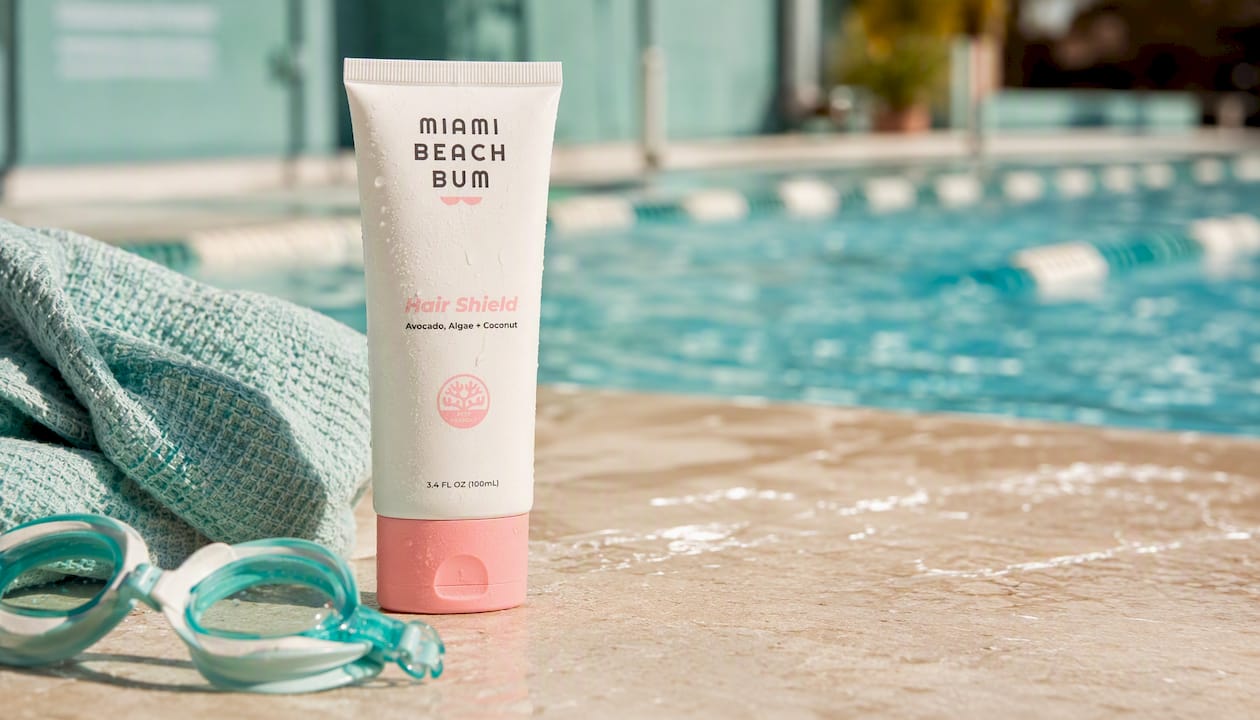
Apply a dime sized amount to damp hair before you head to the pool, focusing on mid shaft and ends, then braid or bun it under your cap. Reapply after any swim longer than an hour, or immediately if you rinse and go back in for a second session. It’s suited especially to regular lap swimmers, triathletes training multiple times a week, and anyone with color-treated hair that shows seawater related combing resistance noted in the 2025 study. If your current post-swim routine leans on a plain drugstore conditioner and nothing before you get in the water, adding this one step is the fastest upgrade available. Shop the reef safe leave-in conditioner and build it into tonight’s swim bag.
Sources
- How to protect skin and hair from chlorine and salt water | UAB News
- Is salt water good for your hair and skin? | Cleveland Clinic
- Effects of artificial seawater on chemically treated hair (2025 DOI study)
- PubMed: pool water and hair/skin effects (historical study)